
In this guide
- The short answer: compare the making, not only the animal
- Start with yarn weight and gauge
- Count the pieces, then notice what they are
- Choose the silhouette you want to assemble
- Flat knitting still asks for three-dimensional thinking
- Match the project to the skill you want next
- A little history makes flat knitting less ordinary
- Make a five-minute pre-cast-on check
The short answer: compare the making, not only the animal
For a first knitted animal, choose a pattern whose yarn weight, piece count and finishing work suit the skills you want to practise. A smaller animal is not automatically the quickest: fine yarn and nine small pieces can require more patient handling than ten larger DK pieces. Read the materials, gauge, construction method and assembly notes before deciding whether the sheep, cat, dog, otter or Highland cow has made the strongest case.
Start with yarn weight and gauge
Four of these five decorative animals use smooth DK yarn; the mini sheep begins with 4-ply. The Craft Yarn Council's Standard Yarn Weight System is useful for comparing thickness categories, but a category name does not make every yarn interchangeable. Fibre, twist and your own tension can change the fabric, so the pattern's stated gauge remains the useful target.
The Craft Yarn Council's guide to reading instructions and checking gauge recommends making the swatch with the yarn, needles and stitch used in the pattern. For a stuffed display piece, the swatch also answers a practical question: is the fabric firm enough to contain the filling without becoming board-like? If a first attempt feels loose or shows pale fibres between the stitches, adjust before knitting a complete body that has already developed opinions.
Count the pieces, then notice what they are
Piece count is a useful measure of finishing, but it needs context. Flock & Roll, the mini sheep pattern, uses smooth 4-ply yarn for a sheep about 9–10 cm long. Its fleece body, head, two ears, four legs and tail make nine small pieces, with garter-stitch texture and an embroidered face. This suits a knitter who enjoys compact work and does not mind handling small seams.
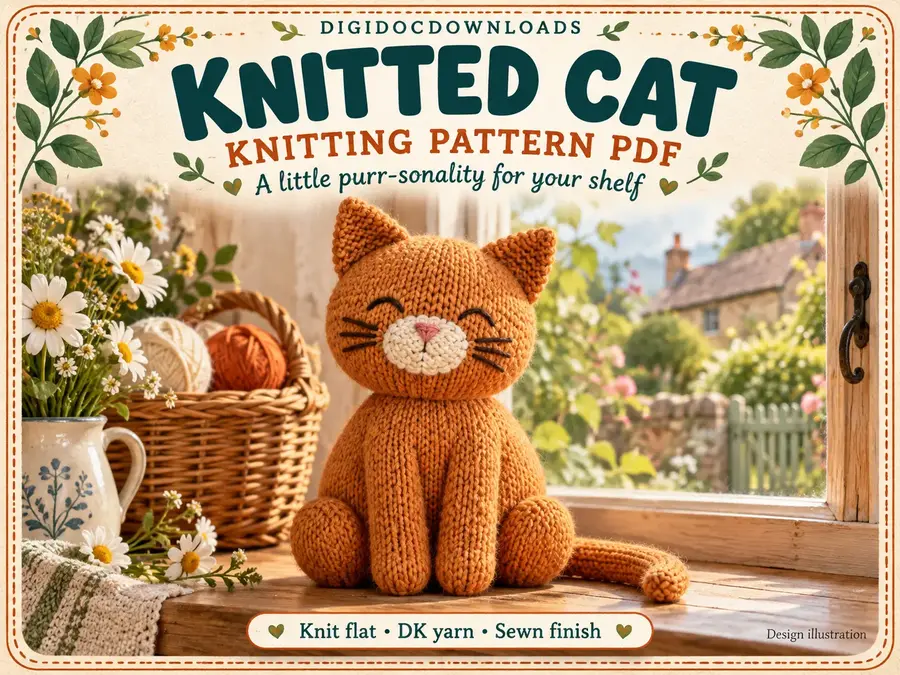
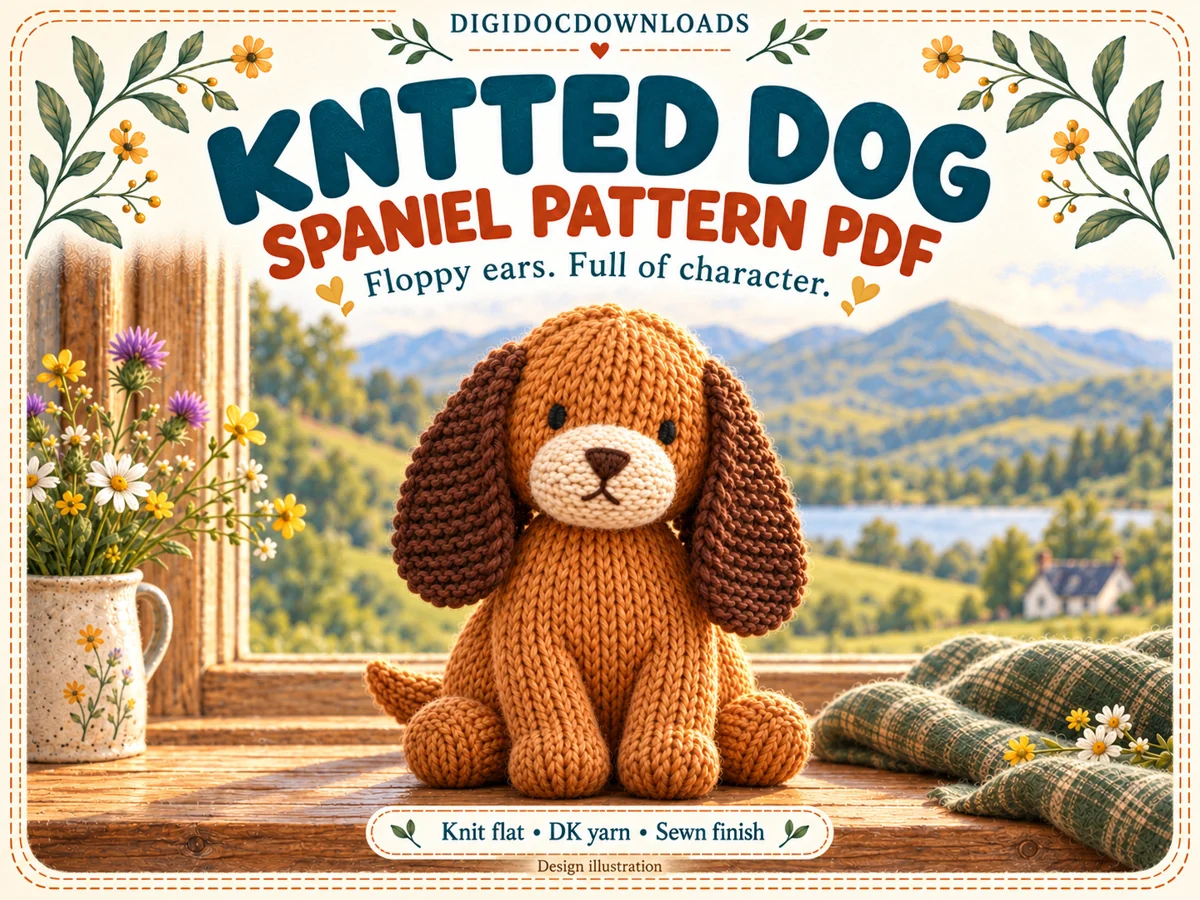
The Cosy Whiskers knitted cat and floppy-eared knitted dog each use ten flat-knitted DK pieces. Both combine stocking stitch with garter-stitch details and finish with embroidered features. The cat adds a softly curling tail; the spaniel gives paired ears and four paws plenty of influence over the final pose. Ten pieces sounds precise. In practice, it means ten small opportunities to label things before they begin impersonating one another.
Choose the silhouette you want to assemble
The knitted river otter pattern has eleven flat-knitted pieces and an intended sitting height of about 18–20 cm. Its pale belly and muzzle, little ears, arms, feet and long tapered tail create a longer outline than the cat or dog. It is a sensible choice when shaping and a clearly placed contrast panel appeal more than a large number of tiny decorative parts.
The knitted Highland cow pattern has thirteen pieces, making it the most assembly-led of this group. The broad oatmeal muzzle, soft horns, four chocolate-tipped feet and forelock all contribute to the recognisable shape. A confident beginner comfortable with simple increases, decreases and small-part sewing can take it one piece at a time; someone seeking the fewest attachments should start elsewhere.
Flat knitting still asks for three-dimensional thinking
All five patterns are worked flat on straight needles and sewn into shape. Flat construction keeps the knitting itself familiar, but the final character depends on matching paired pieces, placing joins and adding filling gradually. Before permanent assembly, lay every piece on a plain towel in its approximate position. Compare pairs without stretching, mark useful edges with removable thread and pin the major attachments before sewing.
That method also makes differences easier to correct. One ear may need moving by half a row; one foot may need a little less filling; a tail may sit more naturally when viewed from the side. Small handmade variations are part of the result. The aim is a stable, deliberate pose rather than a creature inspected by a committee carrying callipers.
Match the project to the skill you want next
- Choose the mini sheep for smaller 4-ply pieces, garter texture and compact finishing.
- Choose the cat for paired paws, flat ears, a contrast muzzle and a curled tail.
- Choose the dog for matched floppy ears, paired legs and careful seated balance.
- Choose the otter for a longer tapered tail, contrast belly and eleven-piece shaping.
- Choose the Highland cow for thirteen-piece assembly, soft horns and forelock finishing.
None of those routes is universally easiest. A knitter who enjoys sewing may prefer more pieces; another may want fewer attachments and a little more work in each piece. The dedicated knitted animal pattern collection keeps the materials, dimensions, owned previews and exact product links together for a side-by-side comparison.
A little history makes flat knitting less ordinary
Working in rows on two needles feels like the obvious form of knitting now, yet the craft has a much wider history. The V&A's history of hand-knitting explains that both flat knitting and knitting in the round have long traditions; the earliest double-needle example in its collection is a blue-and-white sock from North Africa, dated to about 1100–1300. A small animal made from flat pieces is therefore using a straightforward modern pattern format within a technique that has travelled through many centuries and places.
Make a five-minute pre-cast-on check
- Confirm the yarn weight, needle starting point and stated gauge.
- Count the pieces and identify which ones form pairs.
- Check the intended finished size and decorative-use notes.
- Read the assembly section before knitting the first piece.
- Choose one skill to practise: gauge, paired pieces, shaping, seaming or embroidery.
- Keep the yarn label and set aside matching seaming yarn before beginning.
The best first knitted animal is the one whose construction still sounds appealing after the face has stopped doing the persuading. Compare the work, choose the skill you want to practise and leave enough time for the finishing. Character tends to arrive during assembly, often at the exact moment one ear is pinned slightly higher than the other.
Explore Knitted Highland Cow Pattern
More to read, make and discover
A few useful, interesting and checked routes into the subject.
- Yarn referenceCraft Yarn Council: Standard Yarn Weight System
A standard framework for comparing yarn thicknesses, while retaining the pattern's stated gauge as the practical target.
- Pattern basicsCraft Yarn Council: Reading instructions and gauge
Explains why a gauge swatch should be made with the yarn, needles and stitch used by the project.
- Knitting historyV&A: The history of hand-knitting
Museum context for flat knitting, knitting in the round and the earliest double-needle knitting in the V&A collection.