In this guide
The short answer: measure the pot, not the box
Size a tea cosy around a cold, empty teapot. Measure the body and height, the knob that must pass through the neck, and the separate spout and handle attachment ranges. Keep every opening clear when checking the fit. Remove the cosy before lifting, carrying, pouring, refilling or touching the lid; a fitting check is not permission to handle hot tea with the cosy on. Cup capacity alone cannot describe all those shapes.
Record the body, knob and both openings
Use a flexible tape on the cold, empty pot. Record the circumference around the widest body point and the height from the base to the highest point, including the lid knob. Follow the pattern worksheet for ease and seam allowances: a flat panel with seed-stitch fabric and garter borders cannot be sized by halving the circumference and using one stitch gauge.
Measure the loop that will pass over the lid knob. For the spout, record both its lower and upper attachment heights from the base; record a separate pair for the handle. Do not assume that the fittings start or finish at the same heights. Draw a side view and label each measurement so that circumference, height and knob clearance stay distinct.
Choose the size by shape as well as litres
Two pots holding the same amount can have very different silhouettes: one may be broad and low, another narrow and tall. The V&A's tour of teapot design shows how widely bodies, handles and spouts have varied, from early Yixing forms to pear-shaped silver pots and playful modern designs. That history explains a practical knitting truth: there is no universal ‘four-cup’ outline.
Compare all those measurements with the pattern rather than choosing only by cup count. The Steep Dreams top edges remain open to form the neck; the knob must pass through that opening without forcing the fabric. Check the crown height and both side gaps as well as the body. A wide, low pot or unusual fitting positions may need a different construction.
Swatch before doing the arithmetic
A gauge swatch is the bridge between a pattern's stitch count and your actual yarn, needles and knitting. The Craft Yarn Council's instructions for making and checking a gauge swatch explain how the pattern yarn, needles and stitch should be compared over a measured area. Knit a swatch larger than the section you plan to measure, let it relax, then count in the centre rather than along the lively edges.
Swatch and wash both seed stitch and garter stitch, then record their stitch and row gauges separately. Garter hems, borders and crown rows contribute differently from the seed-stitch body. Use the complete custom-fit worksheet, including seam allowances and rounding rules, instead of applying a single width-times-gauge calculation to the whole panel. Its design targets are starting values; your washed fabric controls the fit.
Check the openings before the crown
Before knitting, check the worksheet limits for the body, open neck, crown and both side-opening ranges. Reject a shape that does not pass those checks; do not clamp an impossible row count to zero. During assembly, fit only on the cold, empty pot and check that the cosy comes off freely and that the spout, handle and knob remain clear. Remove the cosy before lifting, pouring, refilling or touching the lid. Keep it away from hobs, flames, ovens, microwaves and electric kettles; it is not a potholder.
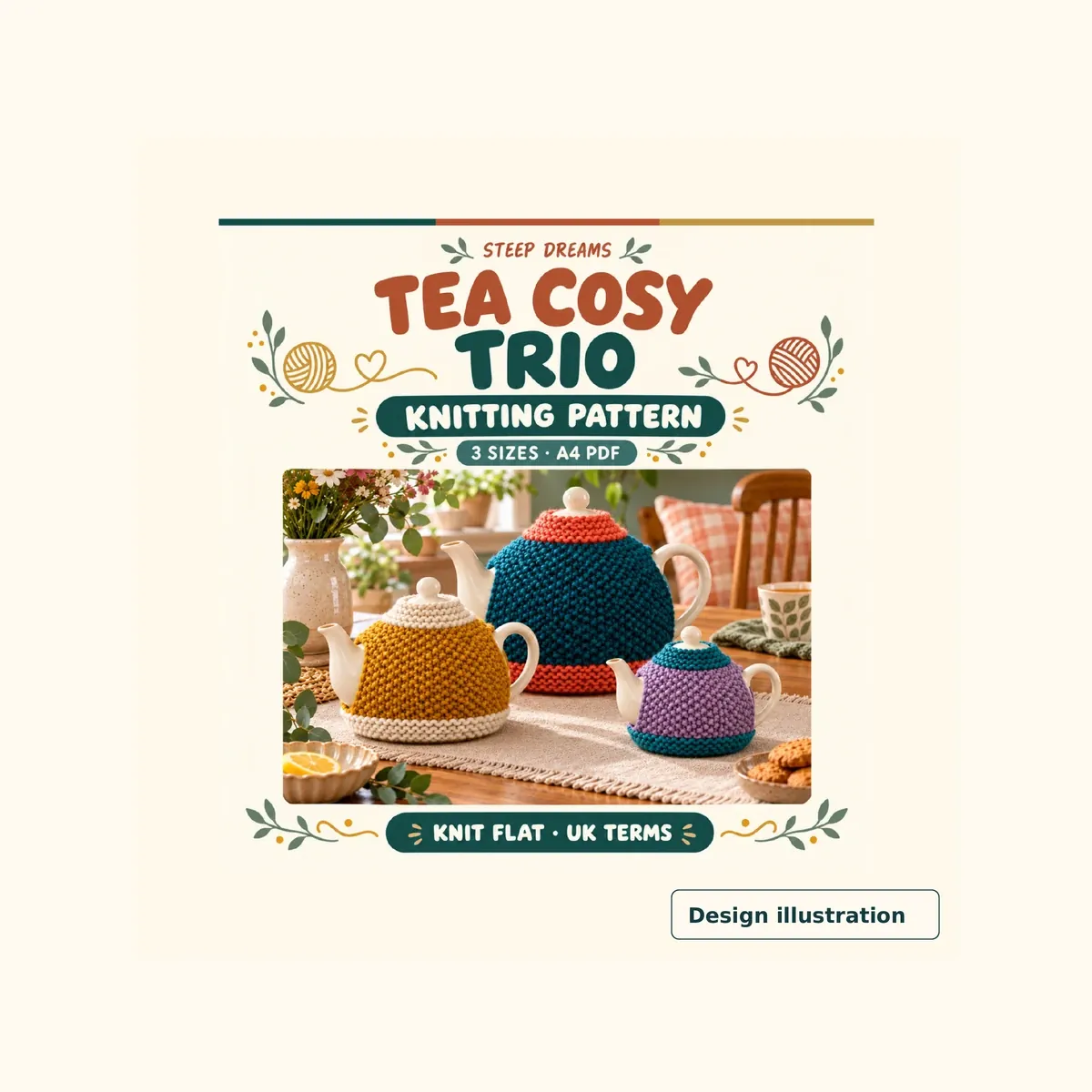
The Steep Dreams tea cosy knitting pattern provides Small, Medium and Large instructions plus a checked custom-fit worksheet. It uses aran or worsted yarn, a starting needle size of 5 mm and UK knitting terms. The eight-page PDF explains the open neck, side seams, separate spout and handle openings, both washed fabric gauges and the feasibility checks. Use every required measurement before casting on; a pot between nominal sizes is not automatically suitable for this construction.
A small piece of knitting history
Tea cosies have long been practical canvases for colour and texture. The V&A's collection of 1940s knitting patterns includes ‘A happy thought’, a tea cosy topped with knitted chrysanthemums and worked to a stated tension of five stitches per inch. The decoration is exuberant; the gauge note is sober. Both belong in the same object, which is perhaps why tea cosies remain such agreeable projects.
Keep a fitting note for the next pot
Record the body, height, knob and both attachment ranges, your yarn and needle size, both washed fabric gauges and the complete chosen counts. Add a note after the cold fitting check and blocking. Treat calculated dimensions and yarn buying amounts as estimates rather than measured outcomes, and repeat the checks when the next pot has a different body, handle or lid.
Explore Tea Cosy Knitting Pattern – Steep Dreams
More to read, make and discover
A few useful, interesting and checked routes into the subject.
- Practical historyV&A: Teapot design through time
Teapots developed in many forms across centuries and cultures, so shape matters as much as nominal capacity.
- Knitting referenceV&A: 1940s knitting patterns
The collection includes a documented 1940s tea-cosy pattern worked to a stated tension, a useful historical example of gauge being part of practical fit.
- Knitting referenceCraft Yarn Council: Reading instructions and gauge basics
The Council explains how to make a gauge swatch with the pattern yarn, needles and stitch, then compare the measured result with the stated gauge.