In this story
A cat can be recognised before anyone has embroidered a whisker. Two pointed ears, a compact body and a tail tucked nearby are often enough. That is especially useful in knitting, where every extra detail brings another piece to shape, sew or persuade into position. The interesting question is how little a design needs before the animal becomes clear.
Start with the outline
Try a small drawing without eyes, stripes or a nose. Give it upright ears, a rounded seated body and a tail that belongs to the silhouette rather than floating beside it. If it reads as a cat, the large shapes are doing their job. If it reads as a bear, adding elaborate whiskers may simply produce a very whiskered bear.
This is an observation exercise, not a rule that every knitted animal must look the same. A long body suggests a different posture from a round one; tall ears change the expression before the face is added. Looking at those choices separately makes it easier to understand why two modest designs can have quite different characters.
A small museum detour
The Metropolitan Museum's blue faience cat figurine, dated about 1981–1802 BC, measures only 6.2 cm long. Faience is a glazed ceramic material; this example has black spots painted over its blue surface. It is an ancient Egyptian object with its own historical setting, not an early knitting design. What a modern maker can borrow is a question: which details make a small animal readable at a glance?
The British Museum's seated cat amulet offers another view: erect ears and a tail wrapped around the body. The museum connects the object with the goddess Bastet. There is no need to copy its religious meaning or treat every ancient cat as the same symbol. Compare the outlines, then return to the collection records for what each object actually is.
Let the pose carry some personality
A seated cat looks settled because its parts form a compact arrangement. A visible curl of tail can reinforce that shape; paws brought forward give the body a base. Those are design choices rather than claims about what a real cat is feeling. A handmade face can suggest sleepiness without becoming an illustration of feline behaviour.
Before sewing, arrange the knitted pieces loosely and look from the front and side. Check their positions against the pattern's diagrams. Small shifts can change the silhouette, especially where the ears meet the head. Photographing the arrangement gives you a reference when pieces inevitably migrate between the table and your lap.
Colour can support the shape
A pale muzzle against a warmer body draws attention to the face. A tail in the main colour keeps the outline quieter. Neither choice requires a realistic coat pattern: a cream cat, a grey cat and a ginger cat can share the same construction while feeling distinct. The useful test is whether the important details remain visible.
Bring the idea back to the needles
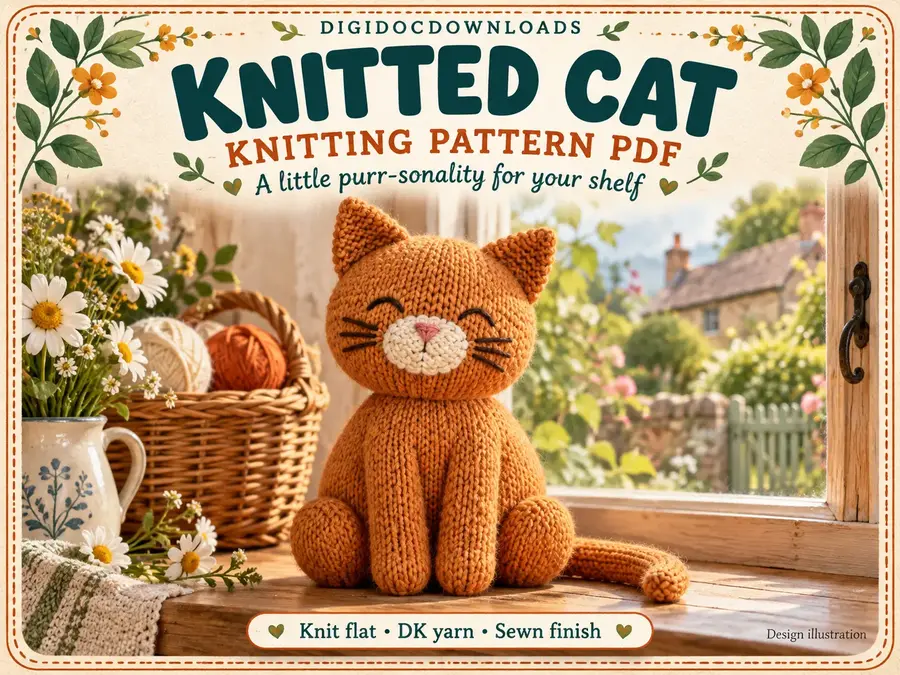
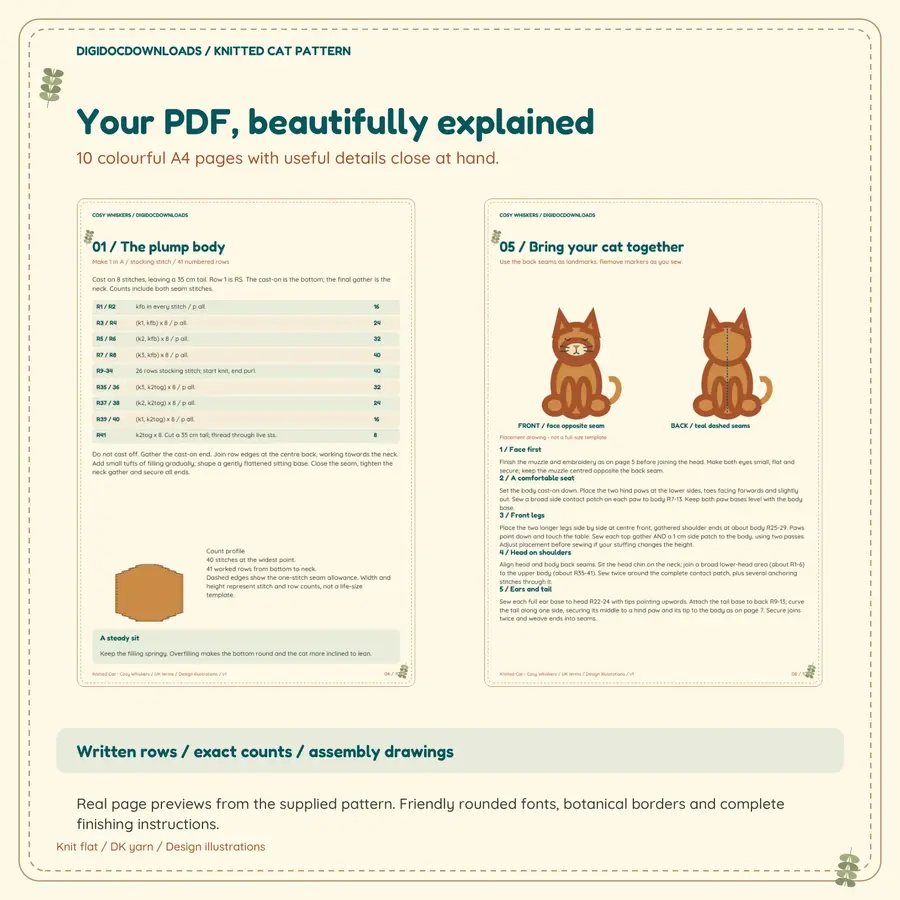
Our Knitted Cat Pattern – Cosy Whiskers uses a ginger-and-cream design with pointed ears, an embroidered face and a curled tail. Its ten A4 pages include written rows, shaping and assembly drawings, a piece checklist and colour ideas. The pieces are knitted flat and joined; the illustration shows the intended design, while yarn, gauge, stuffing and finishing affect the result. It is a decorative shelf companion for adults, so keep its small parts and filling away from young children and pets.
The V&A’s history of knitting patterns in Britain puts modern written instructions in a longer craft story. Its examples show changing stitch language, illustrations and pattern leaflets. Clear drawings are especially useful when the arrangement of several little pieces matters as much as the knitting itself.
Know when the face is finished
Embroider the main features, then pause before adding more. Look at the piece from the distance at which it will sit on a shelf. If the face is clear, another stripe or flourish may add work without adding character. The point is not to make the fewest possible stitches; it is to give each visible detail a reason to be there.
For a practical next step, use our guide to choosing yarn colours for knitted animals. It turns the same idea into a small palette you can check before casting on.
Explore Knitted Cat Pattern – Cosy Whiskers
More to read, make and discover
A few useful, interesting and checked routes into the subject.
- Further readingThe Met: Cat figurine
Primary collection record: blue faience with black spots, c.1981–1802 BC, 6.2 cm long.
- Further readingBritish Museum: seated cat amulet
Indexed collection description identifies erect ears, wrapped tail and association with Bastet; direct page blocked during source check.
- Pattern historyV&A: a short history of knitting patterns in Britain
Context for changing written pattern language and illustrated instructions.