Measure the pot, not the label
Choose the exact decorative outer pot you want to dress and measure that object directly. A size name printed underneath it may describe the opening, the inner planter or a manufacturer’s range rather than the outside surface where the knitted sleeve will sit. Empty or steady the pot, place it on a flat surface and keep it nearby while you plan. The cosy is a decorative sleeve for the outer pot; it is not a liner for soil and it should be removed before watering.
Take the circumference where the cosy will sit
Wrap a flexible tape around the outside of the pot at the height where you want the main body of the cosy. Keep the tape level, let it touch the surface without pulling it tight and record the result in centimetres. If you do not have a flexible tape, wrap a non-stretching length of string around the pot, mark where the ends meet and measure that length against a ruler. Repeat the measurement once before choosing a size.
Check more than one height on a tapered pot
Many plant pots are wider at the top than at the base. Measure around the pot near the lower edge of the planned sleeve, through its middle and near the upper edge. If those figures differ noticeably, a simple rectangular cosy will sit differently from top to bottom. Moss & Meadow is knitted flat as one rectangle and joined with a side seam, so it suits a pot whose sides are reasonably straight. Choose another pot if the taper would make the sleeve bunch or gape.
Decide the finished height separately
Measure vertically from the point where you want the lower edge to begin to the point where the upper edge should finish. Leave the rim, drainage saucer and any shape change clear if covering them would stop the cosy sitting flat. Record circumference and height as two separate figures rather than writing one general pot size. That small habit prevents the width measurement from being mistaken for the vertical one when you return to the project.
Compare your circumference with the written sizes
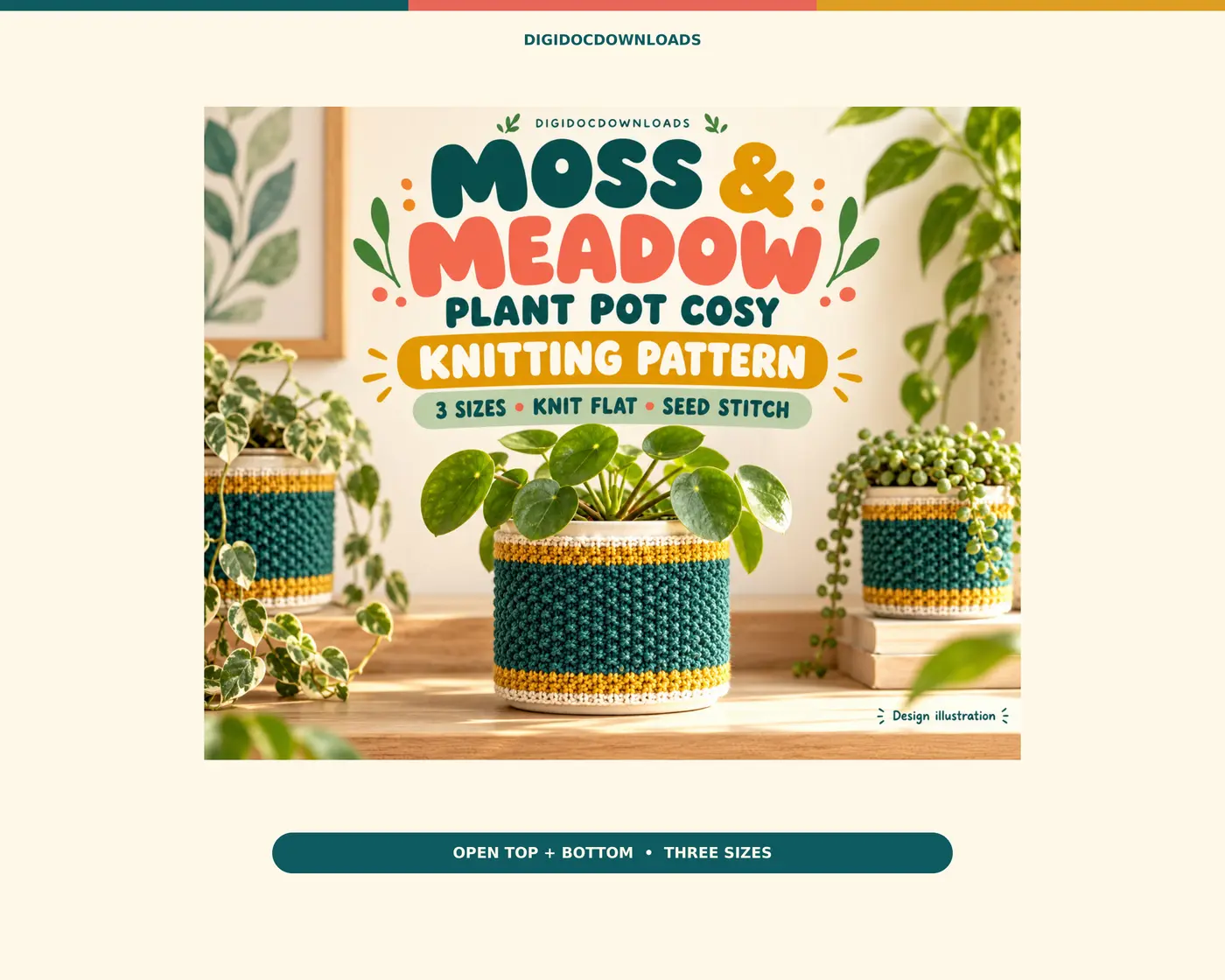
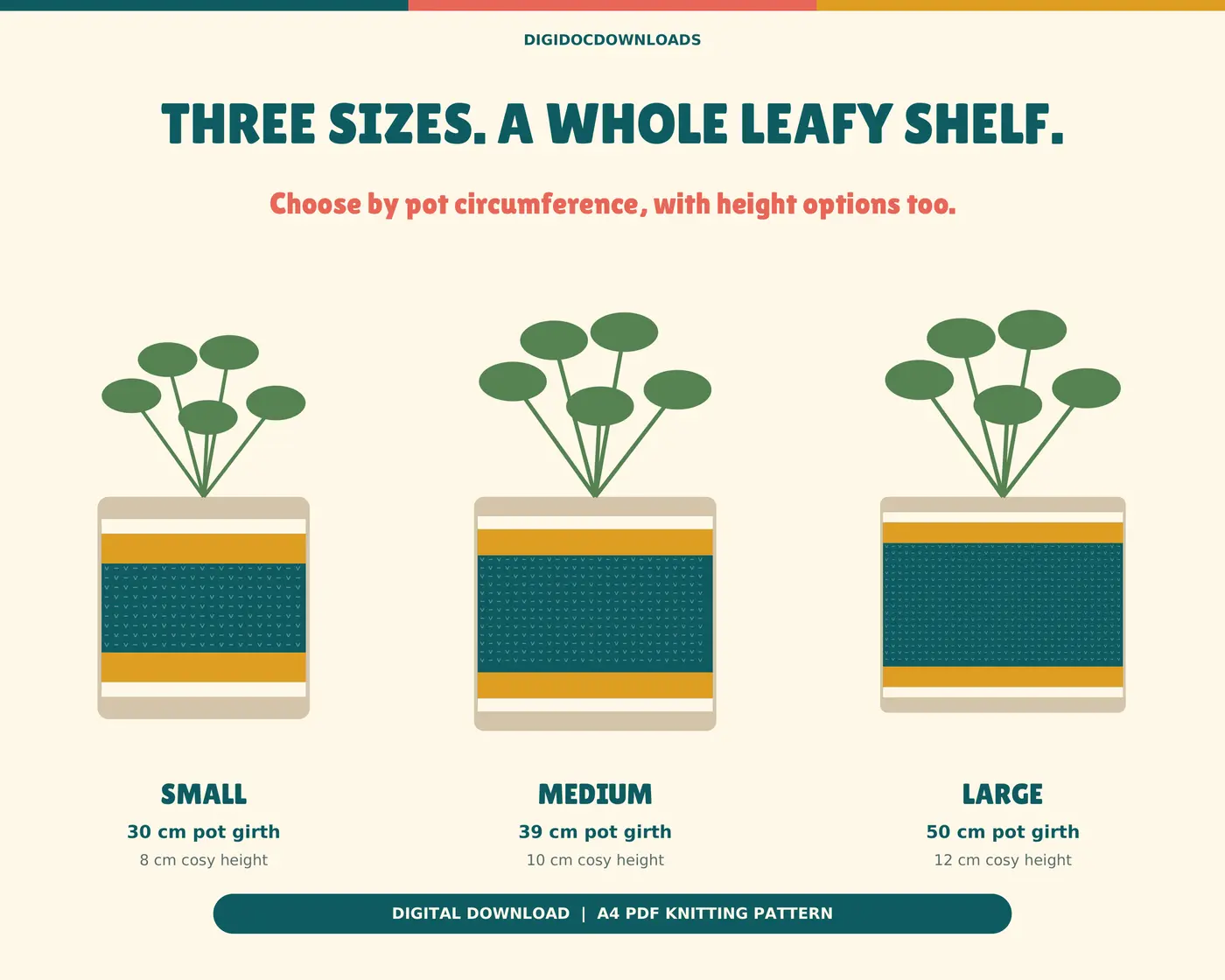
Moss & Meadow includes complete written rows for three plant-pot circumferences of about 30, 39 and 50 cm, plus a measuring guide and a worked custom-size example. Compare the direct measurement with those pattern figures rather than choosing small, medium or large by eye. Read the complete size guidance before casting on, including how gauge and finishing affect the planned rectangle. If the pot sits between the written options, use the custom-size method instead of silently promoting it to the nearest convenient size.
Make the gauge check part of measuring
The pattern uses smooth Aran cotton and suggests starting with 5 mm needles, but the useful number is the gauge actually produced. The Craft Yarn Council’s yarn FAQ explains why a shared weight category does not guarantee an identical result, while the Knitting Guild Association’s gauge guide goes further into swatching and measurement. Work the pattern’s check before calculating the full width, then note the yarn, needle size and measured gauge.
Measure the outside of one real pot, then let the pattern and your gauge turn that figure into a fit.
Use a quick paper check before knitting
Cut or fold a strip of ordinary paper to the planned finished height and wrap it loosely around the pot. This does not predict knitted stretch, but it can reveal practical problems: a hidden bulge, a handle, a sharply changing taper or a saucer that catches the lower edge. Mark where the side seam would sit and turn that point towards the back. If the paper cannot lie sensibly on the surface, reconsider the height or choose a straighter pot before using yarn.
Keep the construction in mind
Moss & Meadow is worked flat in seed stitch, with contrasting bands or a single-colour option, then the short edges are joined in one side seam. The top and bottom remain open. Read the seam guidance before beginning because the join completes the circumference you have planned. When the knitting is finished, check the rectangle against the pot before completing the seam, following the pattern’s own finishing steps rather than forcing a tight fit.
Make a reusable pot note
- Outside circumference at the lower, middle and upper points of the planned sleeve.
- Chosen finished height, with the rim and saucer left clear.
- Yarn, needle size and measured gauge from the pattern check.
- Written size or custom-size route used from the Moss & Meadow guide.
Keep that note with the six-page pattern. If another cosy is planned, measure the new pot rather than assuming it matches the first one. The useful sequence stays the same: check the shape, measure circumference and height, verify gauge, then choose the written or custom route. Remove the finished cosy before watering and keep drainage clear; the RHS houseplant guide explains why containers need drainage and why watering needs change with the plant and room. The knitting is decoration, not irrigation equipment.
More to read, make and discover
A few useful, interesting and checked routes into the subject.
- Gauge basicsCraft Yarn Council: yarn and gauge questions
Why yarns in the same weight category are not automatically interchangeable and why a gauge swatch matters.
- Accurate measuringThe Knitting Guild Association: measuring gauge accurately
Specialist guidance on swatching, measuring and using stitch and row gauge with greater confidence.
- Plant careRHS: a practical guide to growing houseplants
General houseplant care, including drainage, watering and the different needs of plants in warm or cool rooms.