In this guide
Choose three moments, not twelve monthly reports
Start with a scrap-paper list: something that changed, something ordinary you enjoyed, and something you are looking forward to. These might be a move, regular Sunday walks and a garden project for spring. Choose details that someone outside your household can understand without a cast list. A month-by-month account often gives January's minor news the same space as the event that mattered most.
Use one concrete detail for each subject. Instead of “We had a lovely summer”, explain that you found a favourite beach or finally learned to grow runner beans. Achievements can certainly belong in the letter, but they need not arrive as a league table. Explain the experience behind them: what was difficult, surprising or worth remembering.
Give the page a simple shape
A workable plan is a greeting, a two-sentence opening, three short news paragraphs and a closing. For a typed draft, roughly 300–400 words is a useful starting point, not a rule; handwriting may need considerably fewer. The actual space depends on your writing, type size and the border. Leave room between paragraphs rather than shrinking everything until the page resembles a contract.
Write the year near the top, then use names the recipient recognises. If several people contributed, give each a fair share of the page without demanding identical word counts. One person may have a bigger piece of news; another may prefer not to appear. Agree what is comfortable to include before making copies.
An original Christmas letter example
This fictional example shows the structure rather than a message to copy unchanged. Replace its details with things that are true for your household and recipient.
Dear Alex and Morgan,
As December approaches, we have been thinking about the people we would like to catch up with properly. Here is a small update from us, with warm wishes for your Christmas and the year ahead.
Our biggest change was moving in March. Most of the boxes have gone, though one still appears to contain every cable we have ever owned. The kitchen now has a little table by the window, which has become our usual spot for breakfast and long phone calls.
Over the summer we started taking a Sunday walk along the river. We have found a bench beside the old bridge and a café that does excellent cheese scones. Nothing particularly dramatic happens on these outings; that has become part of their appeal.
Sam has been learning to mend clothes, starting with a torn pocket and working up to a rather ambitious jacket repair. We are also planning a small herb bed for spring. Advice from anyone who can keep parsley alive would be very welcome.
We still talk about your visit in May and the evening we spent looking through old photographs. We hope there will be time for another visit next year. Until then, wishing you a peaceful Christmas and a good beginning to January.
With love, Jamie and Sam
Add one line that belongs to this recipient
A shared family update can save time, especially when several friends have asked for news. Keep a little space for a handwritten sentence addressed to each person: a remembered visit, a thank-you or a question about something they mentioned. The example's photograph evening is the personal line; it would change for a different household.
Printed seasonal greetings have long left room for this human addition. The V&A's account of Henry Cole's Christmas card explains that unanswered correspondence prompted his 1843 idea. A thousand printed copies could be personalised by hand. The useful distinction is not printed versus personal, but whether the finished message acknowledges its recipient. Our Christmas-card history article explores that story further.
Leave private news out of the shared version
Ask before including someone else's health, relationship, school or work news. A letter that is appropriate for a close friend may not suit a wider mailing list. Remove addresses, travel plans or other details that do not need to circulate. A separate private note is often better than squeezing a sensitive explanation into a general update.
A difficult year does not need to be disguised as a cheerful one. A brief, honest sentence can acknowledge change without sharing more than you wish: “It has been a quieter year while we adjust to a few changes.” Nor must every recipient celebrate Christmas; choose a seasonal or new-year greeting that fits the person.
Let the stationery frame the words
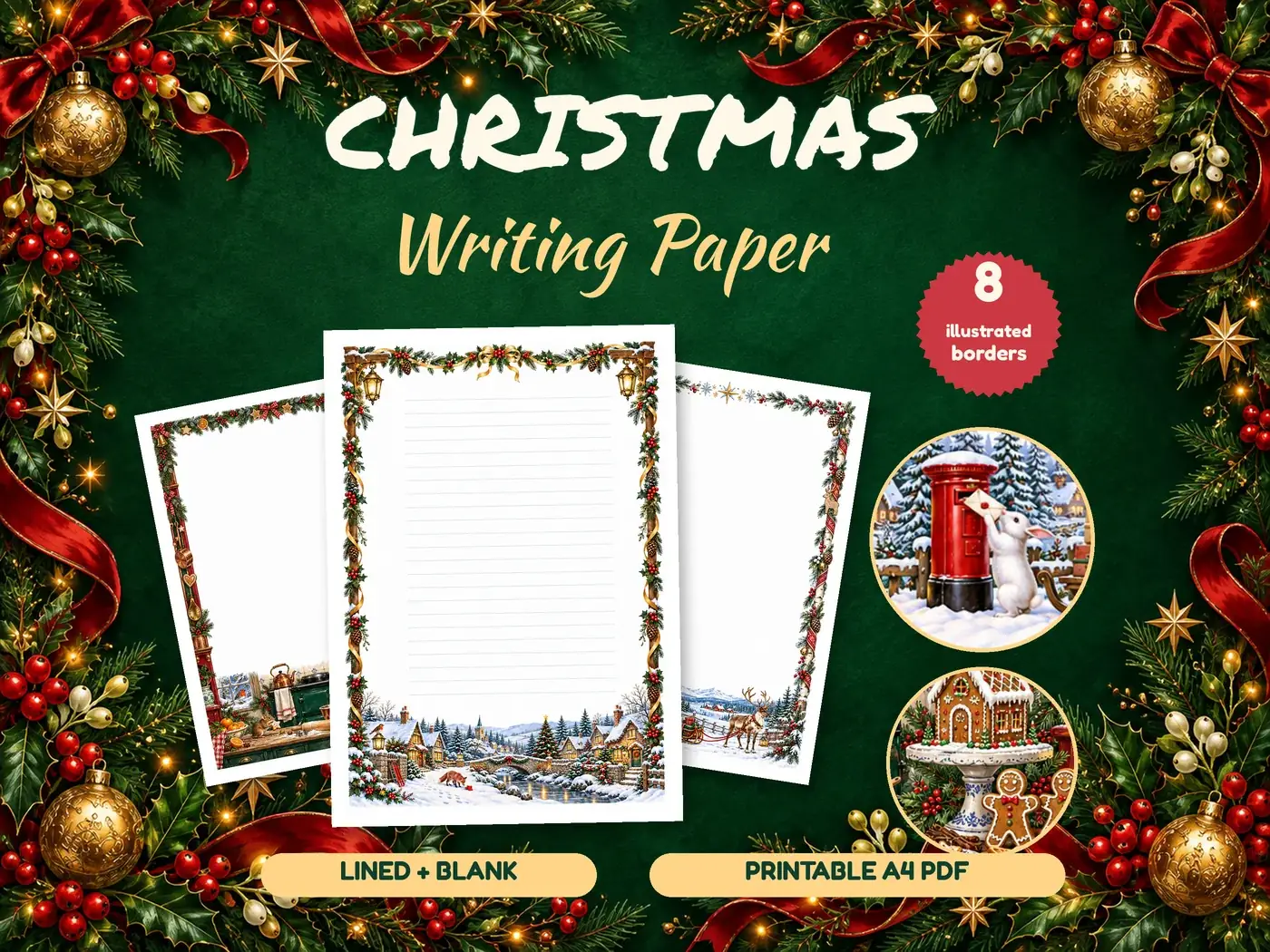
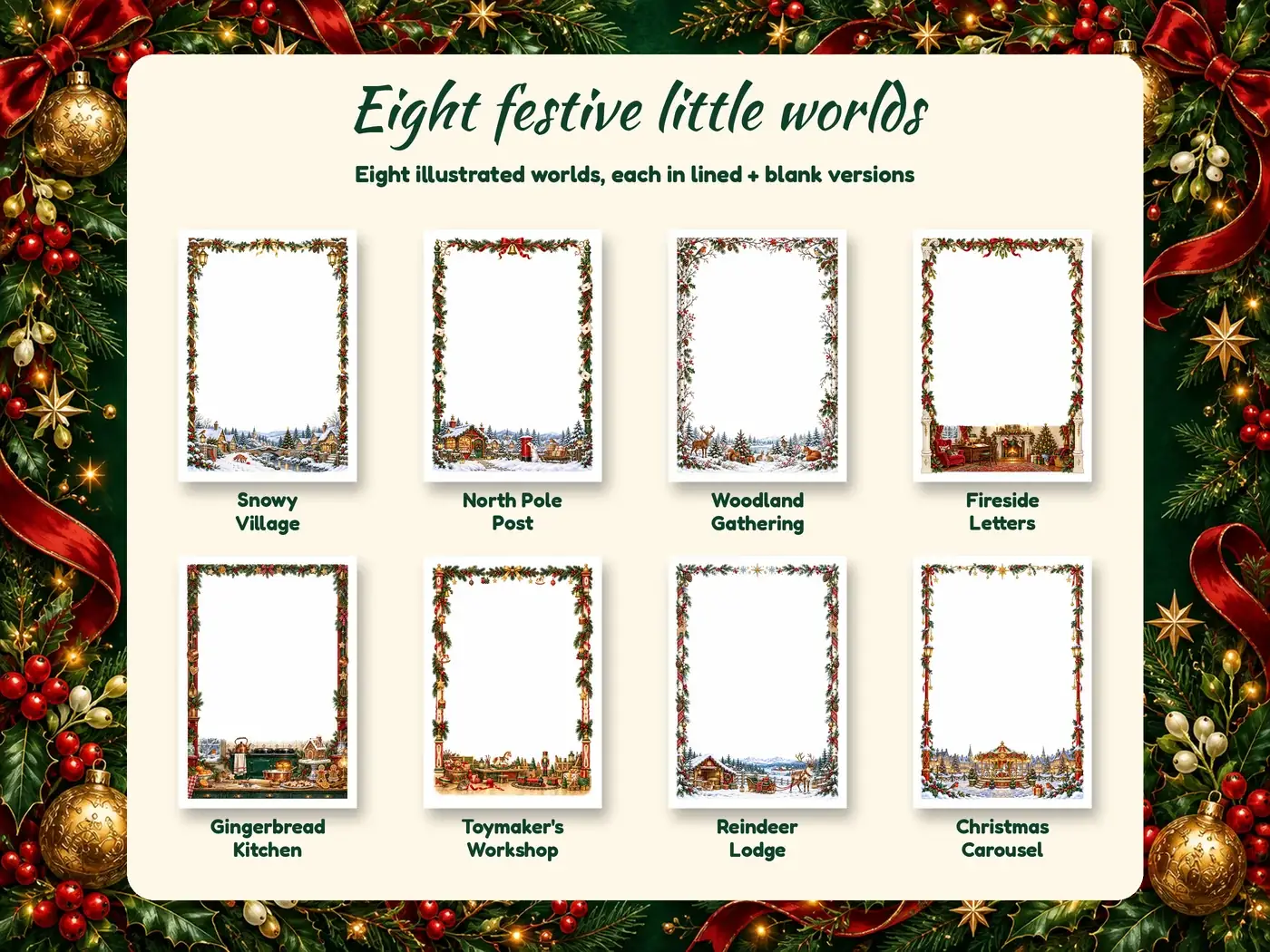
Plain paper works perfectly well. For an illustrated page, Christmas Writing Paper has eight borders in lined and blank versions: sixteen stationery pages within an 18-page A4 PDF, including the cover and printing guide. Lined pages support handwriting; blank pages leave the arrangement to you. The collection supplies the stationery, not a prewritten family update.
Choose one design, print a single test page at Actual Size and check how much clear writing space remains. Draft on ordinary paper first if you want to judge the length. These are ready-to-print pages, so do not assume the PDF contains editable text boxes. Our page-selection guide explains how to print just the sheet you want.
Read the finished letter aloud once. Remove a repeated detail, clarify an unfamiliar name, and check that the final personal sentence is meant for the person whose envelope is beside it. Then sign it. One clear page is enough.
Explore Christmas Writing Paper
More to read, make and discover
A few useful, interesting and checked routes into the subject.
- Correspondence historyV&A: the first Christmas card
Cole's unanswered correspondence inspired a printed greeting; 1,000 copies allowed handwritten personalisation in1843.