1. Decide what the contest is judging
Set three clear categories before people begin: overall favourite, creativity and humour. Explain whether pumpkins may be real, artificial or drawn, and whether making happens at home or during the event. Comparable rules matter more than identical results; a painted pumpkin should not quietly compete under rules written for elaborate carving.
Use a no-carve format when that suits the group. Paint, paper features and suitable decorative materials offer plenty of scope. Adults should choose age-appropriate supplies and avoid small loose pieces around young children. Participation can include naming, designing or displaying an entry rather than making every part.
2. Give every entry one stable number
Assign the number when an entry arrives and record the maker privately. Put the number beside the pumpkin where voters can see it, then keep it unchanged throughout voting. If an entry moves to another table, its identity should move with it.
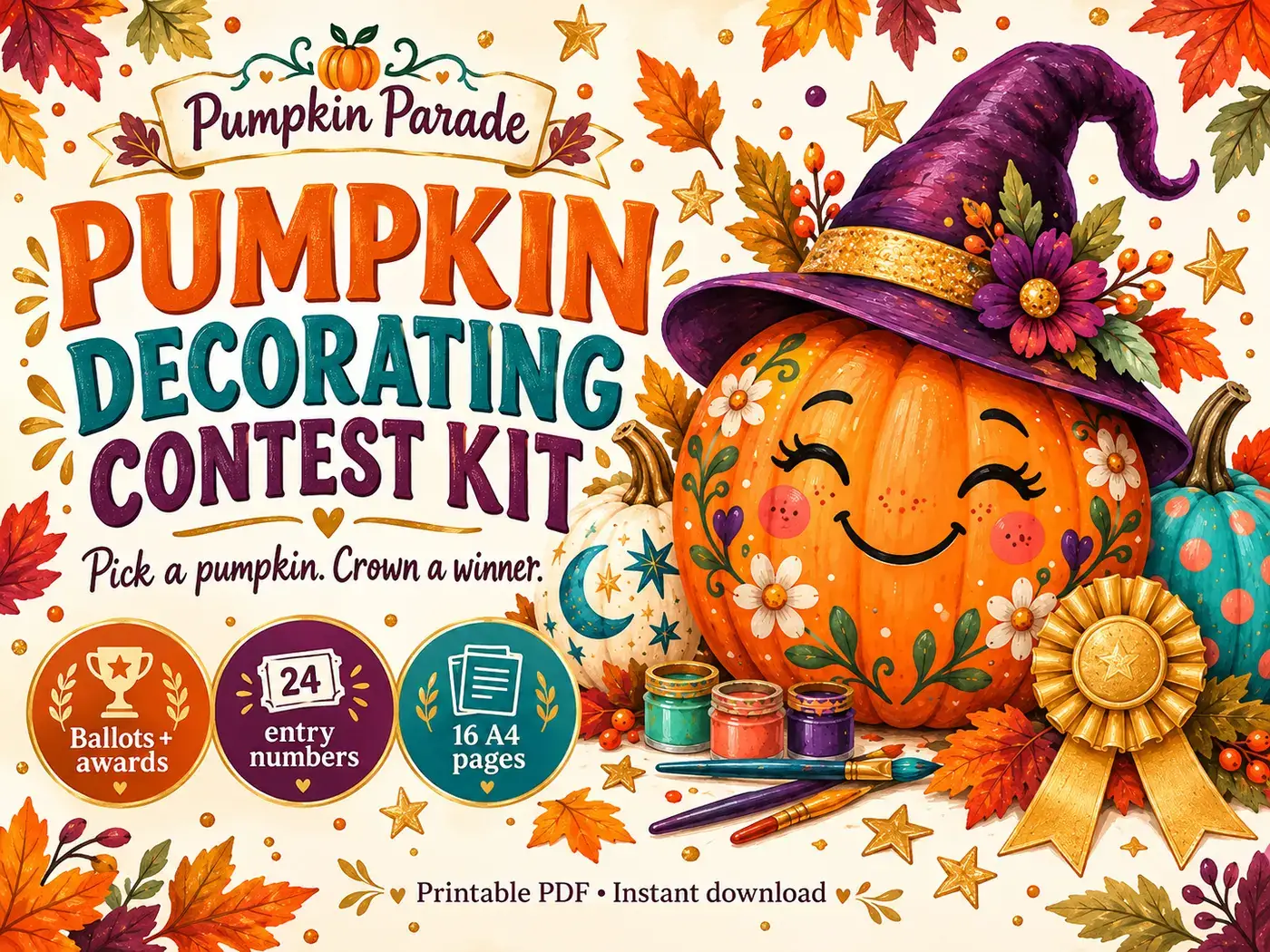
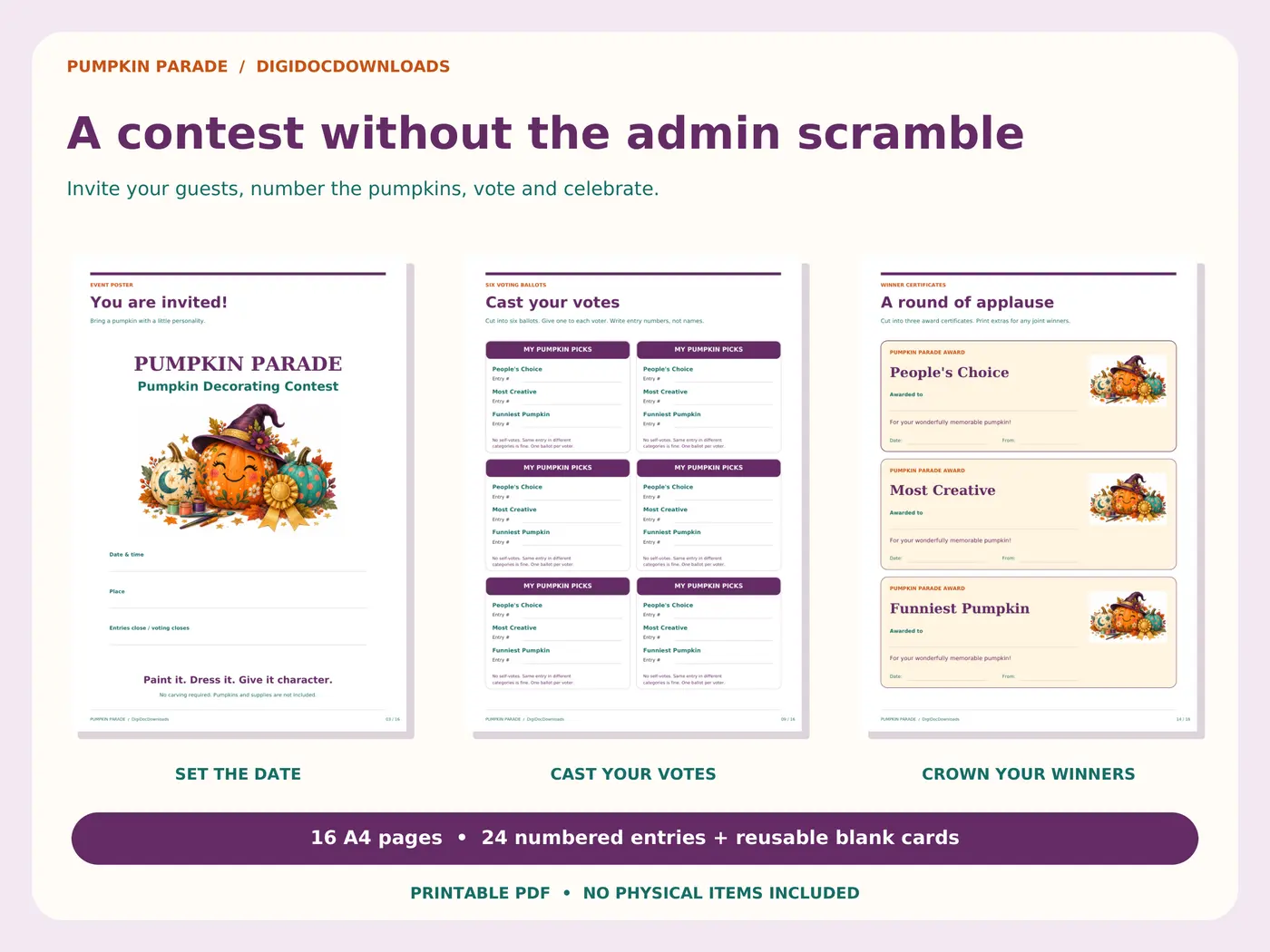
Our Pumpkin Decorating Contest includes cards numbered 01–24, a private registration sheet, extra blank entry cards and tally sheets. Use those supplied records together instead of keeping a second improvised list. Write a simple title beside the number if it helps distinguish similar designs.
3. Calculate ballots from voters, not pumpkins
Print one ballot for each person voting, with a few clearly separated spares. The pack places six ballots on a page: eighteen expected voters need three pages; twenty voters need four pages, leaving four unused ballots. Count and reserve the unused pieces so they are not mistaken for additional votes.
The kit’s three awards are People’s Choice, Most Creative and Funniest Pumpkin. Explain the ballot fields before distributing them, using the supplied host rules. A separate “Vote Here” sign can make the collection point obvious without requiring someone to repeat the instructions all afternoon.
4. Keep the tally visible to the organisers
Close voting at the announced time. Have one person read each valid ballot and another mark the relevant tally, then compare category totals with the number of accepted ballots. If a field is missing or unclear, follow the stated rules rather than guessing the voter’s intention.
Keep voting optional and provide another way to engage, such as discussing a favourite design. Scope’s accessible-agenda guidance offers useful questions about different participation needs. Read ballot text aloud when requested, while allowing the voter to make the choice privately.
5. Let a tie remain a tie
Record equal highest totals as shared awards, following the pack’s winner record and certificates. Do not introduce an unannounced final judge simply because one winner would be easier to photograph. If a tie-break is wanted, its method must be agreed before voting begins.
For a short historical introduction, show the National Museum of Ireland’s ghost turnip. Its documented lantern makes a lively comparison with modern decorated pumpkins. The museum’s Halloween customs article adds cultural context; our turnip-lantern story explains the distinction between the original vegetable and its museum cast.
6. Finish with a result people can follow
Announce the category, winning number and any shared award. Keep participation certificates available without suggesting that everyone had to compete. Photograph entries only with appropriate permission, and avoid publishing the private registration sheet with people’s names.
Before packing away, note one improvement for next time: clearer numbers, more space between entries or a longer viewing period. The useful outcome is a cheerful display and an understandable vote. The pumpkin’s expression may be gloriously unreasonable; the counting should be straightforward.
Explore Pumpkin Decorating Contest
More to read, make and discover
A few useful, interesting and checked routes into the subject.
- Further readingScope: planning an accessible agenda
Useful questions about different ways to take part in an activity.
- Further readingNational Museum of Ireland: ghost turnip
A museum object with a recorded place, collector and history.
- Further readingNational Museum of Ireland: Halloween traditions
Lanterns, food and other Irish Halloween customs.