In this guide
Choose a short route before printing
Decide who is taking part, where the treasure will wait and which rooms are available. For a first family hunt, a handful of distinct locations is easier to manage than a grand tour of every cupboard. Choose reachable places in rooms an adult can supervise; rule out climbing, hot appliances, medicines, breakables and private drawers.
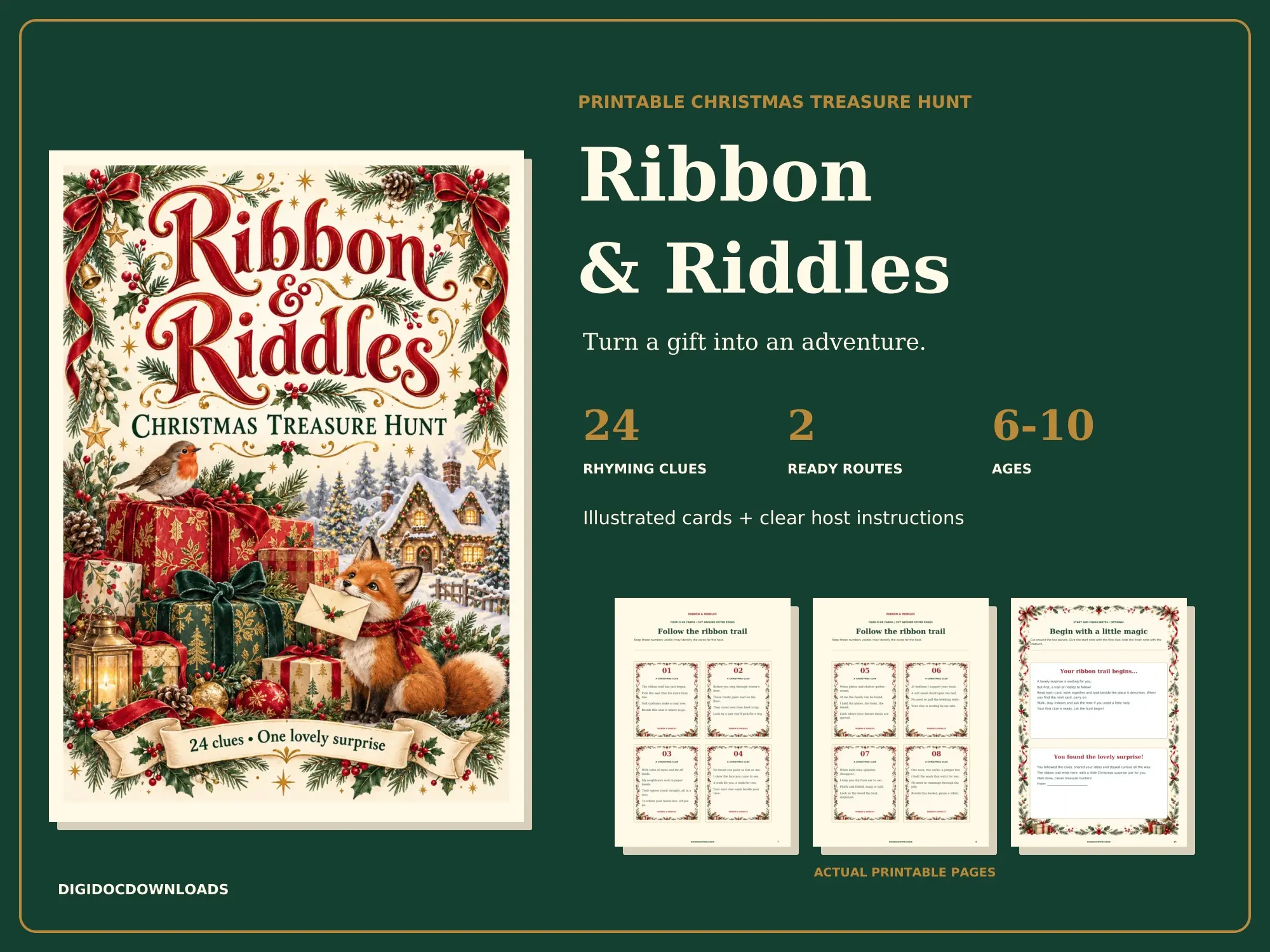
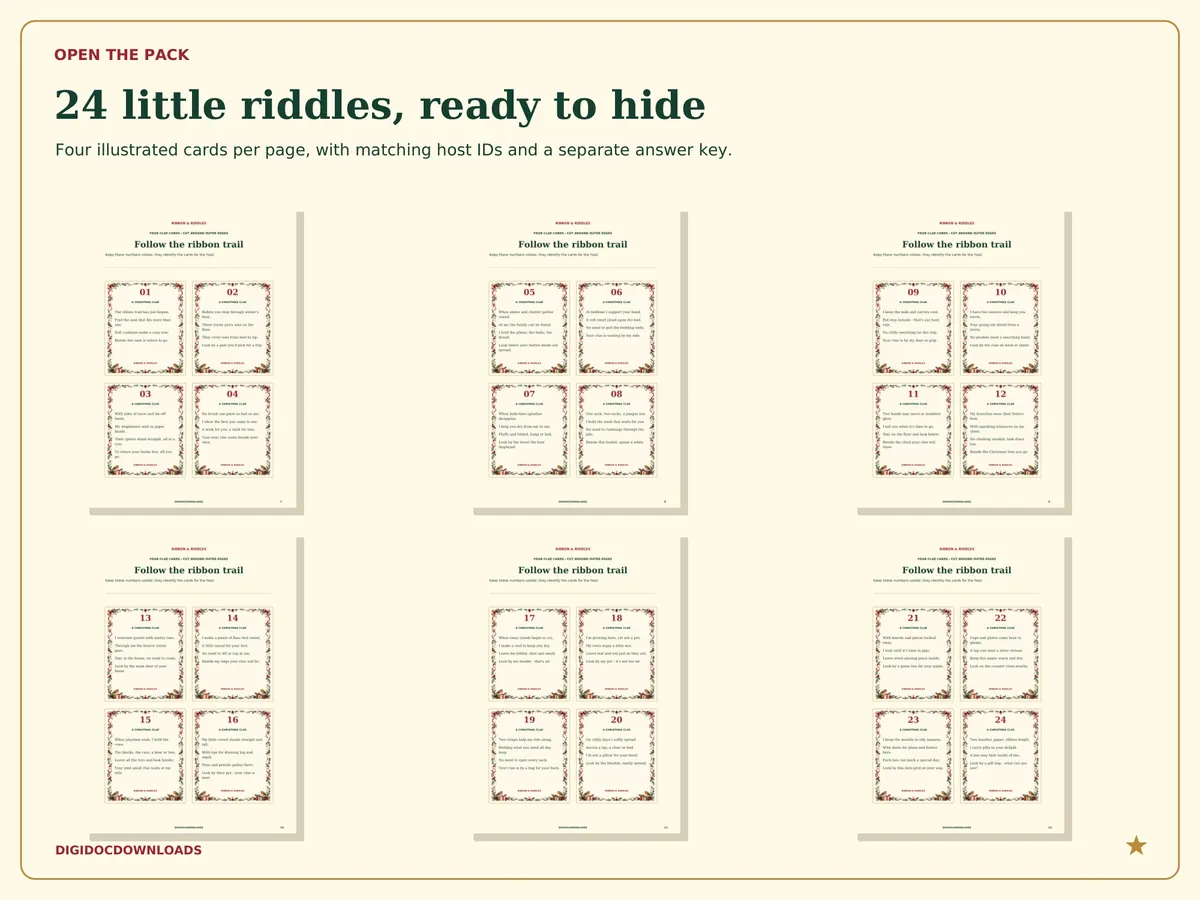
The Christmas Treasure Hunt offers ready-made six-stop and twelve-stop routes, plus a custom-route sheet and an answer key for its 24 rhyming clues. Those host tables already explain the card placements: start there rather than reconstructing the supplied route from scratch. The 18-page A4 PDF is designed for ages 6–10 and a team of 1–6 children, with a reader on hand. Print only the pages needed, single-sided at Actual Size; an adult should cut and hide the cards.
Separate the clue's answer from its hiding place
A card that describes the sofa normally belongs somewhere else. The children solve it, go to the sofa and find the next card there. Write two headings on the host plan: “Hand over or hide here” and “This clue sends them to”. Keep card IDs separate from the order of stops, especially when selecting a custom route from a larger numbered set.
Here is an original three-card example, not the supplied pack's route. Card A describes a bookshelf; hand A to the children. Card B describes a coat hook; hide B at the bookshelf. Card C describes a gift bag; hide C beside the chosen coat hook, within easy reach. The treasure waits inside the gift bag, not another clue. The sequence is therefore: adult → bookshelf → coat hook → gift bag. No card needs to be hidden at the place it describes.
For a longer trail, continue the same pattern one row at a time. Label your private plan with the exact shelf, hook or bag intended. “Coats” may seem perfectly clear until three people have left theirs in different rooms. Keep the final gift concealed until the route is ready.
Adapt missing locations before hiding anything
Read the entire chosen route against the actual home. If there is no suitable location, use the pack's alternative destinations or its four blank cards for a handwritten replacement. Check both links around a changed stop: the preceding clue must lead to the new location, and the card hidden there must still send the group onwards.
A tree-free finish is already included in the pack as a gift-bag option. Use that when a tree is absent or inconvenient; festive success does not depend on rearranging the furniture around one. For a homemade version, choose a distinctive bag or box and describe its location clearly. The treasure can be a wrapped present, a handwritten promise of an activity or the included certificate; it need not become an extra shopping assignment.
Write a replacement riddle with one clear answer
Begin with the answer, then choose two features that distinguish it from nearby objects. For a bookshelf, an original clue might read: “On shelves my stories stand in line; your next clue waits beside a spine.” That wording needs a particular bookshelf agreed on your host plan. If there are several, add a location detail rather than hoping the rhyme will settle the matter.
Ordinary objects have inspired riddles for centuries. Exeter Cathedral's account of the Exeter Book describes a manuscript written around 970, including poetic puzzles about everyday things. The modern household clue shares that idea of making something familiar sound unfamiliar; this is a literary comparison, not a claim that Christmas treasure hunts descend from that manuscript. The history page is optional background for grown-ups, rather than a children's clue sheet.
Walk the trail as though you know nothing
Once the cards are placed, take the opening clue and follow every instruction literally. At each destination, check that the next card is visible enough to find without rummaging, that it is the right card and that it has not exposed the answer to a later stop. Finish by checking the treasure is where the last clue says it is. Keep the answer key and completed host plan with the adult.
If another adult can do the walk-through, ask them to use only the instructions rather than your explanation. This is a suggested preparation check, not a claim that the product has been physically tested. Make corrections before announcing the hunt. Collect unused cards so an abandoned draft does not become an unexpected extra branch.
Make finding the gift a shared finish
Give the group one rule before starting: read the whole clue, agree an answer and move together. Rotate small jobs—holding the card, reading aloud, suggesting an answer and leading to the next stop. A grown-up can read without taking the solving away from younger children. Offer a hint about one useful word if needed, rather than turning a pause into a race.
Let the final discovery belong to the whole team. If the gift is for one person, say so at the beginning and give the other children a clear role in delivering it. For a group activity, a shared certificate or promise can avoid dividing one surprise into six unequal portions. The pack's spot-it activity and memory page provide a quieter follow-on; or borrow a prompt from our Christmas memory-book guide and record the funniest guess alongside the date. Once the treasure is found, the trail has done its job.
Explore Christmas Treasure Hunt – Ribbon & Riddles
More to read, make and discover
A few useful, interesting and checked routes into the subject.
- English literary historyExeter Cathedral: The Exeter Book
The manuscript custodian dates its writing to about 970 and describes riddles about everyday objects. Background reading for adults, not a ready-made children's riddle collection.