1. Agree what the conversation is for
Explain the idea in ordinary language: a few family stories for private notes, an audio recording or a book shared with named relatives. Ask which option is welcome, whether any subjects should be avoided and how long would feel comfortable. Do not begin recording while permission is still assumed.
The Oral History Association’s principles and its guidance for participants provide a useful foundation. A relative can decline a question, stop the recording or ask for a passage to remain private. Agree those choices before the conversation rather than treating them as a complication afterwards.
2. Choose three prompts and one object
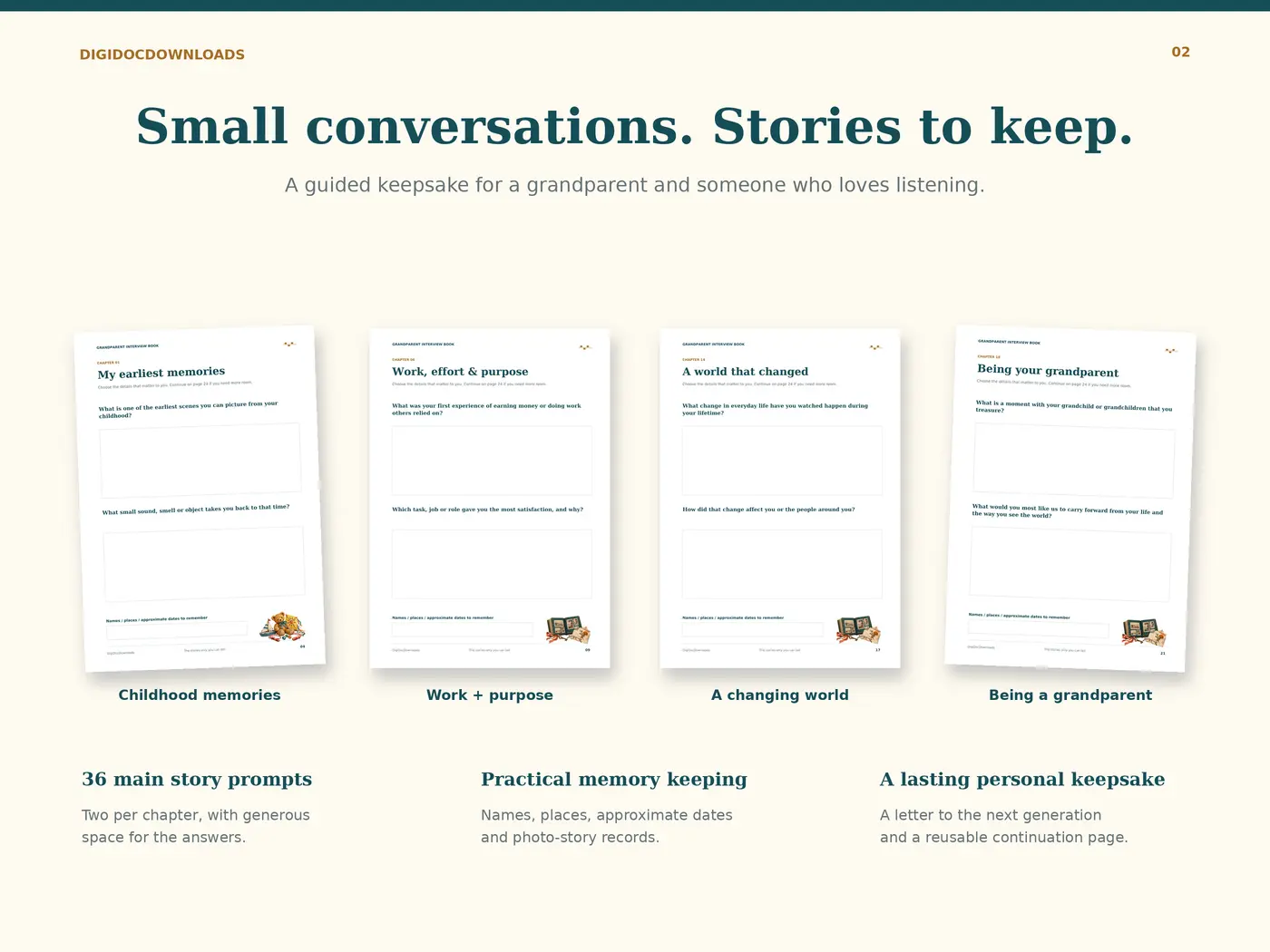
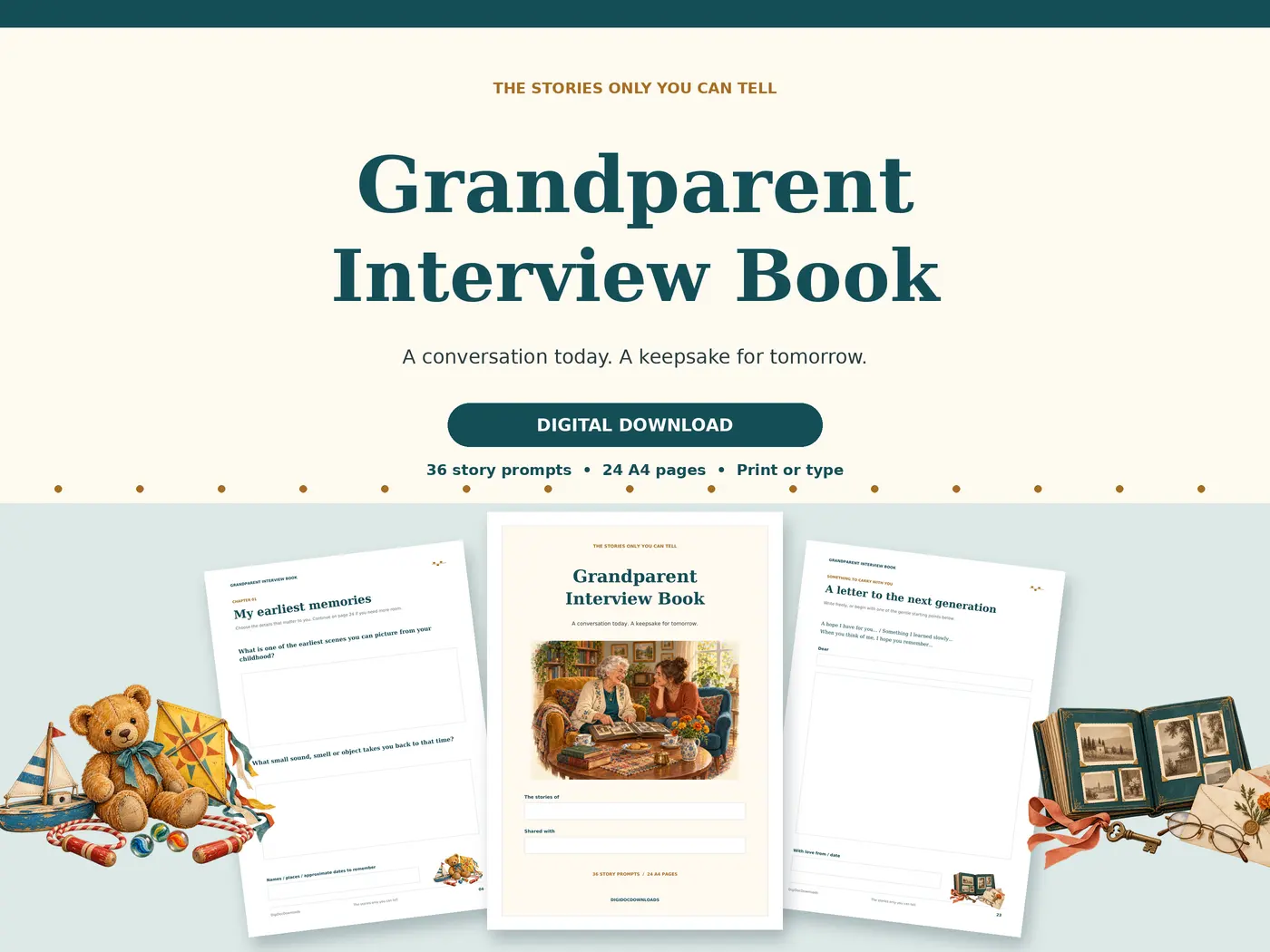
Pick a manageable theme, such as school, a first home or family meals. Our Grandparent Interview Book contains thirty-six story prompts in a twenty-four-page A4 PDF. Select three relevant prompts rather than trying to finish the book in one sitting.
A copied photograph or familiar object can provide a starting point. Ask what the person recognises before supplying your own explanation. “Who is beside the window?” leaves more room than “That must be your sister.” If the image is fragile, follow the Library of Congress preservation advice and use a copy.
3. Prepare the recording without making it the event
If audio recording is agreed, test the device beforehand with ordinary speech and play it back. Check available space, power and background noise. Keep the recorder visible, and confirm it is running only once everyone is ready. Make a short opening note naming the participants and date, subject to the agreed privacy choices.
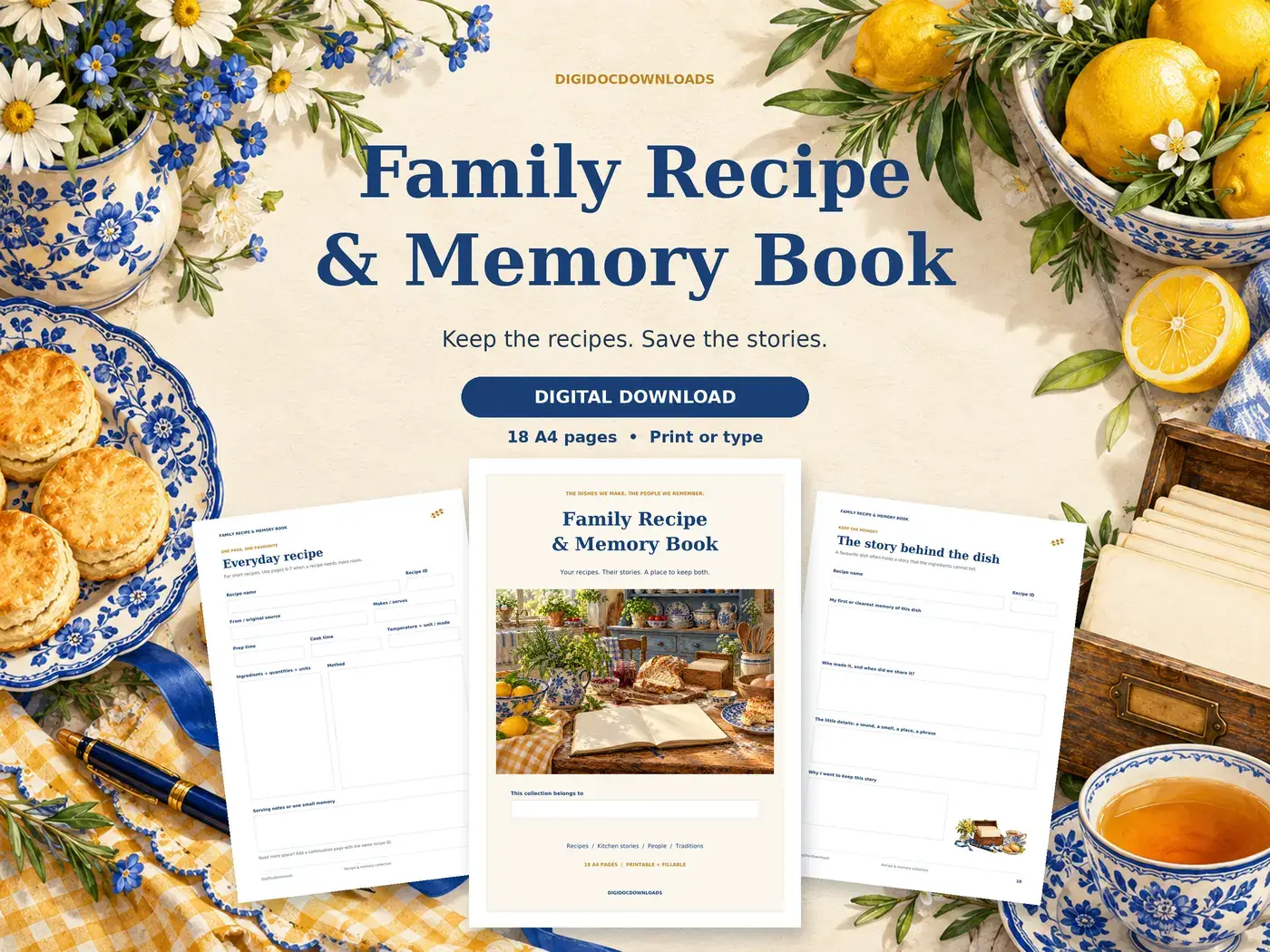
For handwritten notes, leave room for additions and mark direct quotations clearly. The book supports print or compatible desktop PDF text fields; photographs are attached as printed copies. A working note is sufficient if typing during the conversation would distract from listening.
4. Ask one question, then allow the answer
Start with a concrete detail: “What could you see from the kitchen window?” Listen before moving to the next prepared prompt. A useful follow-up often comes from the answer: “Who looked after that garden?” or “What happened when the shop was closed?”
Avoid correcting a date mid-story unless the person asks for help checking it. Note uncertainty for later. A twenty-minute first session may be enough; that is a planning option, not a quota. Pause or finish when needed, even if the best question is still on your page.
5. Separate the words from your interpretation
Afterwards, write a clear summary while the details are fresh. Distinguish what was said, what you inferred and what remains uncertain. If the account will be shared, invite the speaker to review the relevant passages and confirm the agreed audience.
Our story about everyday family details explains why keeping a distinctive phrase can be valuable. Do not polish a speaker’s meaning into something grander than intended, and do not combine conflicting memories into one apparently certain version.
6. Save an understandable record
Give the file a clear name such as “Pat-school-memories-2026-10-07” and keep a backup in another appropriate location. Include the date, contributor and any agreed sharing restriction in the accompanying notes. Check that the saved recording opens before deleting anything from the device.
Send a short thank-you and, where welcome, a copy of the notes. Record one possible follow-up subject. The first conversation is successful if it leaves a few accurate stories and makes another conversation possible, rather than exhausting every prompt at once.
Explore Grandparent Interview Book
More to read, make and discover
A few useful, interesting and checked routes into the subject.
- Further readingOral History Association: principles and best practices
Planning, consent and respect for the narrator’s own words.
- Further readingOral History Association: interview participants
The person telling the story should understand and choose how it is used.
- Further readingLibrary of Congress: preserve family records
Care for original family documents, photographs and objects.