1. Choose one conversation, not an entire life
Begin with a topic small enough to explore comfortably: a childhood kitchen, a first job, a family celebration or a place someone remembers well. Explain that the aim is to preserve one story together. A modest starting point leaves room for the details that a rapid tour of seventy years would hurry past.
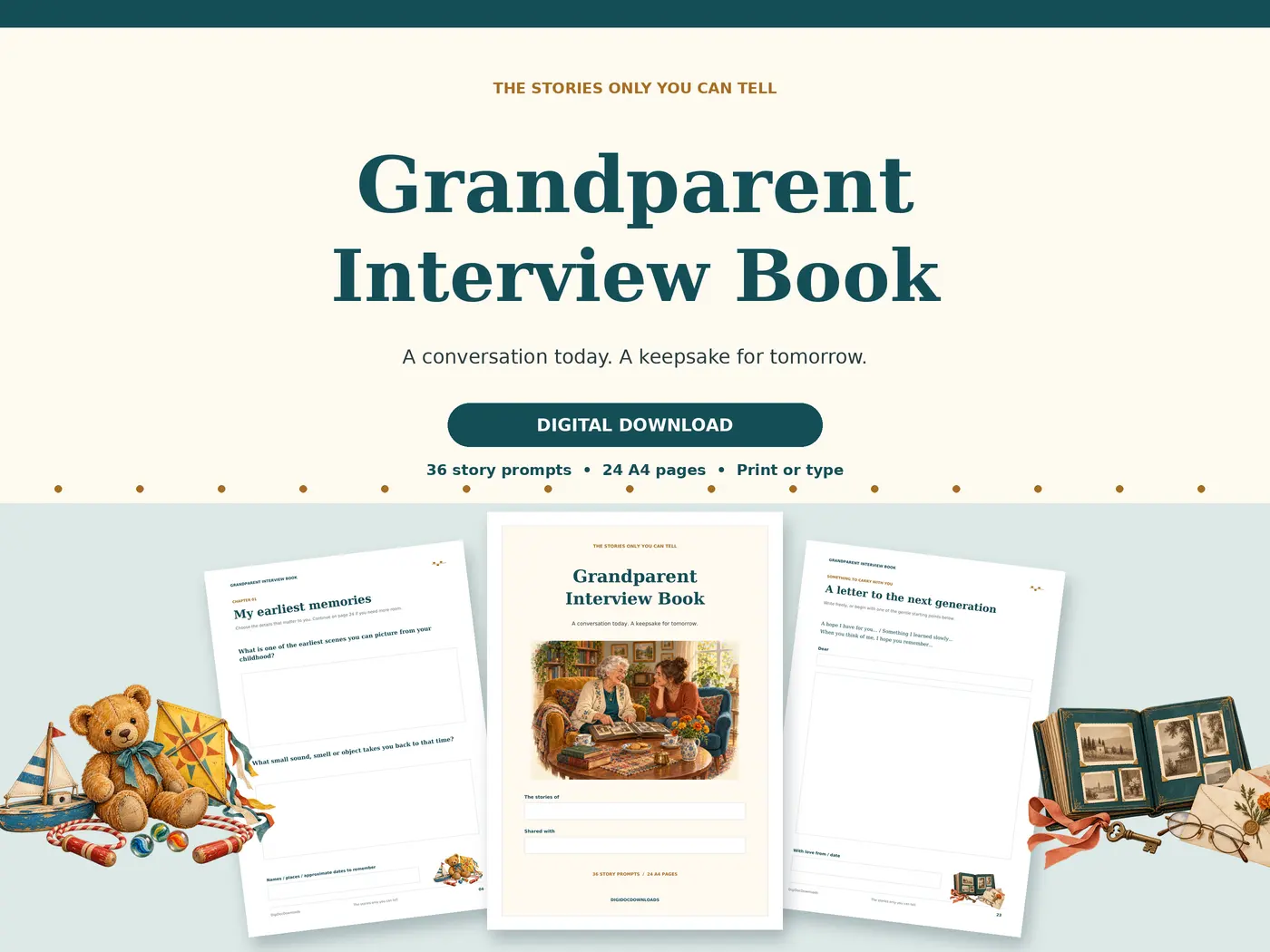
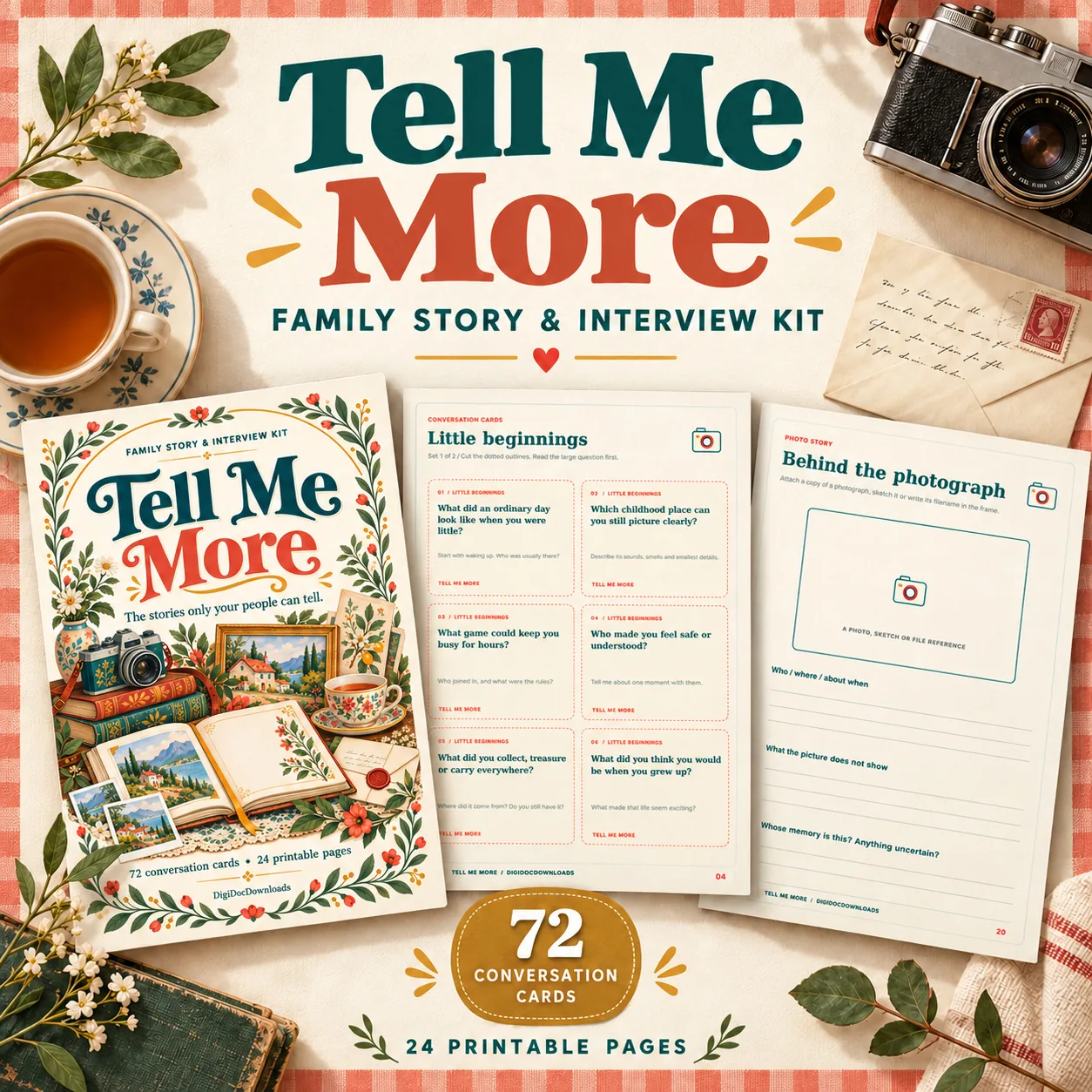
The Tell Me More kit contains 72 conversation cards across six themes, each with a main question and a gentle follow-up. Start with its quick-start guide and theme menu, then choose two or three cards. There is no need to use all the questions, follow them in order or complete every writing page in one sitting. For a first conversation, our grandparent interview guide also helps with setting a relaxed pace.
2. Agree the record before starting it
Ask whether the storyteller wants notes, an optional phone recording or simply a conversation followed by a few agreed memories. Explain who you hope will see the finished page. Someone may be comfortable talking to you and still prefer that an anecdote stays out of a family group chat.
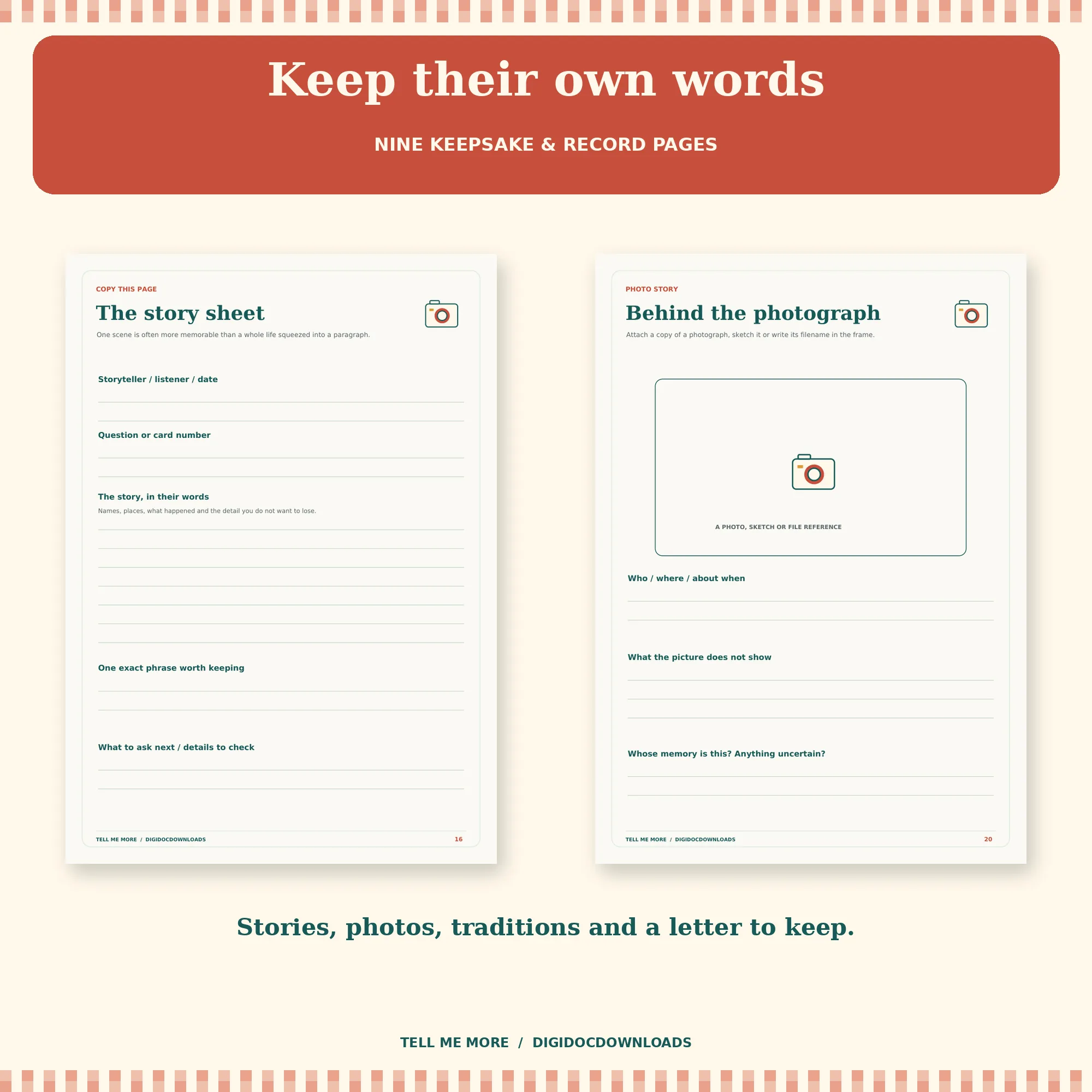
The Smithsonian American Art Museum's oral-history lesson includes preparing an interview and gaining agreement from the participant. In a family setting, keep checking that the arrangement still suits the person. They can pass a question, ask for the recording to stop or decide that a particular detail should be left out. Use the kit's memory archive record and sharing preferences to preserve those decisions alongside the story.
3. Print a small, useful set
Tell Me More is a 24-page A4 PDF designed for printing and handwriting. The pages are fixed-layout, not editable or fillable forms. Print the chosen card sheets and one or two relevant writing pages; cut the cards on their dotted outlines. A pen and a clear writing surface are enough to begin. Cameras and other styling props shown in product previews are not included.
Choose a page that matches the material: a story sheet for an event, a place sketch for a remembered home, or the photo-story page for an image someone can explain. The six-chapter timeline is useful for organising a longer sequence later. It need not force a wandering conversation into chronological order while the person is speaking.
4. Follow an answer before introducing the next card
Ask the main question, then give the answer room. When a detail appears—a blue door, a particular bus journey, a name nobody else recognises—follow it with a neutral question about what happened or what it was like. Read the card's supplied follow-up when it fits; leave it aside when the story has found another useful direction.
The Smithsonian Archives' interviewing guidance recommends open questions, close listening and following up on details without unnecessary interruption. A practical difference is the gap between “Did you enjoy school?” and “What do you remember about arriving at school?” The latter allows an answer that the interviewer has not already divided into yes and no. These are example prompts, not a script to read over someone's reply.
5. Capture enough context for another reader
After a story, clarify names, relationships, place names and approximate dates. Write “my mother's sister, June” rather than assuming a future reader knows which Aunt June appears on the page. Ask how a name is spelt before choosing a likely version. Keep the date of the conversation separate from the date of the remembered event.
If a date is uncertain, preserve the uncertainty: “about 1968” or “before the family moved to Leeds” is more honest than a precise year supplied by the interviewer. Distinguish the person's recollection from information later found elsewhere. A family keepsake can value a remembered experience without presenting every detail as independently verified history.
6. Use a photo or object to deepen one story
A photograph, recipe, ticket or familiar object can provide a specific starting point. Ask what the person notices first, who or what is missing from the picture and what happened before or afterwards. Do not assume a smiling photograph proves that everybody enjoyed the occasion.
The Smithsonian Folklife interviewing guide offers further question ideas to adapt. Tell Me More's photo-story, tradition-keeper and words-of-wisdom pages provide different homes for the resulting material. Choose the page after hearing the story when that feels easier. The record should fit the answer, rather than asking the person to produce a conveniently page-shaped memory.
7. Make a readable page and check it together
Keep the person's distinctive words where possible. Mark a short exact quotation clearly; describe the rest as your notes or summary rather than presenting a tidied paragraph as a verbatim transcript. If you recorded audio, check a quotation against the recording before copying it into the keepsake.
Read the page back together or offer it for later review. Ask what should be corrected, expanded or removed. A missing name can be added in the margin; a story that should stay private can be omitted entirely. The kit's letter to a future reader offers another option: let the storyteller address the person who may eventually open the collection in their own words.
8. Give the story an understandable home
Add the storyteller's name, interviewer's name, conversation date and the agreed sharing preference to the archive record. If there is a recording, give it a clear filename and note where it is stored. Keep a backup in an appropriately private place; a folder named “New recording 7” is a weak companion to a carefully labelled page.
Finish by offering the storyteller a copy and agreeing whether another conversation would be welcome. Keep an unanswered question for next time rather than pressing for a complete account now. One well-labelled story, reviewed by the person who told it, is already a useful family record.
More to read, make and discover
A few useful, interesting and checked routes into the subject.
- Further readingSmithsonian Archives: how to do oral history
Practical guidance on preparation, open questions, listening and keeping interview records.
- Further readingSmithsonian Folklife: interviewing guide
A guide and adaptable question ideas for exploring lived experience.
- Further readingSmithsonian American Art Museum: creating oral histories
An educational introduction to preparing interviews, gaining agreement and following up.