1. Measure the actual book
Choose the book the sleeve needs to hold, or a representative example if it is a gift. Measure its height, cover width and spine thickness with the book closed. Include any projecting cover edges, and note whether it is a paperback or hardback. Two books described as the same format can still need different room inside a sleeve.
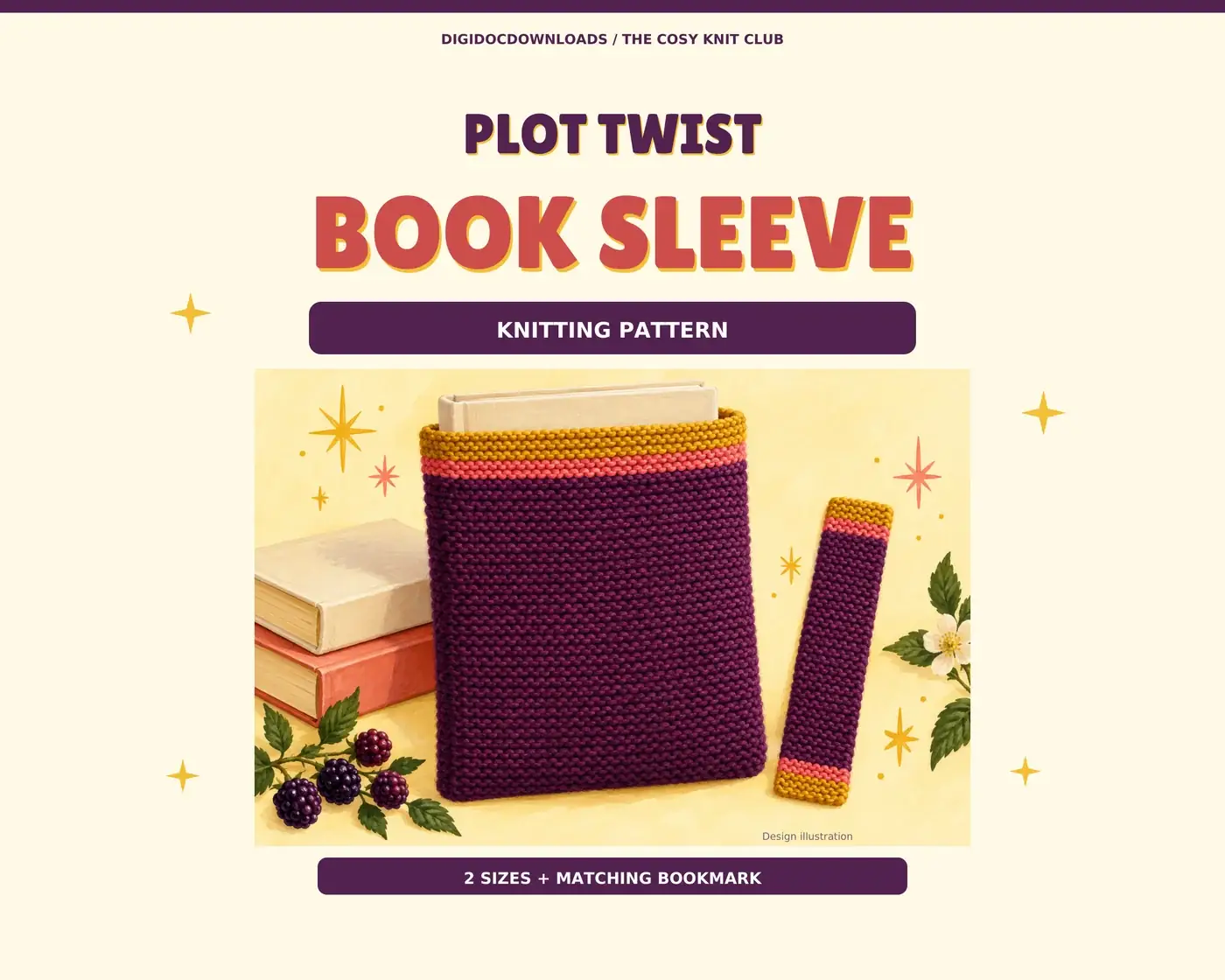
Our Plot Twist Book Sleeve pattern includes a measurement guide and two sizes. The compact sleeve is approximately 18.2 cm wide between the seams and 23.6 cm deep; the roomy version is approximately 21.8 cm wide and 27.3 cm deep. Compare the book with the pattern’s fit guidance, including its thickness, rather than using cover width alone.
2. Read the construction before choosing yarn
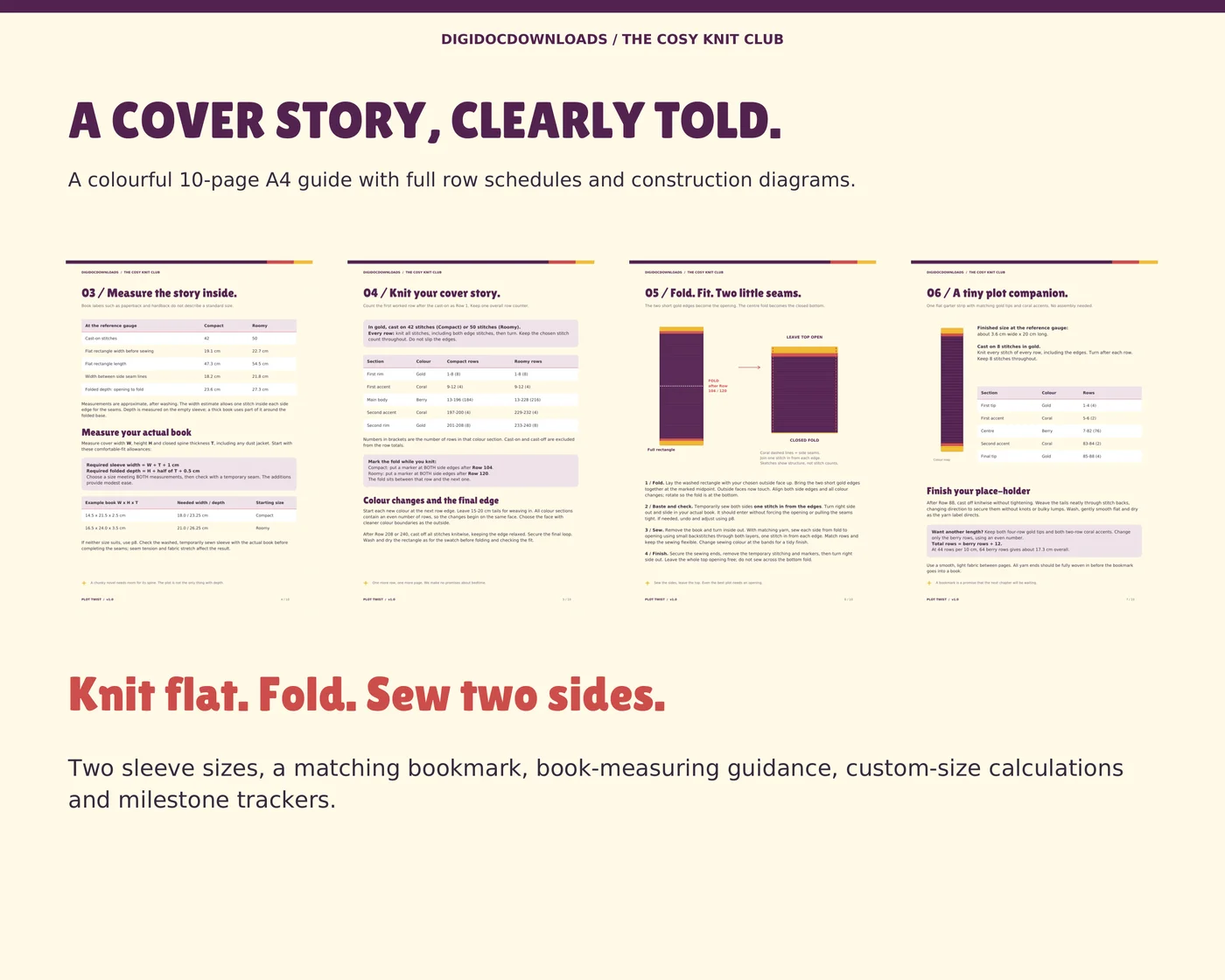
The sleeve is worked flat in garter stitch: knit rows form a rectangle, which is folded and seamed at the sides. There is no knitting in the round or shaping. Knowing that construction helps explain why the finished fit depends on both the knitted fabric and where the seams sit.
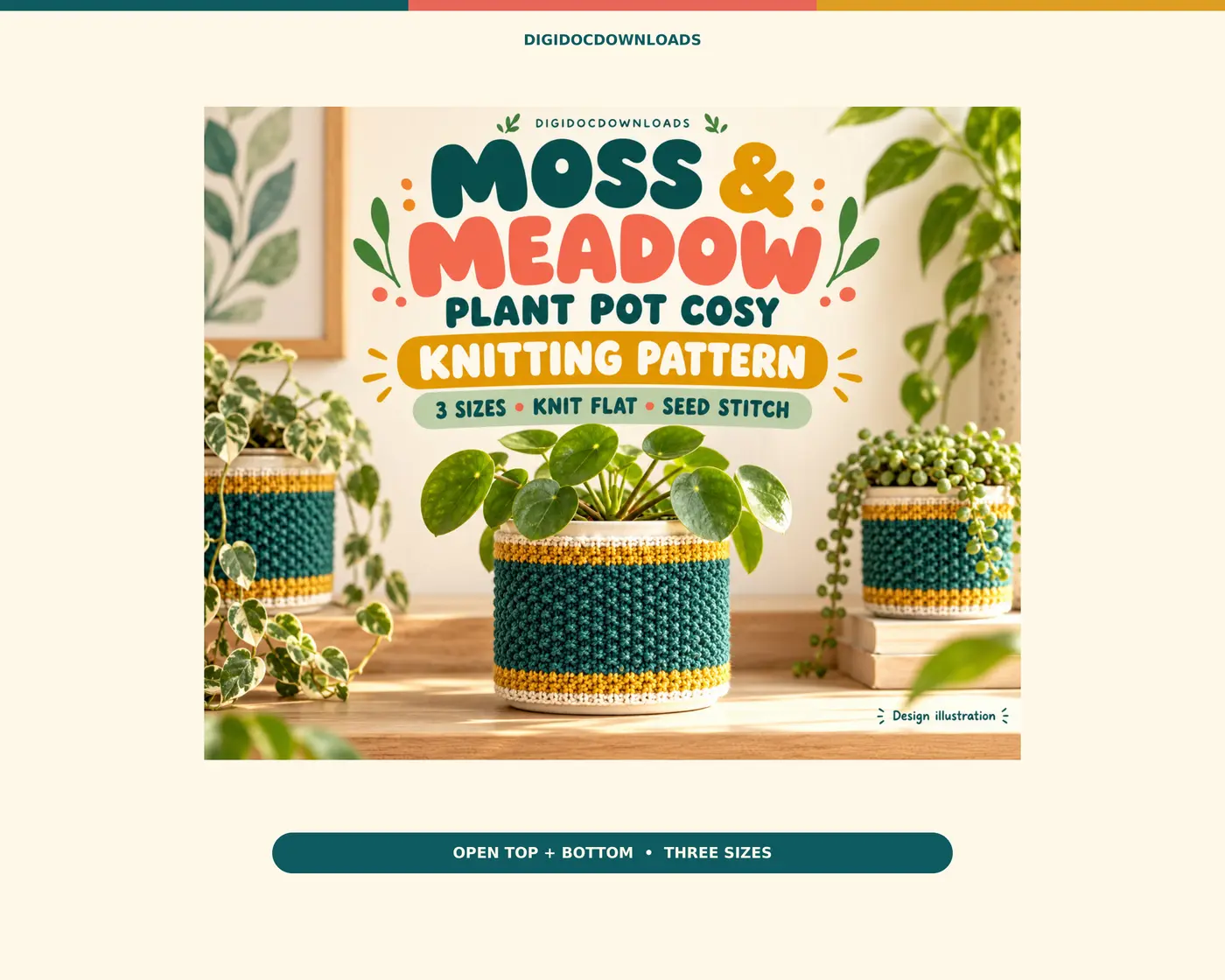
The pattern uses DK yarn and starts with 4 mm needles, with a matching knitted bookmark included. The needle size is a starting point for obtaining the required fabric. It is not a guarantee that every knitter will produce identical measurements using the same pair of needles.
3. Make and wash a useful swatch
The specified washed garter-stitch gauge is 22 stitches and 44 rows per 10 cm. Make a swatch large enough to measure a representative central area, then wash and dry it according to the yarn’s instructions before measuring. Allow it to settle fully; a damp swatch is an unreliable ruler.
Keep the label. The Craft Yarn Council’s yarn-label guide explains the information worth retaining, and its care-symbol reference helps interpret the instructions. Record your own measured gauge beside the yarn and needle details. If it differs, follow the pattern’s adjustment guidance rather than assuming stretching will resolve the fit later.
4. Choose the size using the checked measurements
Lay the book beside the pattern’s finished dimensions and follow its custom-fit instructions where needed. Allow for the space taken up by the spine and for inserting and removing the book comfortably. A sleeve that barely accepts a closed book may be awkward in daily use, particularly if the cover catches at the opening.
Do not treat the printed measurements as a promise about an unmeasured project. Check the work as it grows, and compare its dimensions with the chosen size after the fabric has received the care needed for an accurate assessment. Our craft-swatches feature explains how a few recorded details prevent the same uncertainty returning next time.
5. Test the fold and temporary seams
Before completing the side seams, fold the rectangle as instructed and secure a temporary seam suitable for a careful fitting check. Insert the book without forcing it, checking the opening, depth and both sides. Remove any pins or temporary fastenings before treating it as a finished sleeve.
If the fit needs adjustment, make it while the construction is still accessible. Notice where the difficulty occurs: an opening problem is different from insufficient depth. Finish the seams following the pattern, then repeat the test. Small changes in seam placement can matter when the margin is already narrow.
6. Use the finished sleeve appropriately
A knitted sleeve provides an everyday layer between a book and other items in a bag. It does not make the book waterproof, and it is not an archival enclosure. Keep it dry and clean, following the yarn’s care instructions when washing is needed.
For important or fragile books, consult the Library of Congress guide to book care and its storage advice. A valuable volume deserves protection suited to its condition and materials. For an ordinary reading copy, a comfortable fit and a well-finished seam are a sensible place to start.
Explore Plot Twist Book Sleeve
More to read, make and discover
A few useful, interesting and checked routes into the subject.
- Further readingCraft Yarn Council: yarn labels
Yarn labels as useful records of material and recommended care.
- Further readingCraft Yarn Council: care symbols
Keep the yarn label with a project so its care instructions survive.
- Further readingLibrary of Congress: preserving books
Preventive care for books and the distinction between everyday use and conservation.
- Further readingLibrary of Congress: storing books
Storage conditions and protective enclosures.