The sample knows; the maker may not
A small piece of fabric can preserve an excellent seam and still fail to explain how it happened. Which needle was used? Was the fabric washed? Why did one test look better than the other? Without a note, yesterday’s useful experiment becomes tomorrow’s mildly accusing square.
Keeping a sample with a few details makes it a working reference. The purpose is not to save every scrap indefinitely. It is to preserve the experiments that answer a question or prevent a problem being solved from scratch next time.
Needlework samples have a useful history
The V&A’s history of needlework samplers describes examples used as references as well as displays of skill. That is an appealing connection to an ordinary modern swatch: a small piece can hold knowledge, not merely show that someone completed the stitches.
Look at a historical sampler’s arrangement before borrowing a motif. Are different stitches placed together? Are there repeated shapes or practical trials? Specific objects reward close attention; there is no need to turn their varied purposes into one universal origin story.
October offers a reason to notice the marks
The Big Draw Festival’s 2026 theme, Make a Mark, focuses on the process of drawing and creating. It is a natural prompt this October to look at the marks in a craft sample: stitch length, repeated ridges, an uneven line or a change in direction.
Make a small sketch beside the sample if it helps explain the result. It need not be an accomplished illustration. A line showing where a seam puckered may tell a future maker more than a polished photograph with no accompanying explanation.
Record the thing that changed
Label two tests before comparing them. “A: original setting; B: changed needle” is more useful than “good one” and “bad one”. Note the material and the one intended difference. If several variables changed, describe the result as a comparison rather than proof that a particular alteration caused it.
For yarn projects, keep the band or a copy of its information. The Craft Yarn Council’s yarn-label guide explains the symbols and information supplied. Colour, fibre and care can matter long after the maker has forgotten the shop receipt.
Give the reference a place in the project
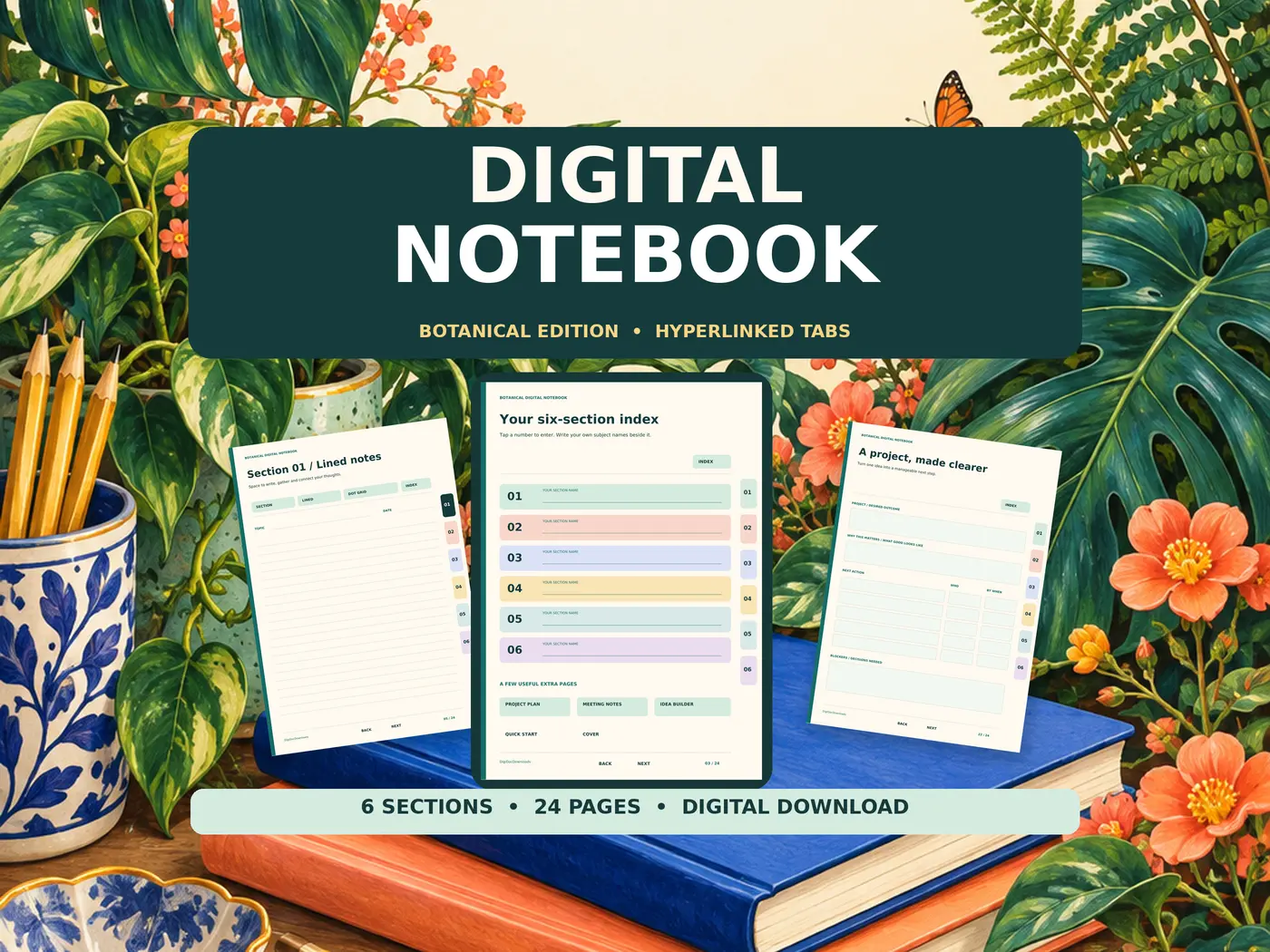
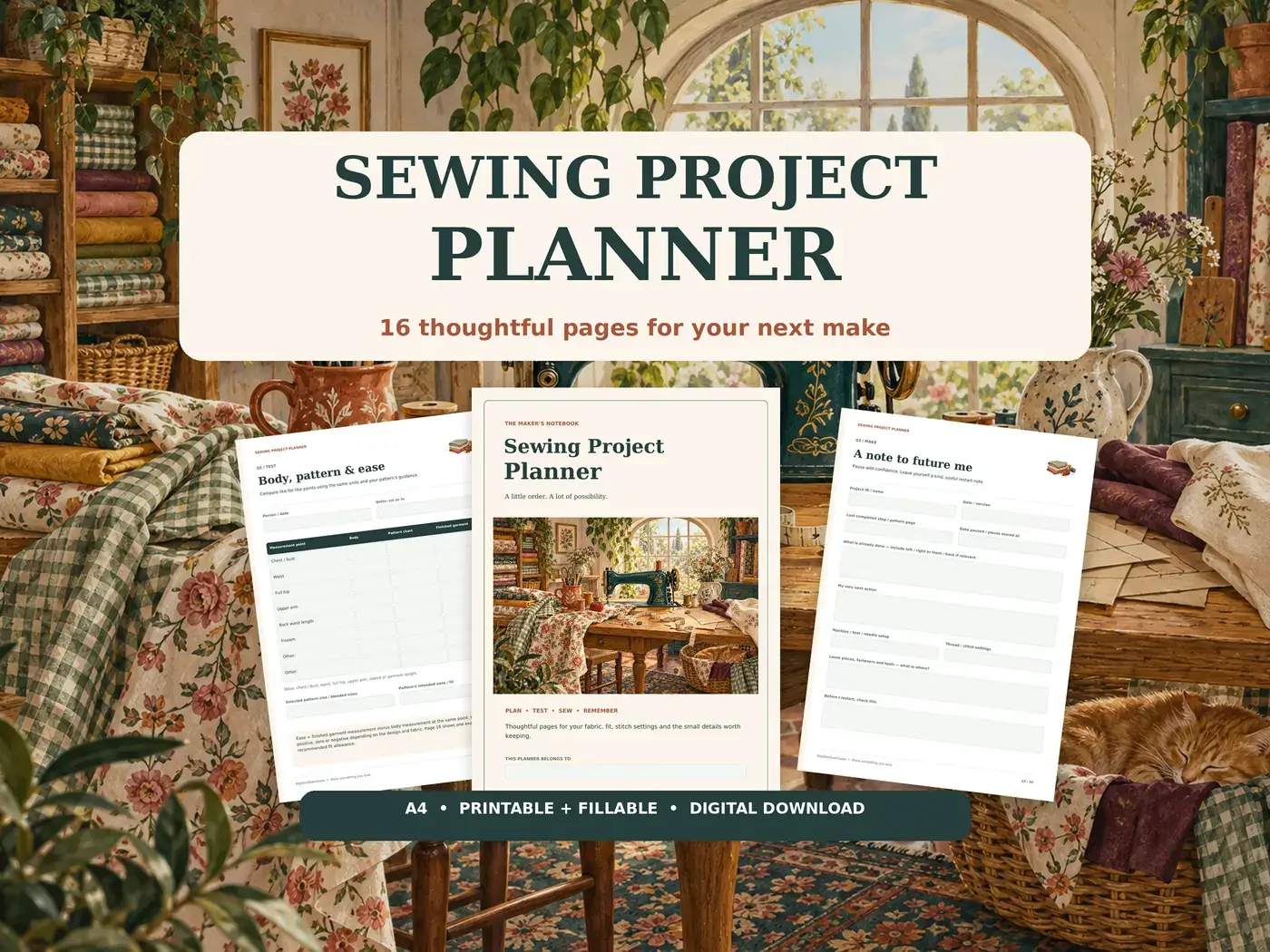
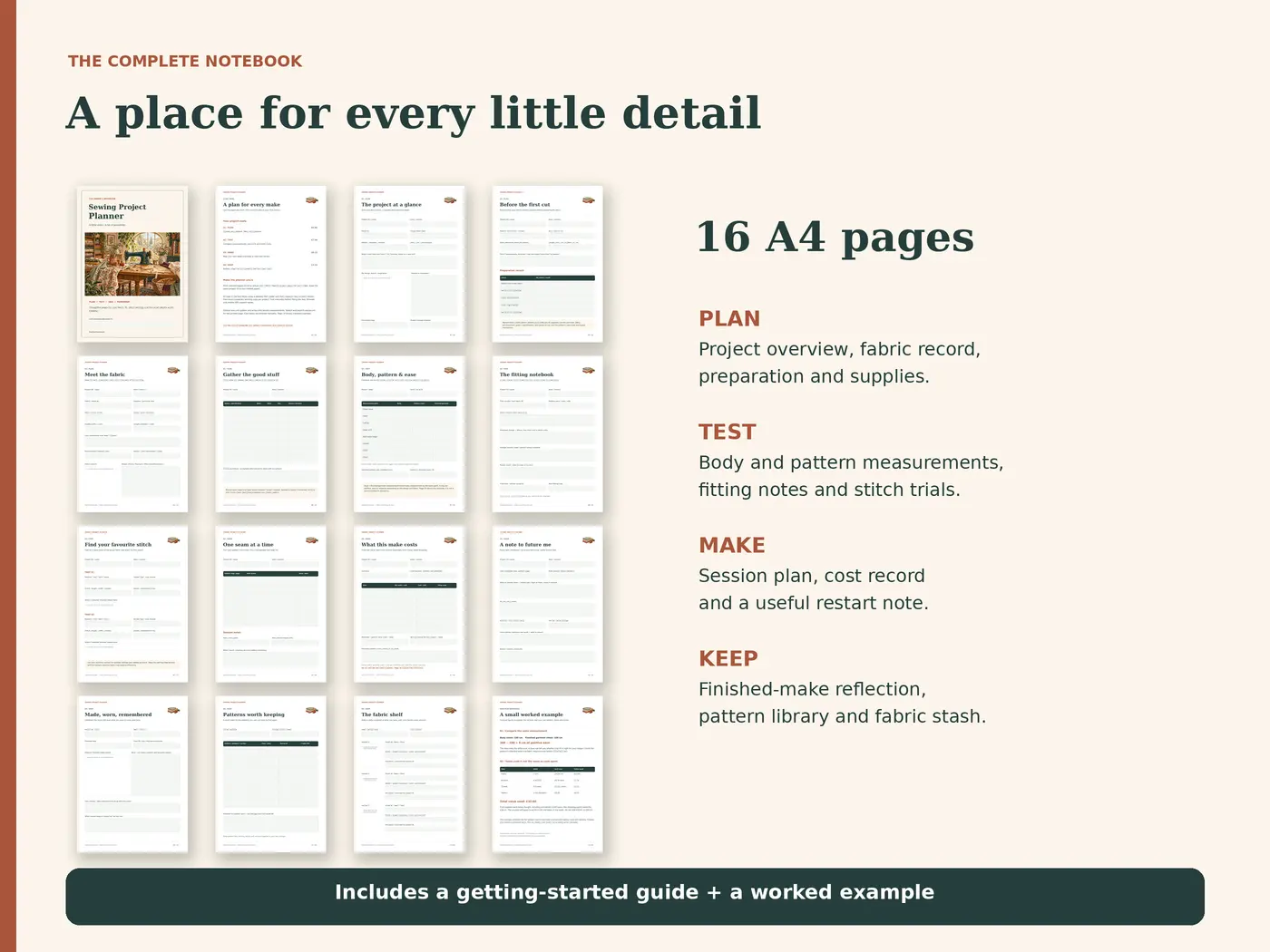
Our Sewing Project Planner includes spaces for sketches and attached swatches, alongside planning and progress pages. Its sixteen-page PDF can hold the material choice and useful test notes together. The sewing pattern is separate; the planner records decisions rather than supplying garment instructions.
Text fields can be completed in a compatible desktop reader, while sketches and fabric samples use printed pages. Our sewing-project planning guide gives a sequence for checking supplies, preparing material and noting changes before committing to the main fabric.
Keep a sample that will earn its space
Save the swatch that resolves a recurring question, or one showing a mistake worth recognising early. Write its date and link it to the finished project. If it has become a record of nothing identifiable, photograph it or let it go instead of granting it permanent residence by default.
A useful sample is small, specific and accompanied by enough words to explain itself. It does not need to look impressive. It needs to remember the part of the making that would otherwise disappear.
Explore Sewing Project Planner
More to read, make and discover
A few useful, interesting and checked routes into the subject.
- Further readingV&A: needlework samplers
Stitch samples used for reference as well as display.
- Further readingThe Big Draw Festival 2026
October 2026’s Make a Mark theme celebrates drawing as a process.
- Further readingCraft Yarn Council: yarn labels
Yarn labels as useful records of material and recommended care.