Space begins with a question
A paper plane will not get anyone into orbit. It can, however, turn an impressive photograph of a rocket into a useful question: what keeps a moving object going, and what makes it change direction? That is a respectable afternoon’s work for a sheet of paper. It need not pretend to be a launch vehicle to earn its place on the table.
The appeal of a small flight experiment is that the result is visible. A fold is changed; a plane veers left. A gentler launch produces a different landing. Suddenly “try again” has a purpose beyond hoping for a more photogenic attempt.
The timely connection: Rocket Revolution
World Space Week runs from 4 to 10 October each year. The United Nations’ 2026 observance names this year’s theme as Rocket Revolution. It offers a timely reason to look at how people reach space, while keeping the distinction between a real rocket and a tabletop activity clear.
Use the event directory to find an appropriate local or online activity, then carry one question into your own session. There is no need to reproduce an entire science exhibition at home. A photograph, a short explanation and something to investigate can be enough.
A glider has a different job
NASA’s explanation of gliders is a useful starting point. A paper aircraft receives its initial motion from a throw; it has no engine supplying thrust afterwards. That makes it different from a powered aircraft and different again from a rocket.
Keep those categories visible when talking with children. A paper jet decorated with rocket stripes is still a paper glider. The artwork can start an imaginative mission, but it does not change the physics. Good activities allow the story and the explanation to sit together without making them identical.
Let the folds become evidence
Put two attempts beside each other and compare them before launching. Are the wings level? Does the nose line up with the centre? Is one crease visibly softer? Those observations are more useful than deciding one plane is simply “good” and the other “bad”.
Choose one change to investigate, and keep the rest of the setup as similar as practical. Three launches will not prove a universal rule, especially when different people throw, but they can show whether an idea deserves another look. Write down an unexpected result instead of quietly removing it from the record.
A prepared sheet, not a promised result
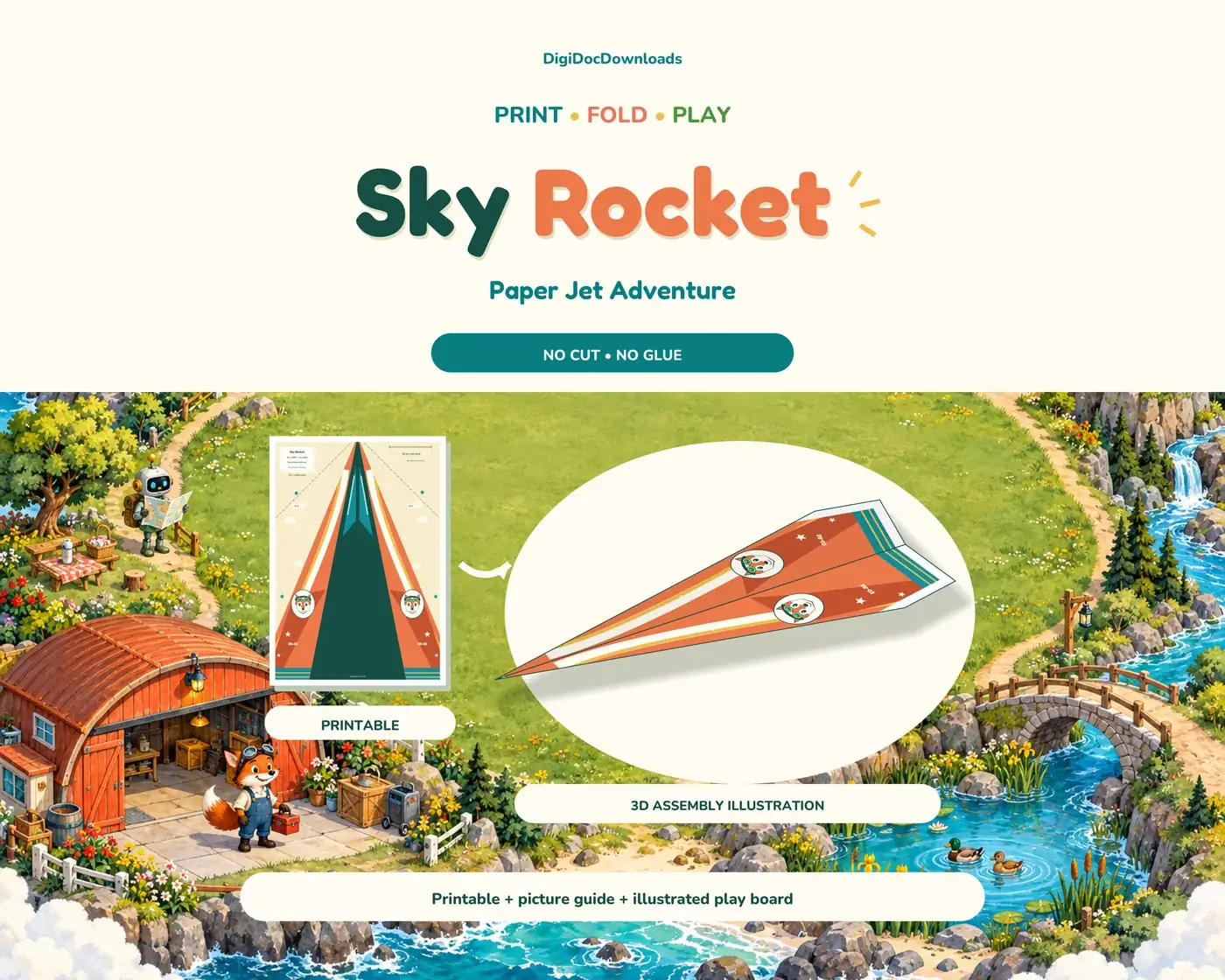
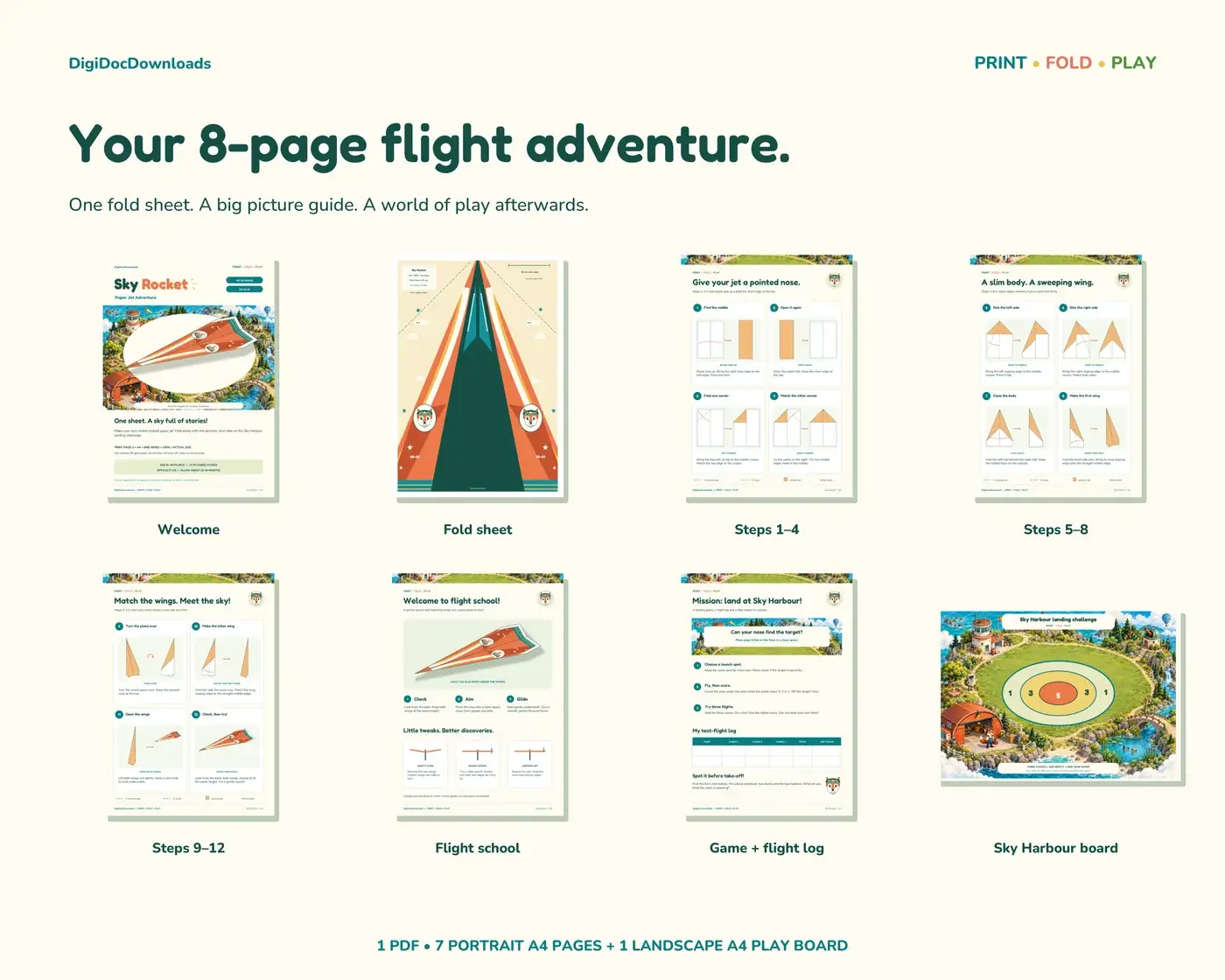
Our Sky Rocket provides one illustrated A4 folding sheet, twelve pictured stages, flight tips, a three-flight log and an optional landing board. It needs no cutting or glue. The 50 mm print-check line helps confirm the sheet’s scale before folding, and the log gives repeated attempts somewhere sensible to live.
It is a paper flight project, not a working rocket or a guarantee of long flights. Results depend on folds, paper and launch. The paper-plane experiment guide turns those limitations into a straightforward testing plan, with a clear launch area away from people and pets.
Ask what changed, then look again
Finish by comparing your original prediction with what happened. “The wider wing did not travel farther this time” is a perfectly useful finding. It opens the next question: was the fold uneven, the launch different, or the prediction too simple?
That habit travels well beyond paper planes. Looking carefully, changing one thing and keeping the awkward result are all ways of learning. World Space Week supplies the occasion; an ordinary sheet supplies somewhere to begin.
More to read, make and discover
A few useful, interesting and checked routes into the subject.
- Further readingWorld Space Week
The annual 4–10 October space celebration and its event directory.
- Further readingUnited Nations: World Space Week
Official 2026 Rocket Revolution theme and observance dates.
- Further readingNASA: gliders
How an unpowered aircraft differs from an engine-powered one.