Begin with an object that surprises you
Ask someone to picture knitting and a jumper or scarf may be the first answer. Fair enough: both give yarn an obvious job. A museum collection widens the picture. It puts ordinary warmth beside decoration, display and extraordinary patience, then leaves us to consider how much a loop of thread can be persuaded to do.
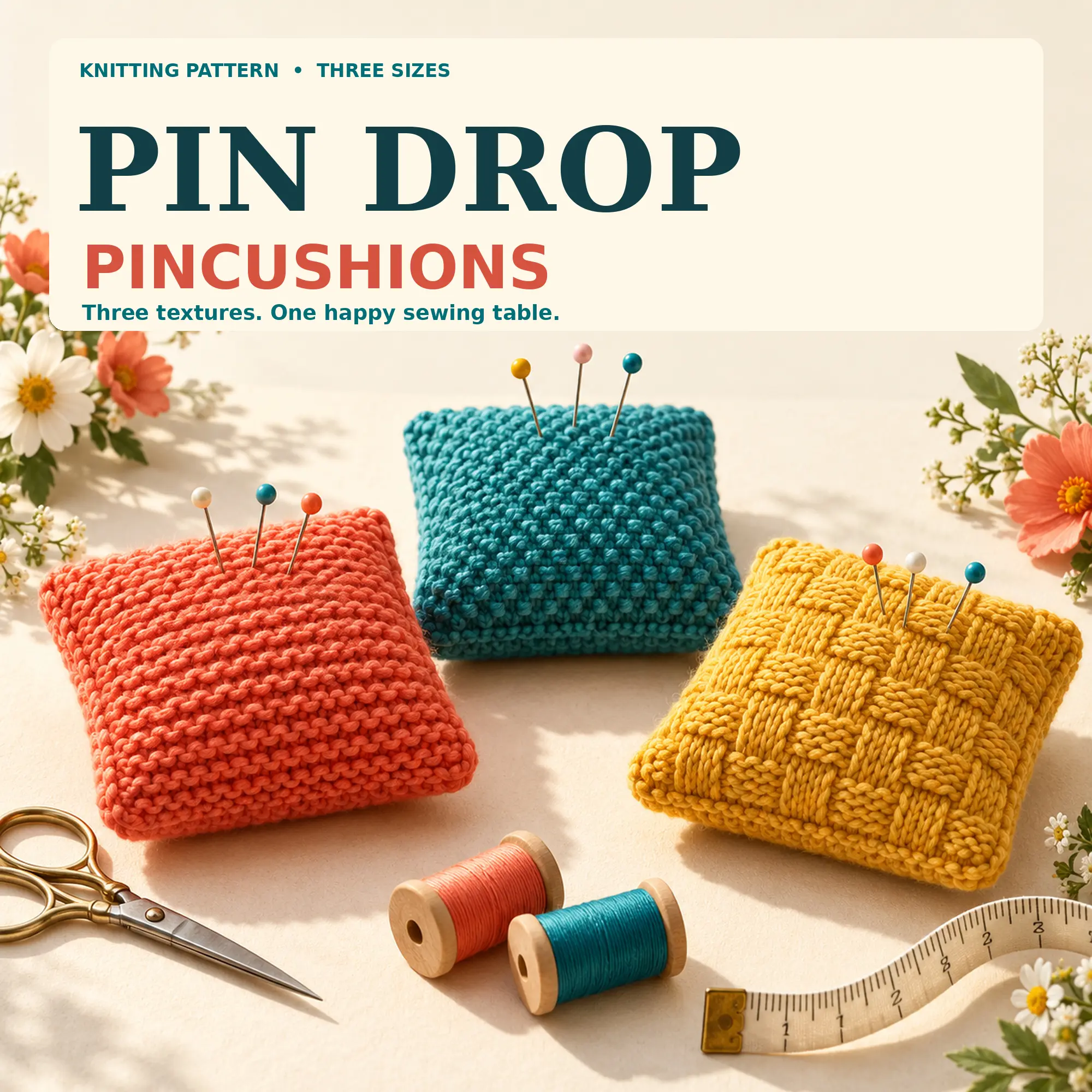
The V&A’s history of hand-knitting includes a knitted carpet or hanging dated 1781 and a silk-and-silver-gilt-thread pincushion dated 1733. Their scale is delightfully different. One occupies a wall; the other gives pins somewhere respectable to wait. Neither needs to be a future project to be worth looking at. They expand the idea of what knitted fabric is for.
Notice the difference between surface and structure
When looking at a knitted object, separate two questions. How is it made into a shape? How is its surface made interesting? A tube, a flat panel and several joined pieces solve different construction problems. Texture, colour and decoration then change the character of that structure. Keeping the questions separate makes a complicated object easier to read.
The same V&A history contrasts knitting in the round with work made flat and joined. On a small home project, that distinction is practical rather than grand: a rectangle with a seam has a different route to completion from a continuous tube. Look for the edges and joins in collection photographs, while accepting that a photograph cannot always reveal them. An honest ‘I cannot tell from this view’ is better than a confident guess.
Old patterns did not always speak today’s language
Pattern instructions are a kind of conversation between an absent maker and the person holding the needles. That conversation becomes harder when the vocabulary changes. The V&A’s history of British knitting patterns shows older terms including ‘pearling’ and ‘turn stitch’ for what we now call purl, and an instruction for a texture now recognised as moss stitch. Familiar fabric can arrive through unfamiliar words.
This is a reason to approach an old pattern slowly, not to treat every antique abbreviation as interchangeable. Read the whole instruction, check its context and try a small sample before committing a project’s worth of yarn. A pattern is useful only when its words produce the intended fabric. Age gives it interest, not automatic clarity.
Borrow a question, not an entire design
Museum browsing is especially rewarding when the aim is modest. Rather than deciding to reproduce a remarkable garment, choose one question: what makes a border visible, how do two colours separate a surface, or why does a repeated texture suit a small object? Keep a note of the object’s title and museum page so inspiration does not become an untraceable image.
- Look at the silhouette before the stitch detail. Is the shape quiet or elaborate?
- Choose one boundary: an edge, cuff or colour change. What makes it readable?
- Describe the texture using ordinary words before searching for a stitch name.
- Use the collection record for factual details; do not infer fibre or technique from colour alone.
The V&A’s knitting collection pages offer designer work, historic objects and further reading. Compare two items rather than opening twenty at once. A clear difference between a patterned surface and a strongly textured one can teach more than a long procession of thumbnails. Browsing is allowed to be a pleasant end in itself; it does not need to generate another unfinished project.
Bring the idea back to something manageable
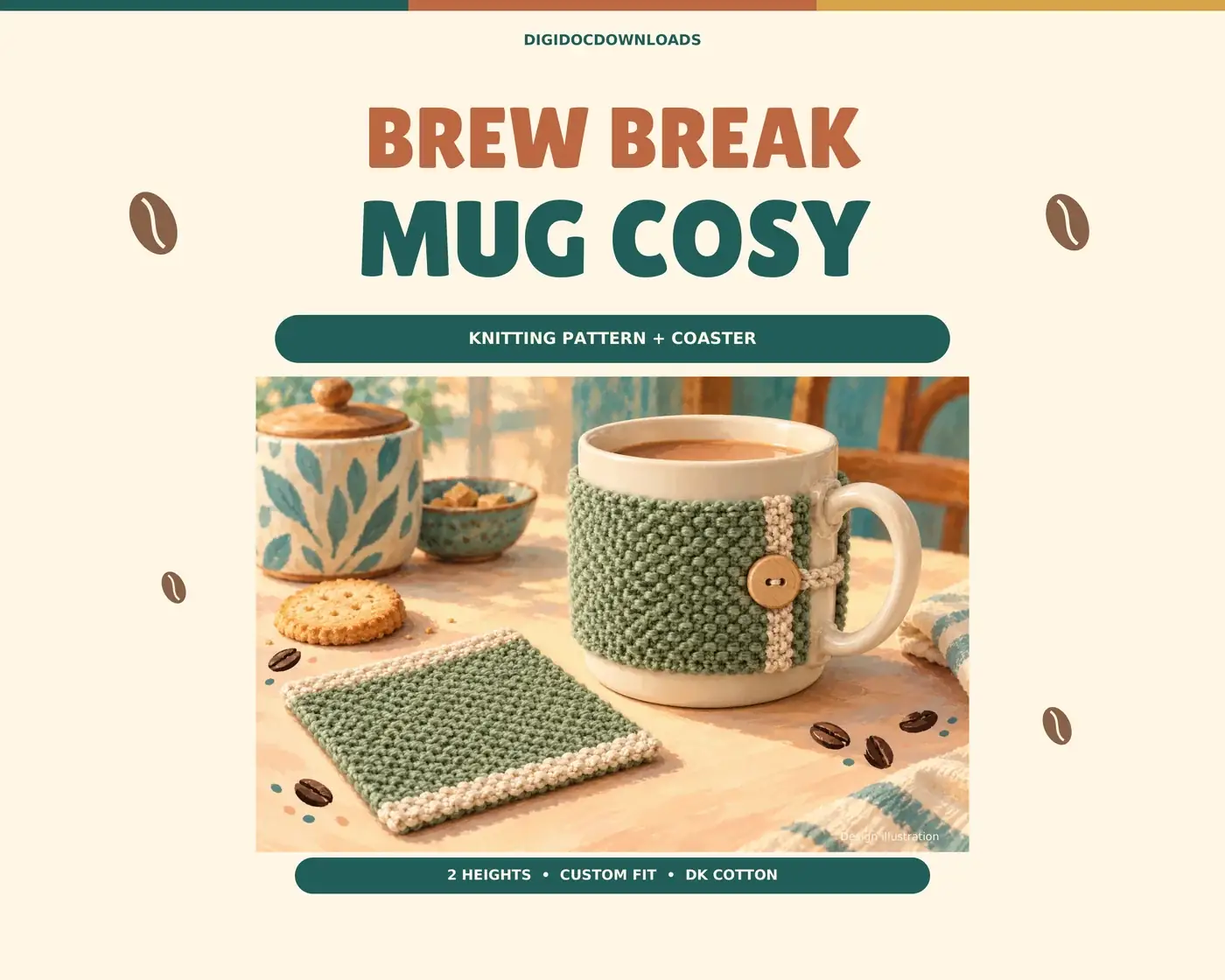
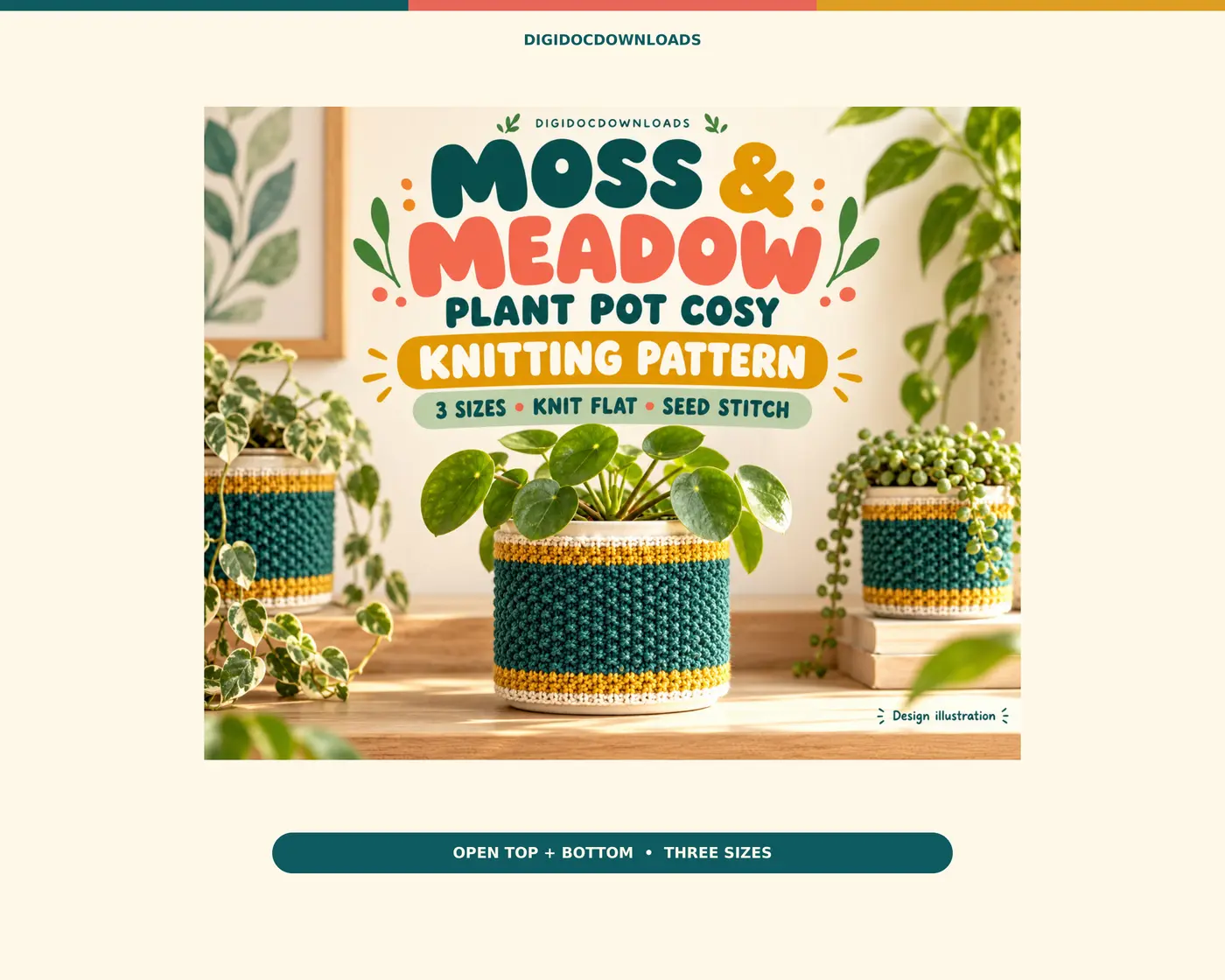
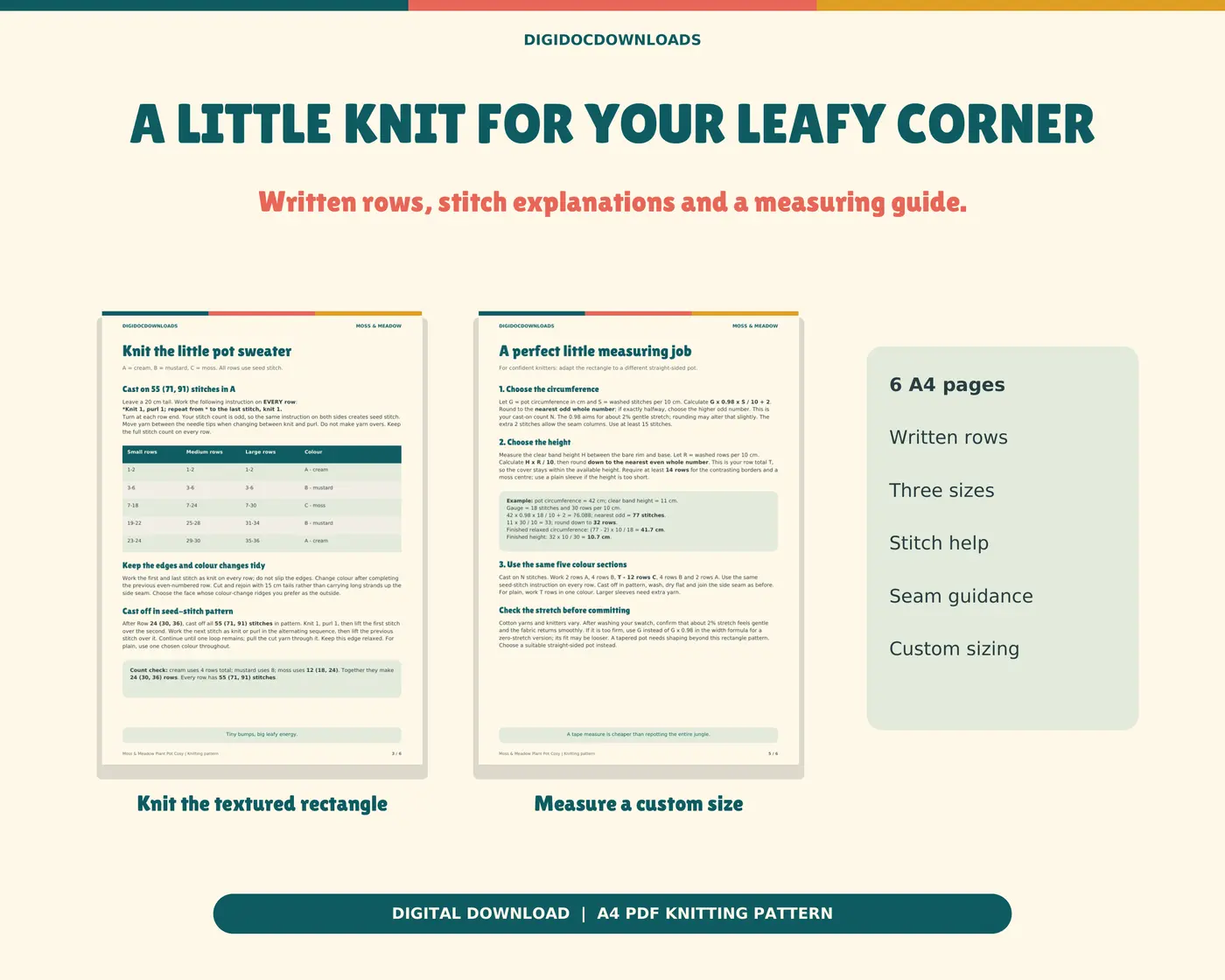
A small object gives texture room to be noticed without requiring a wardrobe-sized commitment. Moss & Meadow uses seed stitch in a plant-pot sleeve worked flat and joined with one side seam. Its six-page pattern includes knit-and-purl explanations, texture diagrams, three written sizes and a measuring guide with a custom-size example. The structure stays simple enough for the surface to do the talking.
It is intended for knitters already comfortable with casting on, knitting and purling; it is not a promise that a complete beginner can skip those foundations. The suggested Aran cotton and 5 mm starting needles still require a gauge check. Our plant-pot cosy guide explains the practical preparation. Plain yarn and a small swatch are sufficient if the aim is simply to explore texture; no purchase is necessary.
Leave room for ordinary usefulness
The museum masterpiece and the modest pot sleeve are not competitors. One demonstrates what exceptional skill can achieve; the other lets a familiar stitch earn its place in an ordinary room. A craft becomes richer when both belong in the picture. There is room for silver thread, certainly, but also for a neat seam, a well-measured edge and a plant that must still be watered without its knitted coat.
More to read, make and discover
A few useful, interesting and checked routes into the subject.
- Craft historyV&A: the history of hand-knitting
Explore knitted objects from socks and jackets to a carpet and a silk pincushion.
- Pattern languageV&A: a short history of knitting patterns in Britain
See how written patterns, stitch names and diagrams have changed over time.
- Collection browsingV&A: knitting collections
A visual starting point for designer interviews, historic garments and further craft reading.