Begin the handwritten letter with one true detail
A blank page can make a letter feel larger than it is. Choose the person first, then one thing worth telling them: something that recalled a shared memory, a thank-you waiting to be written or a small detail from the week. The Postcrossing prompt list is useful when even that first thought refuses to report for duty. A letter need not contain all the news; one specific piece is enough to begin.
Choose writing paper that leaves room for the words
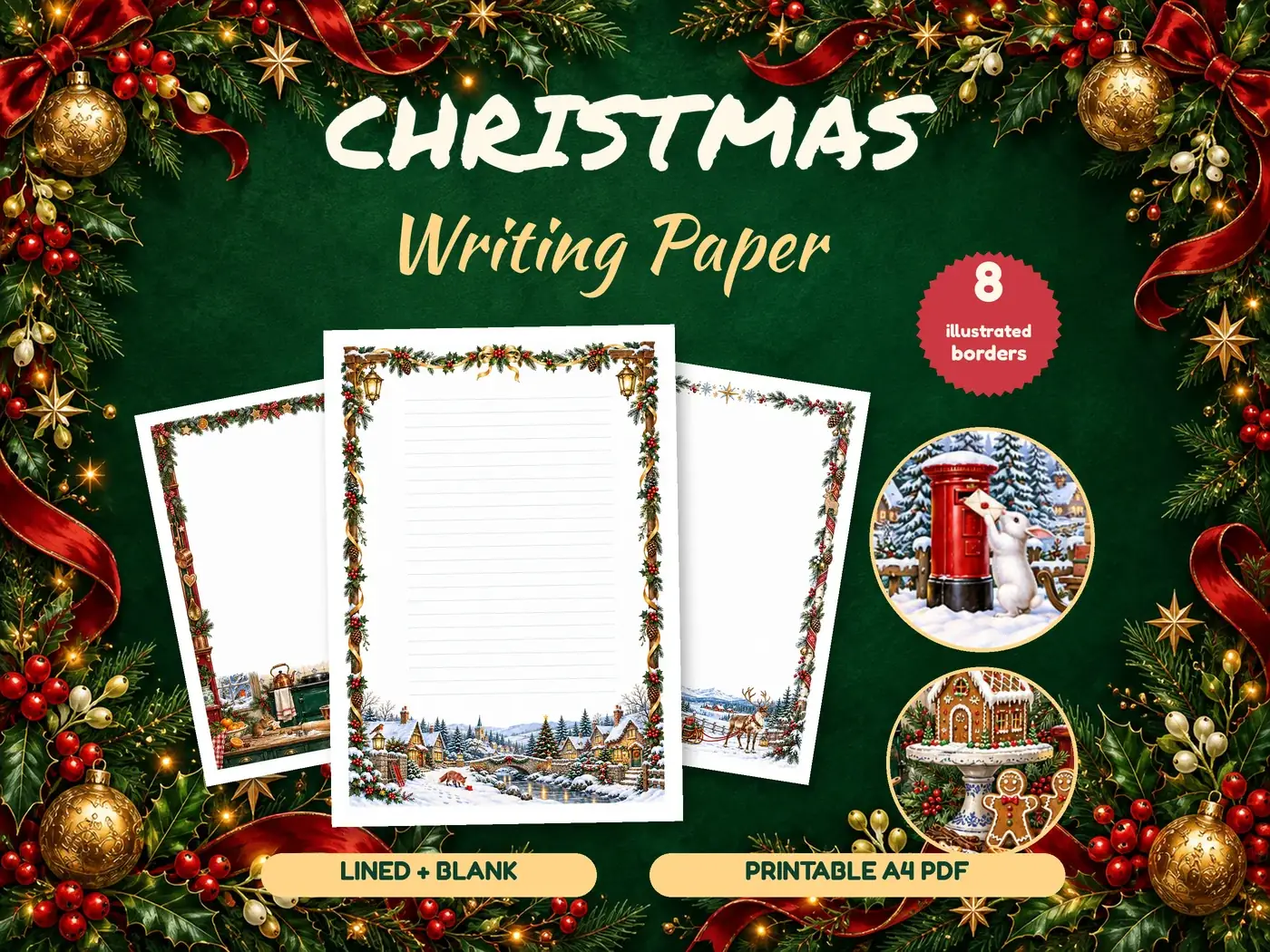
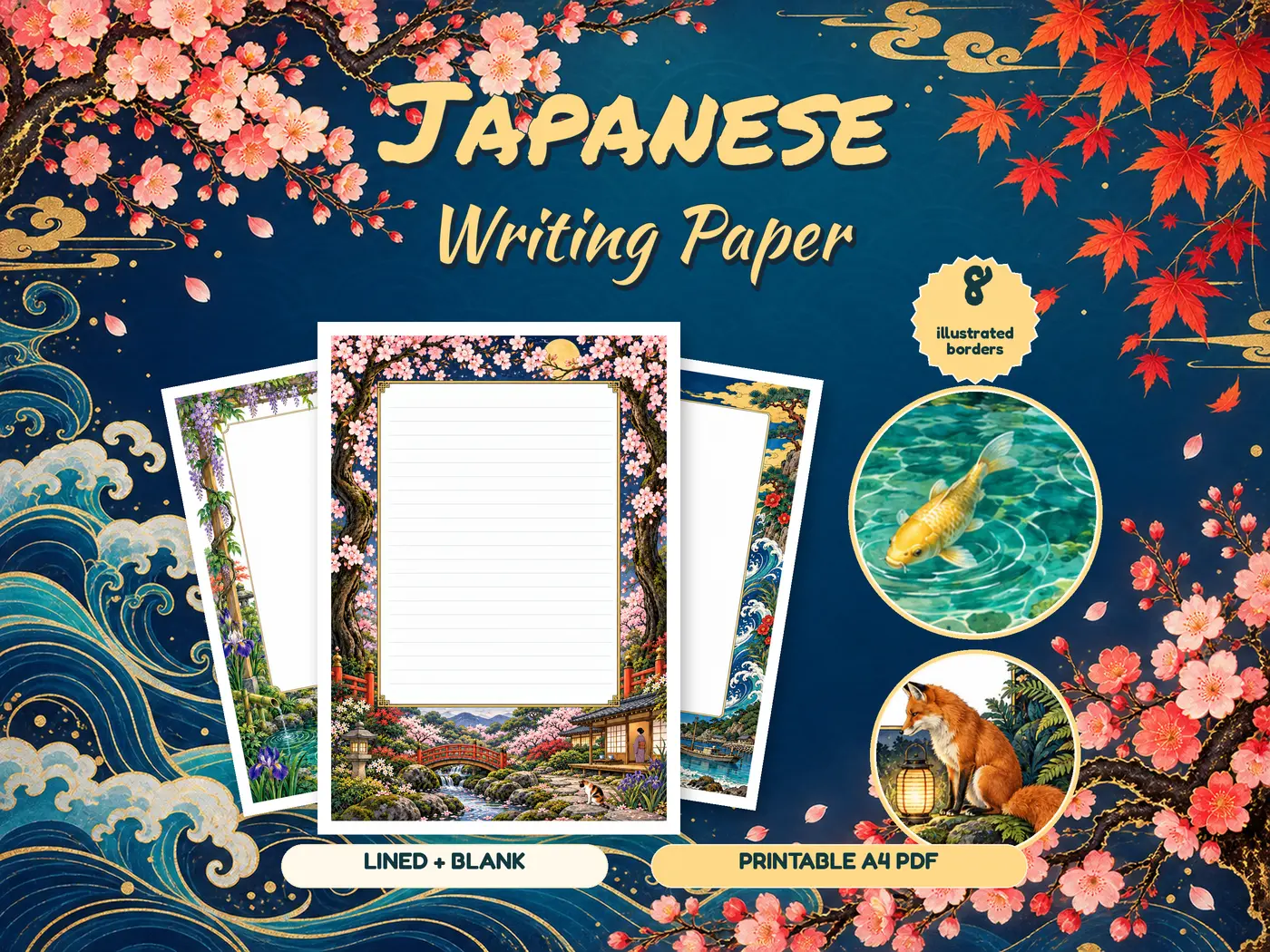
Illustrated borders can make a note feel considered while keeping the centre clear for handwriting. Pick a design that suits the mood rather than trying to encode the recipient’s entire personality around the margins. Japanese Writing Paper includes eight original Japanese-inspired borders—among them blossom, lantern, crane and garden scenes—each supplied in lined and blank versions.
Print a single page first
Open the PDF and select the page you want. Check the paper size and print at Actual Size on A4, as the pack’s guide recommends. Try one sheet before printing a larger batch. Your printer and paper affect the result, so a test page lets you check that you are happy with the colours and margins.
Let your handwriting be your handwriting
A lined page can help if you like a little structure; a blank version leaves room for a drawing, a poem or a shorter note. Leave enough space between your lines that the letter is comfortable to read. You can jot down your main points separately if that makes starting easier, without copying the whole letter twice.
A thoughtful note does not need to be a long one.
Use a simple beginning, middle and ending
- Begin with why the person came to mind today.
- Share one or two specific details, memories or questions.
- Close with something to look forward to or a warm wish.
Specific details give a short note its character. Mention the conversation you enjoyed, the meal you remember or the little kindness that mattered. If you want a reply, ask something the recipient can answer easily rather than a general request for all their news.
Borrow one wonderfully economical idea from letter history
Nineteenth-century writers sometimes used cross-writing: after filling a sheet, they turned it sideways and wrote across the first set of lines to save paper and postage. The Postal Museum’s account of Jane Austen’s letters shows the practice in context. Resourceful? Certainly. Easy on a modern reader’s eyes? Rather less so. A short, spacious letter is allowed.
Make the next note easier
Keep a few sheets and a pen somewhere convenient. Reserve one design for thank-you notes, another for longer letters and perhaps a blank page for small sketches. Having the paper ready removes one decision next time. If the note is going by post, use a suitable envelope and check the current price for its size and destination; the Penny Black and Rowland Hill’s postal reforms make a compact introduction to how prepaid postage changed the British letterbox.
The Japanese-inspired collection has eight original borders, sixteen stationery pages and a cover and visual printing guide in one 18-page PDF. Choose lined or blank, print one A4 test page at Actual Size, then let the words occupy the generous centre. Plain paper still works perfectly; the illustrated pages are for occasions when preparing the letter is part of the pleasure.
Explore Japanese Writing Paper
More to read, make and discover
A few useful, interesting and checked routes into the subject.
- Writing promptsPostcrossing: what to write when the page looks suspiciously blank
Twenty small prompts that work just as well as the first spark for a longer personal letter.
- Postal historyThe Postal Museum: how Jane Austen wrote her letters
Discover cross-writing, upside-down postscripts and the lengths writers used to make every inch of paper earn its keep.
- Tiny revolutionThe Postal Museum: the first Penny Black
A compact history of the stamp that helped reshape how ordinary letters travelled.
- Postal reformThe Postal Museum: Rowland Hill’s postal reforms
Explore the reforms behind uniform postage, prepaid stamps and a much busier national postbag.