Name the kindness before you try to sound polished
The hardest part is often the first sentence. Instead of searching for an impressive opening, write down what the person actually did: they chose a gift, made time to help, welcomed you into their home or noticed that support was needed. That detail gives the note a centre. The Met's practical thank-you guide likewise begins with the specific gift or action and the reason for gratitude. This is one person and one kindness, not gratitude in the abstract.
Use a four-part thank-you note
- Greet the person as you normally would.
- Thank them for one specific gift, action or moment.
- Say what it meant to you or what you will do next.
- Close with a warm line that suits your relationship.
That structure is enough for a complete note. It can fill half a page or only a few lines. The useful detail sits in the third part: the book is already beside your chair, the lift home made a difficult evening manageable, or their supper gave you a chance to relax. For another cultural route into the same form, Japan Post's illustrated English-letter guide shows how date, greeting, message, closing and signature fit together. A concrete consequence usually carries more warmth than several grand adjectives.
Try an opening for the kind of thanks you need
- For a gift: ‘Thank you for choosing the blue notebook for me — you remembered exactly the sort I like.’
- For practical help: ‘Thank you for stepping in with the boxes on Saturday. I could not have finished the move as calmly without you.’
- For hospitality: ‘Thank you for such a comfortable afternoon. The long lunch and unhurried conversation were exactly what I needed.’
- For a thoughtful gesture: ‘Your message arrived on a difficult morning, and I wanted you to know how much steadier it made me feel.’
Use these as shapes rather than scripts. Replace the object, moment and effect with your own details, and let your usual way of speaking remain visible. If you would never say ‘I am profoundly grateful’ aloud, it may feel equally unlike you on paper. A direct ‘That was so kind of you’ can carry more warmth because the reader recognises your voice.
When the note is late, acknowledge it once
A delayed thank-you is still worth sending. You can write, ‘This note is later than I meant it to be, but my thanks are just as warm,’ and then move straight to the specific kindness. There is no need to turn the message into a long apology. Keeping the explanation brief lets the person receive the appreciation instead of feeling that they must reassure you about the date.
Specific thanks make a short note feel complete.
Keep a very short note generous
If you only have space for three sentences, give each one a job. The first names the gift or help. The second explains why it mattered. The third sends a warm wish or looks ahead to seeing the person. Avoid filling the little space with apologies about your handwriting or the length of the note. The care is already evident in the fact that you noticed, chose your words and sent them.
Choose paper after you know the tone
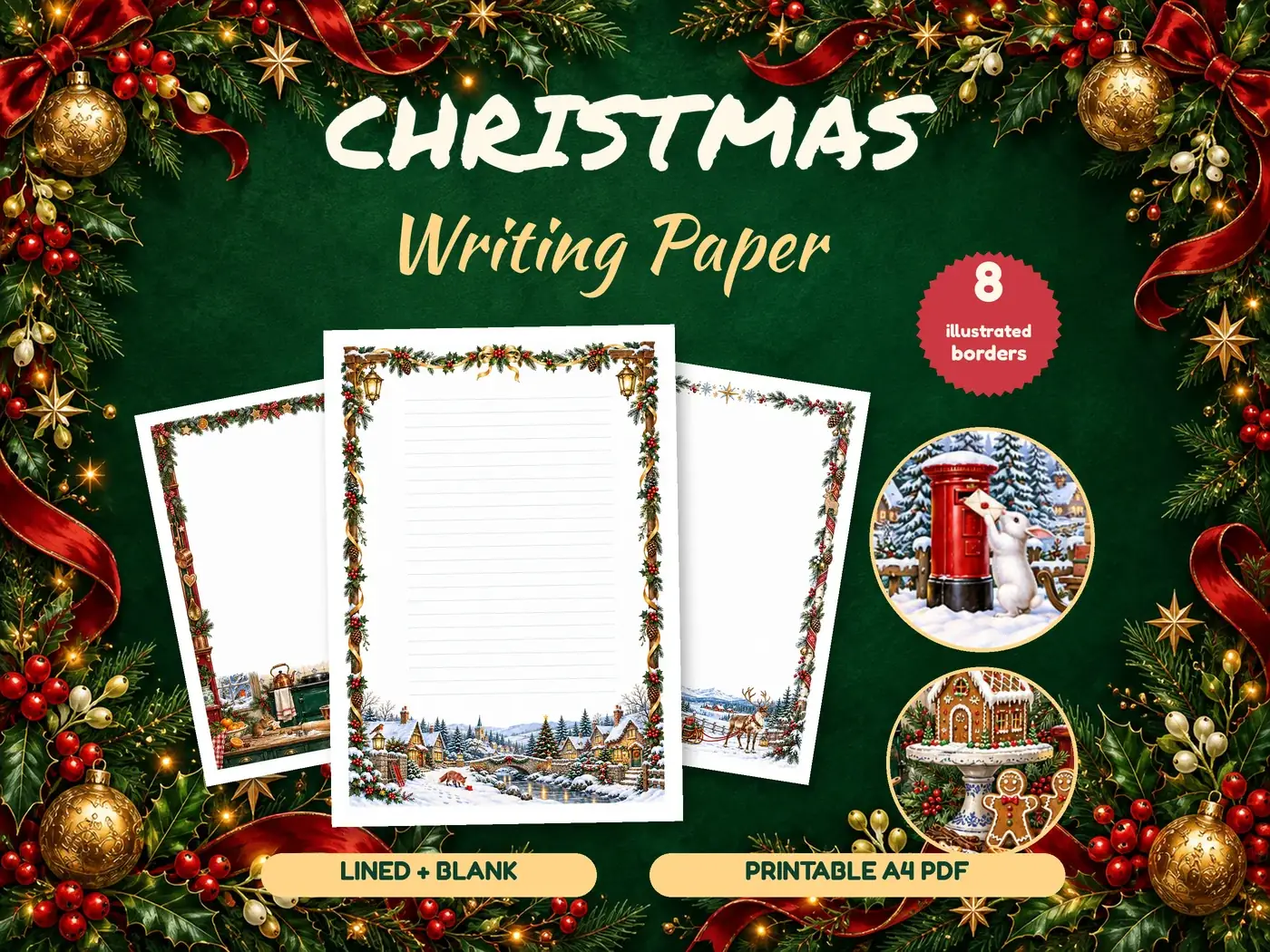
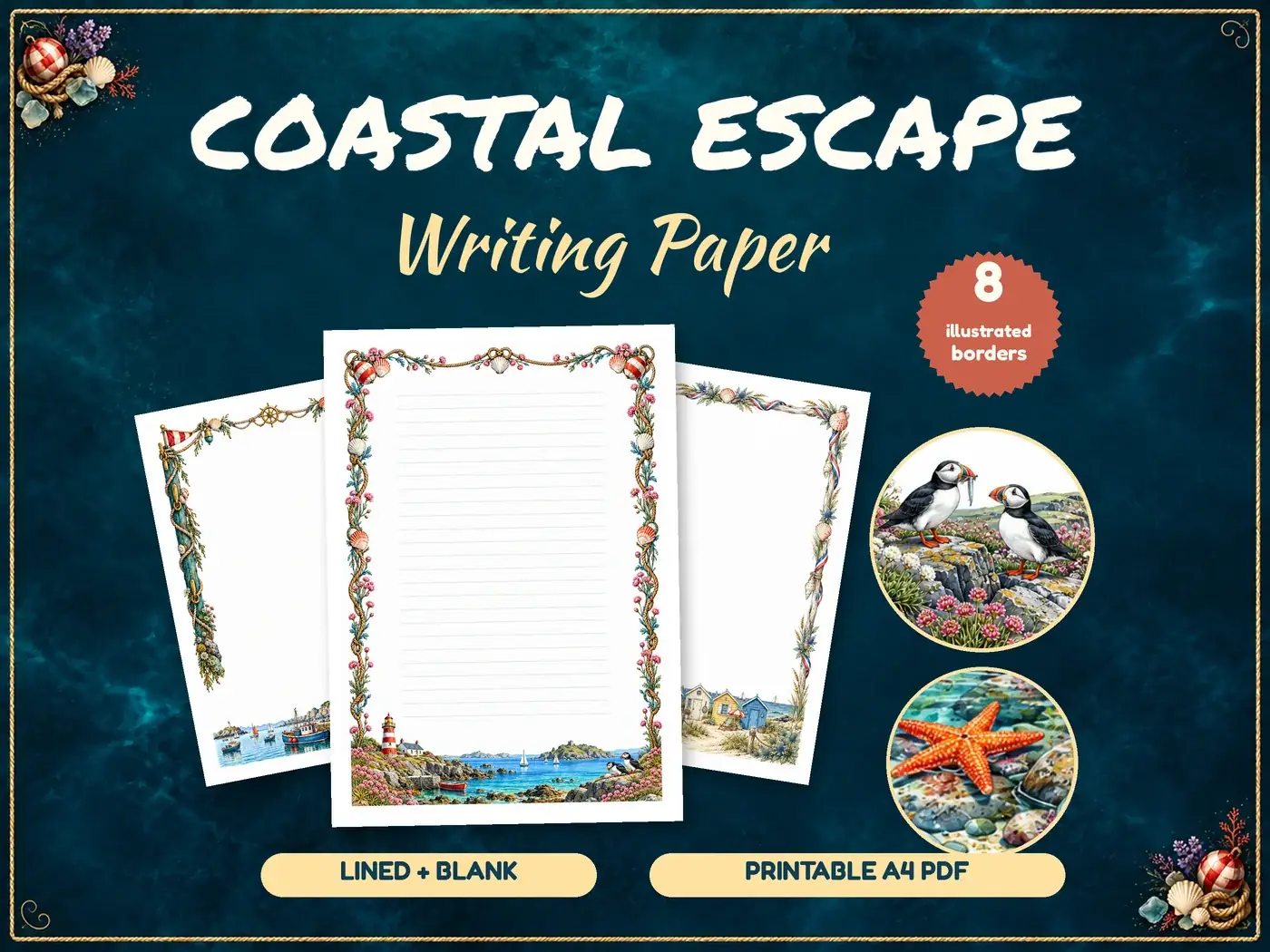
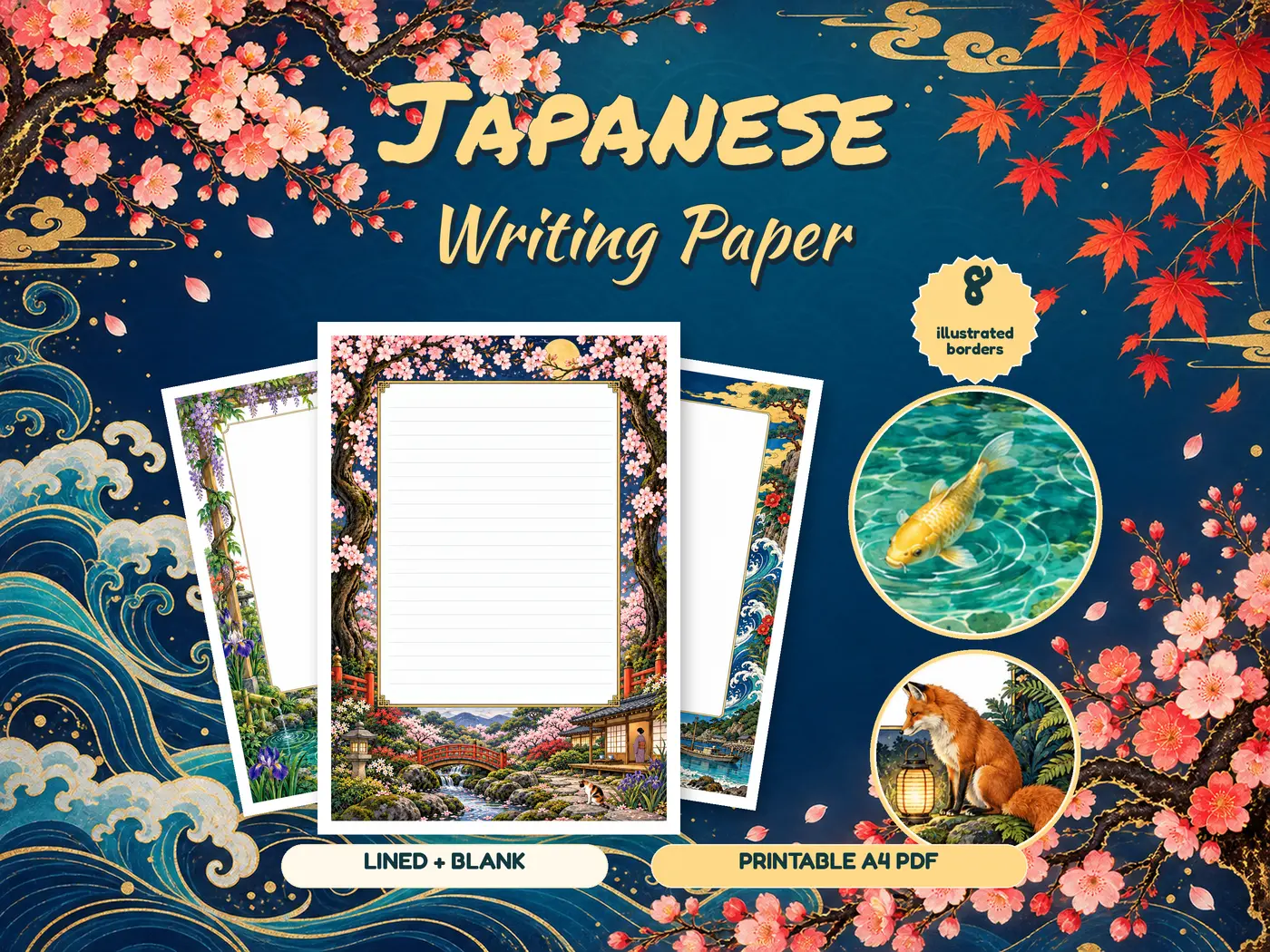
Once the message has a mood, choose a page that supports it. A lined sheet can make a longer note easier to place; a blank one suits a few spacious sentences or a small drawing. Japanese Writing Paper includes eight illustrated borders in both lined and blank versions, including Sakura Teahouse, Koi Garden, Lantern Lane and Waves & Fuji. Pick one border, print a single A4 test page at Actual Size as the included guide recommends, then keep the words in the generous centre space. Ordinary paper is perfectly sufficient too; the stationery should support the message, not audition for the leading role.
Finish with a tiny read-through
- Have you named what the person did or gave?
- Have you included one true detail about its effect?
- Does the note sound like you rather than a formal template?
- Is the person’s name and your closing written clearly?
Then let the note be finished. You do not need a perfect final flourish. ‘With love’, ‘Warmly’, ‘Thanks again’ or simply your name may be exactly right. The National Postal Museum's history of letter-writing manuals is an entertaining reminder that correspondence has accumulated plenty of rules over time. Read once for sense and spelling, then stop before polishing away your natural voice. The purpose is not to perform gratitude beautifully; it is to let another person know their kindness was seen.
Explore Japanese Writing Paper
More to read, make and discover
A few useful, interesting and checked routes into the subject.
- Practical wordingThe Metropolitan Museum of Art: the art of the thank-you note
A concise structure built around the specific gift or action, why it matters and an appropriate closing.
- Letter-writing historySmithsonian National Postal Museum: manuals that taught letter writing
A lively history of changing correspondence manuals, familiar letters and the rules people were once expected to follow.
- International letter formatJapan Post: an illustrated English-letter guide
A Japanese postal guide to dates, greetings, closings, signatures and example messages for thanks and congratulations.