1. Define the object and choose the pattern
Write down what you are making and how it will be used. A bag for daily shopping needs different decisions from a decorative cushion, even if the fabric is identical. Note the important features before choosing colours: size, fastening, washing needs and any practical restrictions.
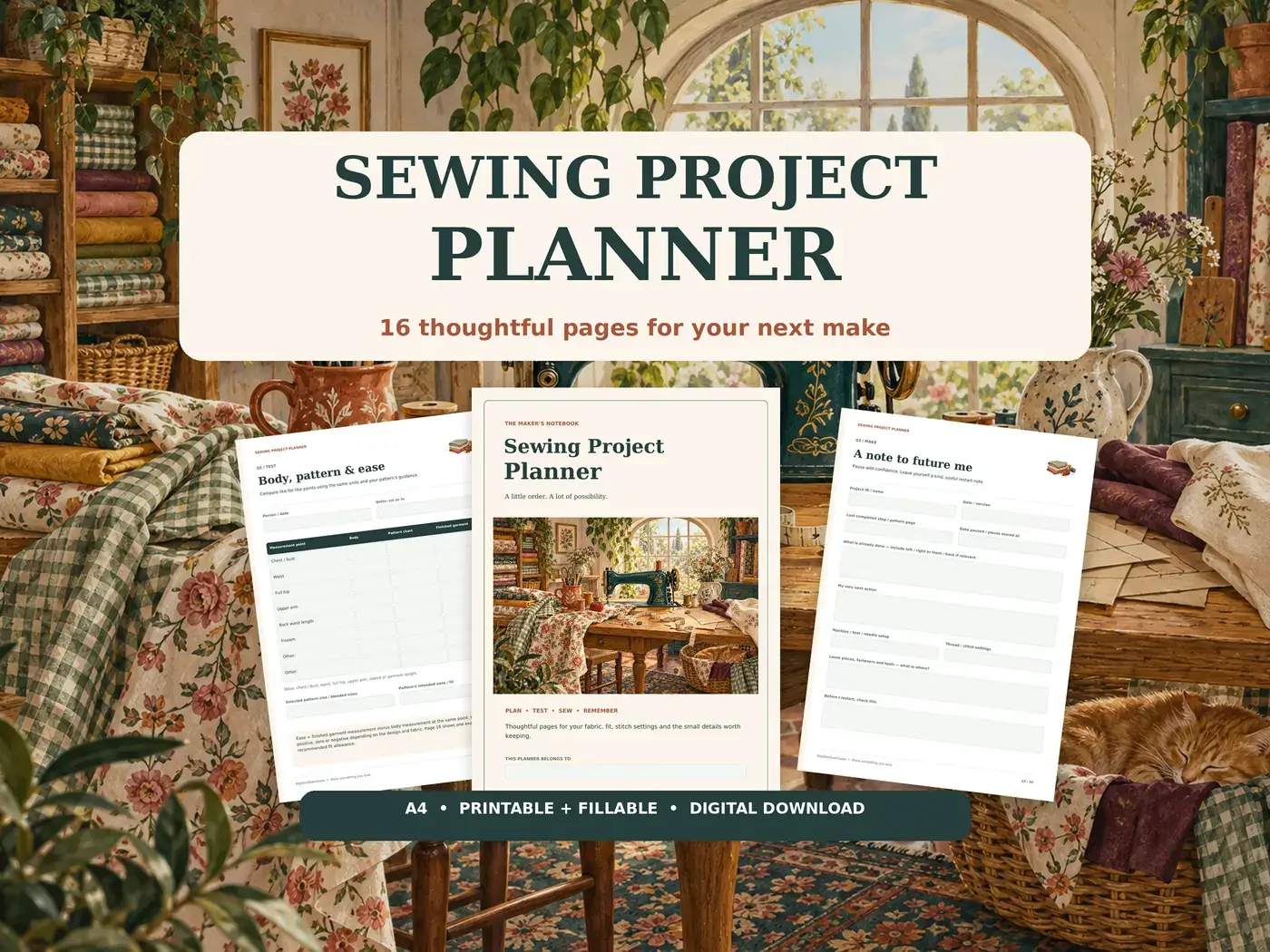
Choose a suitable sewing pattern and read it through. Our Sewing Project Planner records decisions and progress; it does not contain the sewing pattern itself. Keep the pattern’s instructions and size information alongside the planner so that a useful summary does not become a substitute for the construction details.
2. Check measurements and fabric requirements
For clothing, take the measurements required by the chosen pattern and use its own size and finished-measurement guidance. Record the date and selected size rather than relying on a label from another garment. Note planned fitting adjustments where the pattern supports them, leaving room to record changes after a test fit.
Check fabric type, width, quantity and any directional print or nap before cutting. Match the materials to the pattern’s recommendations and follow their preparation and care instructions. The specialist Sewaholic pre-sewing checklist gives a useful example of preparation; use your actual pattern to settle the requirements for your project.
3. Gather notions and check the equipment
List the fastenings, thread and other notions named by the pattern, including sizes and quantities. Mark what you already have and what still needs obtaining. A zip that is almost the right length is a decision to resolve before the project reaches the zip, rather than an optimistic item to cross off.
Check the machine manual, needle and stitch choices for the fabric and task. Test on a suitable scrap where needed. Keep preparation proportionate: the aim is to remove avoidable interruptions, not to create a second project devoted to managing the first one.
4. Make a visual record worth keeping
Sketch the proposed object and add a fabric swatch to the printed planner. Annotate changes with plain words: “shorter handles”, “pocket on inside” or “check button spacing”. During October, The Big Draw’s 2026 Make a Mark theme offers a timely encouragement to use drawing as a working process rather than a polished result.
A sketch can be untidy and still answer a question. Historical needlework samplers at the V&A also show the value of keeping examples of technique. Our craft-swatches article suggests the small records that make a sample useful when the details are no longer fresh.
5. Divide the work into real sessions
Separate preparation, cutting, marking, construction and finishing, following the pattern’s order. Estimate what fits a normal session and choose a stopping point that will be easy to recognise later. “Cut and label the pieces” is clearer than “make good progress”, which has a habit of becoming less definite as the evening goes on.
Before cutting, confirm the layout, required folds, grain direction, number of pieces and any pattern-matching decisions. Use the pattern’s instructions for the actual method. Record the completed step and the next task if the project pauses; a brief note can save a surprising amount of re-reading.
6. Save the decisions, not just the ambition
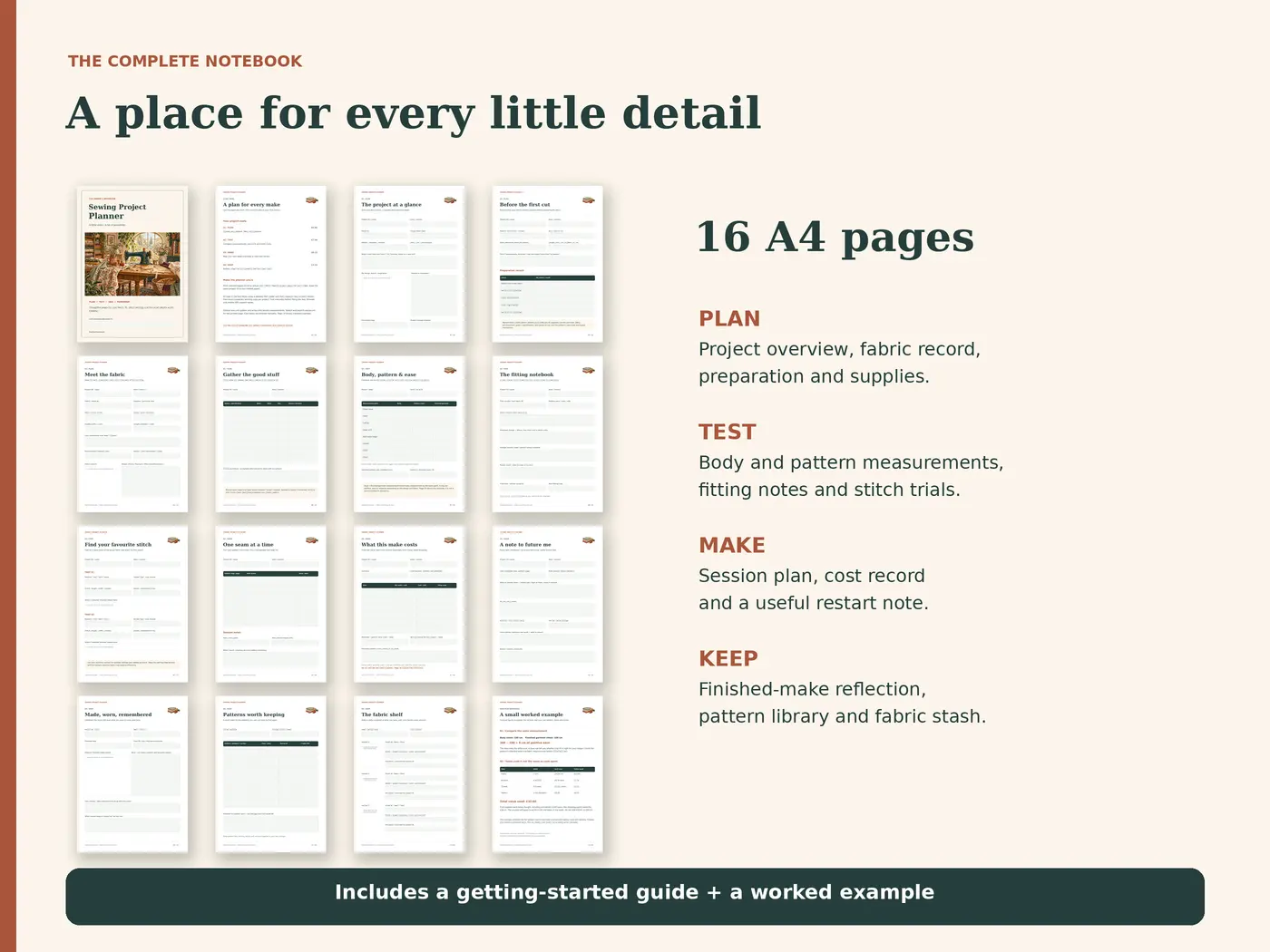
The planner has 16 A4 pages with fillable text fields for a compatible desktop PDF reader. Save a fresh copy for each project and test that your entries remain after reopening. Sketching and attaching physical swatches belong on the printed pages; calculations are manual.
Keep useful final notes: what changed, what fitted, what fabric remained and what you would check before repeating the pattern. Avoid filling every field simply because it exists. A good project record answers the questions that otherwise return when the pieces are already cut, the instructions are open and the thread is finally the right colour.
Explore Sewing Project Planner
More to read, make and discover
A few useful, interesting and checked routes into the subject.
- Further readingSewaholic: a pre-sewing checklist
A specialist pattern-maker’s example of preparation before sewing.
- Further readingThe Big Draw Festival 2026
October 2026’s Make a Mark theme celebrates drawing as a process.
- Further readingV&A: needlework samplers
Stitch samples used for reference as well as display.