1. Gather the work before changing a stitch
Put the unfinished piece, remaining yarn, hook, pattern and any notes together on a clear surface. Take a photograph before removing markers or pulling out stitches. If the active loop is loose, secure it with a suitable removable marker while you work out where the project stopped.
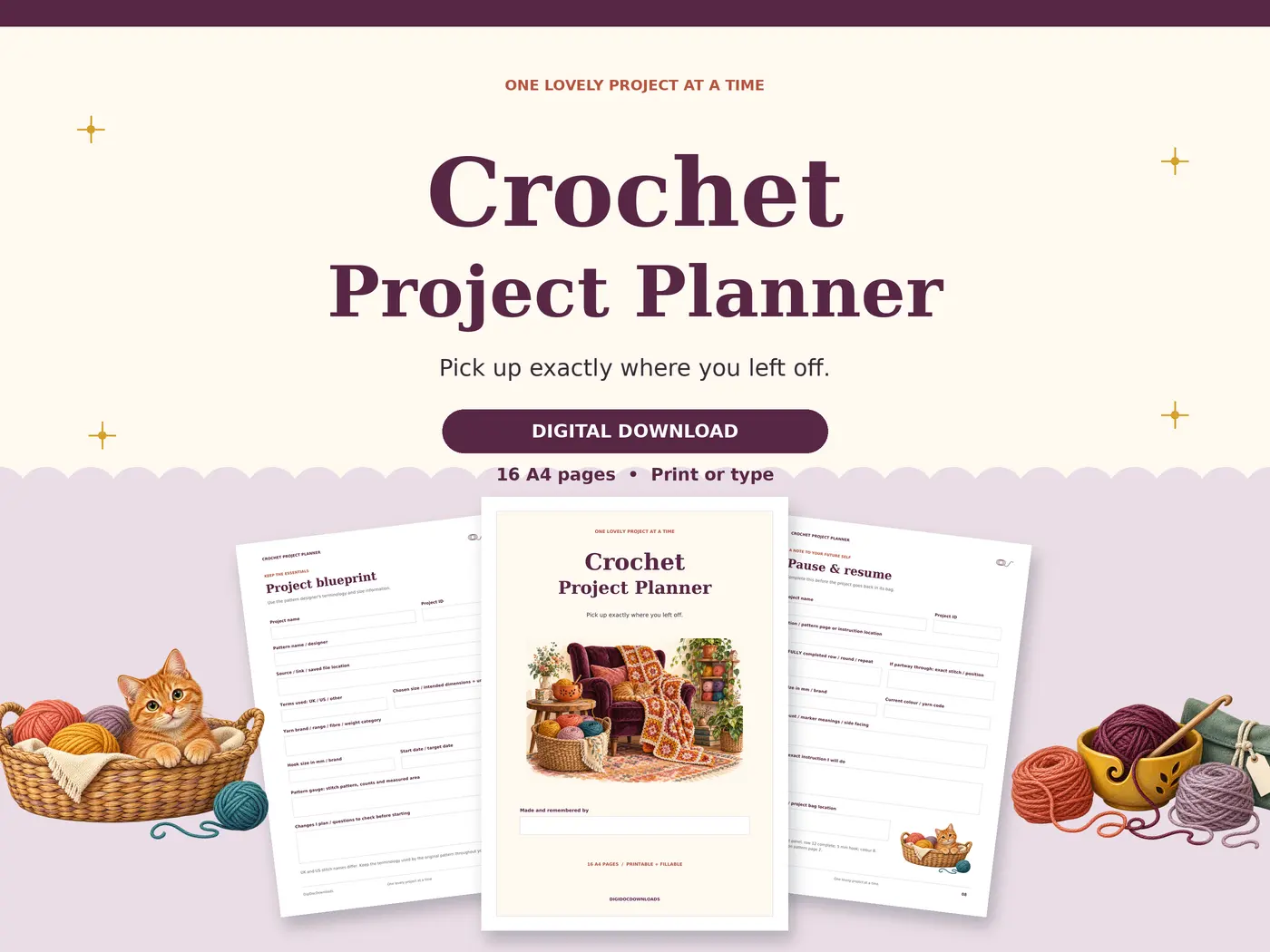
The Crochet Project Planner supplies project blueprints, progress logs, pause-and-resume notes and four project-bag cards. Begin with only the pages you need. Ordinary paper can also hold a restart record; the planner's advantage is keeping the different kinds of information in a consistent place. It does not include crochet patterns or identify stitches automatically.
2. Identify the exact pattern and version
Record the pattern name, designer, source and version or publication date where available. Add the chosen size and any changes already made. Keep a lawful working copy accessible: a title scribbled on a card is less useful if the instructions themselves are no longer to hand.
Check whether the instructions use UK or US crochet terminology. The same abbreviation can describe a different stitch in different systems, so copy the pattern's terminology note rather than translating from memory. Also record whether the piece is worked in rows, joined rounds or a continuous spiral, following the pattern's own method. These details affect how a stopping point should be described.
3. Match the yarn and hook to the evidence
Read the yarn band and record the brand, yarn name, fibre content, colour reference, dye lot if supplied and length per ball. The Craft Yarn Council's label reference is useful for recognising the information. Keep the actual label or a photograph with the project; the record should lead back to evidence rather than merely repeat a guess.
Record the hook size in millimetres, including any markings on the hook already in the bag. If several hooks are present and no note survives, mark the size as unconfirmed. A comparison sample may help investigate, but it cannot prove which hook was used. Do not quietly convert an uncertain detail into a definite one because the planner has a box waiting for it.
4. Find the last completed instruction
Lay the piece beside the relevant pattern section and compare visible features: shaping, colour changes, repeats and any markers. Count slowly and check the same section again. Work out whether the last note describes a completed row or the row that was about to begin. “Row 12” on its own leaves both possibilities open.
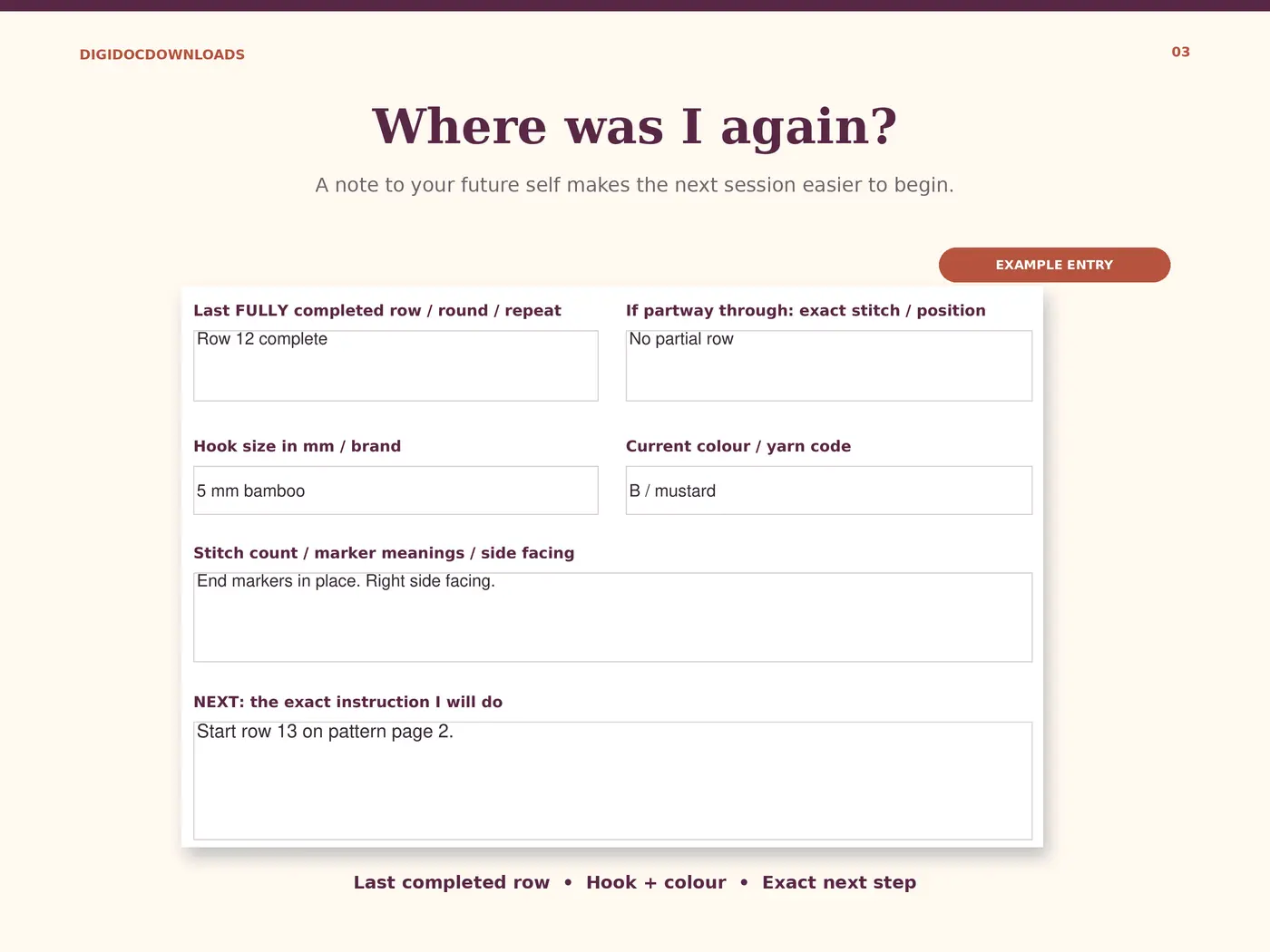
Write the stopping point in a complete sentence. For example: “Row 12 completed; 36 stitches counted; turn before starting row 13.” This is an illustrative record, not an instruction for your pattern. If the fabric and the notes disagree, pause at the disagreement and seek pattern-specific help. Pulling back work is an option only once the intended point and method are understood.
5. Check the fabric before committing more yarn
If the project depends on fit, revisit the pattern's gauge instructions. The Craft Yarn Council's crochet gauge sheet explains making a sample in the specified yarn, hook and stitch. Measure a suitable sample according to the pattern, and record both the count and the area measured. Keep a note of any washing or finishing treatment used.
Compare the new sample with the existing fabric as well as the target gauge. A return to crochet after a break may produce a different fabric even with apparently identical tools. Decide how to handle a mismatch before adding a large section. The planner's gauge records and swatch cards preserve the outcome; they do not make an unsuitable sample match the pattern.
6. Separate stock, estimates and purchases
Use the yarn inventory to list what remains, keeping complete labelled balls separate from partial or unidentified ones. Retain the pattern's stated quantity as its own figure. A manual estimate of remaining length is an estimate, particularly when the original ball weight or length is uncertain.
The planner includes a manual yarn-length estimate with a worked example. Read that supplied example before attempting your own calculation, and copy the units carefully. The Craft Yarn Council's yarn questions offer further context on yarn and quantities. Leave a margin for uncertainty rather than treating a calculated figure as a promise that the final edging will be possible.
7. Put one clear next action on the bag card
Choose the next action small enough to complete in one sitting: verify a stitch count, make the sample or work one specified section. Include the exact pattern location and any colour or shaping reminder. Keep the card with the yarn and work, rather than in a separate notebook that may migrate elsewhere.
A useful card might read: “Pattern version 2, medium size, 4 mm hook. Last completed: round 18. Next: follow round 19, contrast yarn. Check count against pattern before continuing.” Replace every detail with the facts of your project. Add a date so the note's age is visible when the bag is opened again.
8. Save the record at the end of the session
For printed use, complete the chosen pages by hand, cut the bag cards and attach yarn samples where appropriate. For digital notes, save a fresh copy of the PDF and test its text fields in a desktop PDF form reader before filling every page. The layout is fixed; cutting cards and attaching samples are printed activities.
End by updating the last completed instruction and the next step. Save and reopen a digital copy to check that the entries remain. If the project is finished, move its yarn details and useful changes into the finished-project record. Our Wool Month story offers a wider yarn-organising starting point, but a single accurate restart card is enough for today's work.
Explore Crochet Project Planner
More to read, make and discover
A few useful, interesting and checked routes into the subject.
- Further readingCraft Yarn Council: crochet gauge
A one-page guide to making a sample in the yarn, hook and stitch required by the pattern.
- Further readingCraft Yarn Council: yarn label information
Check the types of fibre, gauge and care information worth retaining.
- Further readingCraft Yarn Council: yarn questions and answers
Further help with yarn choices, quantities and care.