1. Keep the original before rewriting
Photograph or scan the whole recipe, including its reverse and margin notes, then record who supplied it and when. If the recipe is spoken, ask permission to record or take notes. Mark remembered details as recollections rather than claiming an uncertain date as fact.
The Library of Congress’s family-recipe article shows why scraps and annotations can matter. Its preservation guide helps with caring for original paper. Use a copy in the kitchen; a cleaner working version should not require throwing away the document that gave it its character.
2. Clarify ingredients and units
Write every ingredient with a quantity and unit where the cook can supply them. Ask what “a cup” or “a packet” means in this version, and record brand or pack size when it affects the method. UK and US kitchen measures do not always describe identical quantities.
Keep one consistent set of measurements in the working recipe. If a conversion is added, check it for the specific ingredient and label it. Do not turn an approximate recollection into a precise-looking gram value without testing or a reliable conversion. “Quantity to confirm” is honest and useful.
3. Record the equipment and oven convention
Note the tin or dish dimensions, required equipment and the oven setting with its units. Ask whether a Celsius temperature is for a conventional or fan oven; do not silently convert it. Record any preheating or preparation that needs to happen before mixing.
Write down the intended yield as clearly as practical: one named tin, approximately six portions or a counted batch. A phrase such as “enough for everyone” is a memory, not a repeatable quantity. Keep it in the story section while supplying a working estimate separately.
4. Put the steps in the order they happen
Begin each step with an action and name the ingredient involved. Separate preparations that must happen first from those that can wait. Add visible signs when known: a mixture thickens, an edge colours or a specified cooking check is reached. Historical wording is not a substitute for current food-safety guidance.
Wikipedia’s recipe overview offers broader context for written recipes, but the working page must match this particular dish. If a recipe has not been tried in its rewritten form, label it “transcribed; cooking details not yet checked” rather than implying a successful test.
5. Keep the memory beside the method
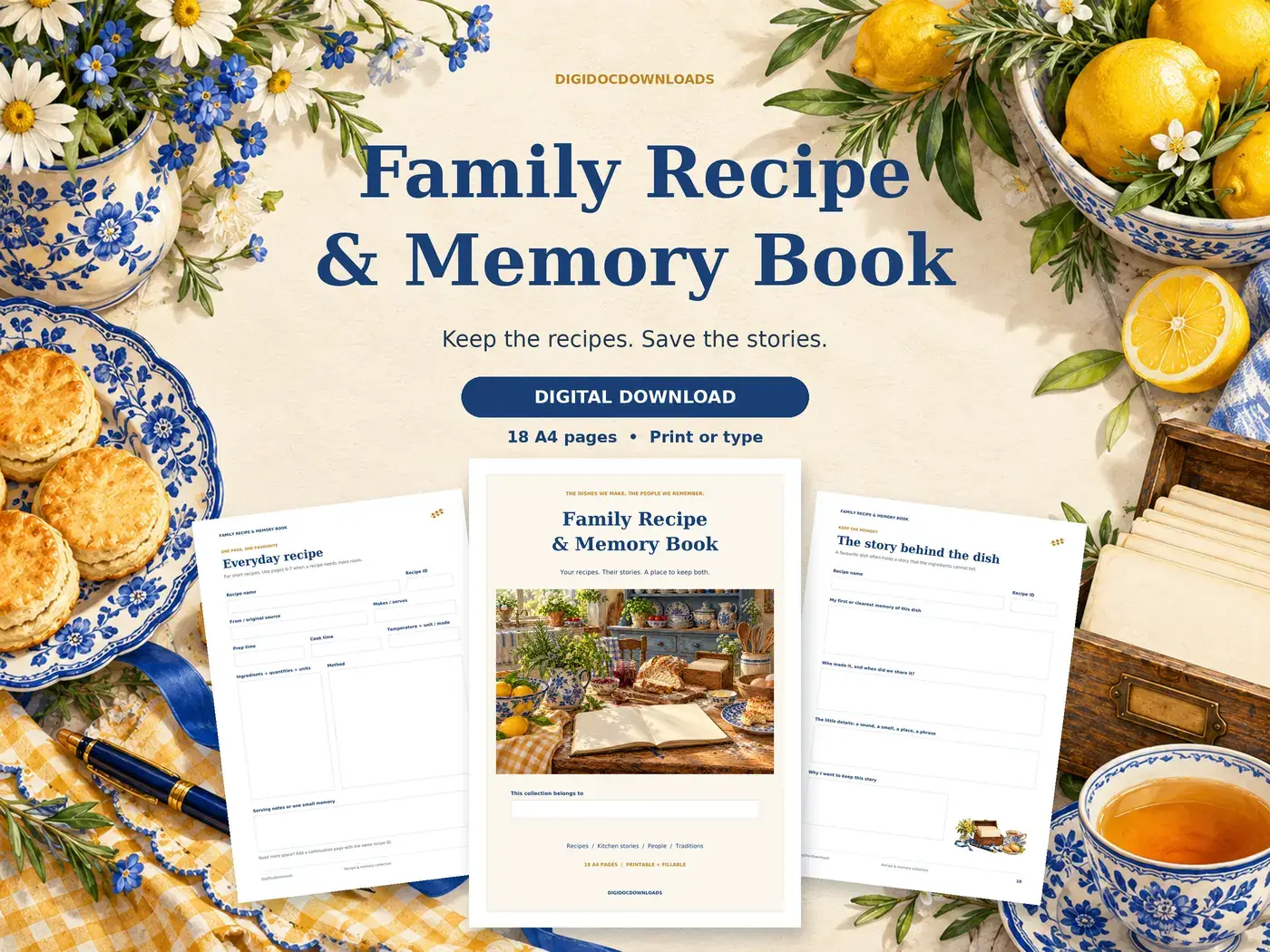
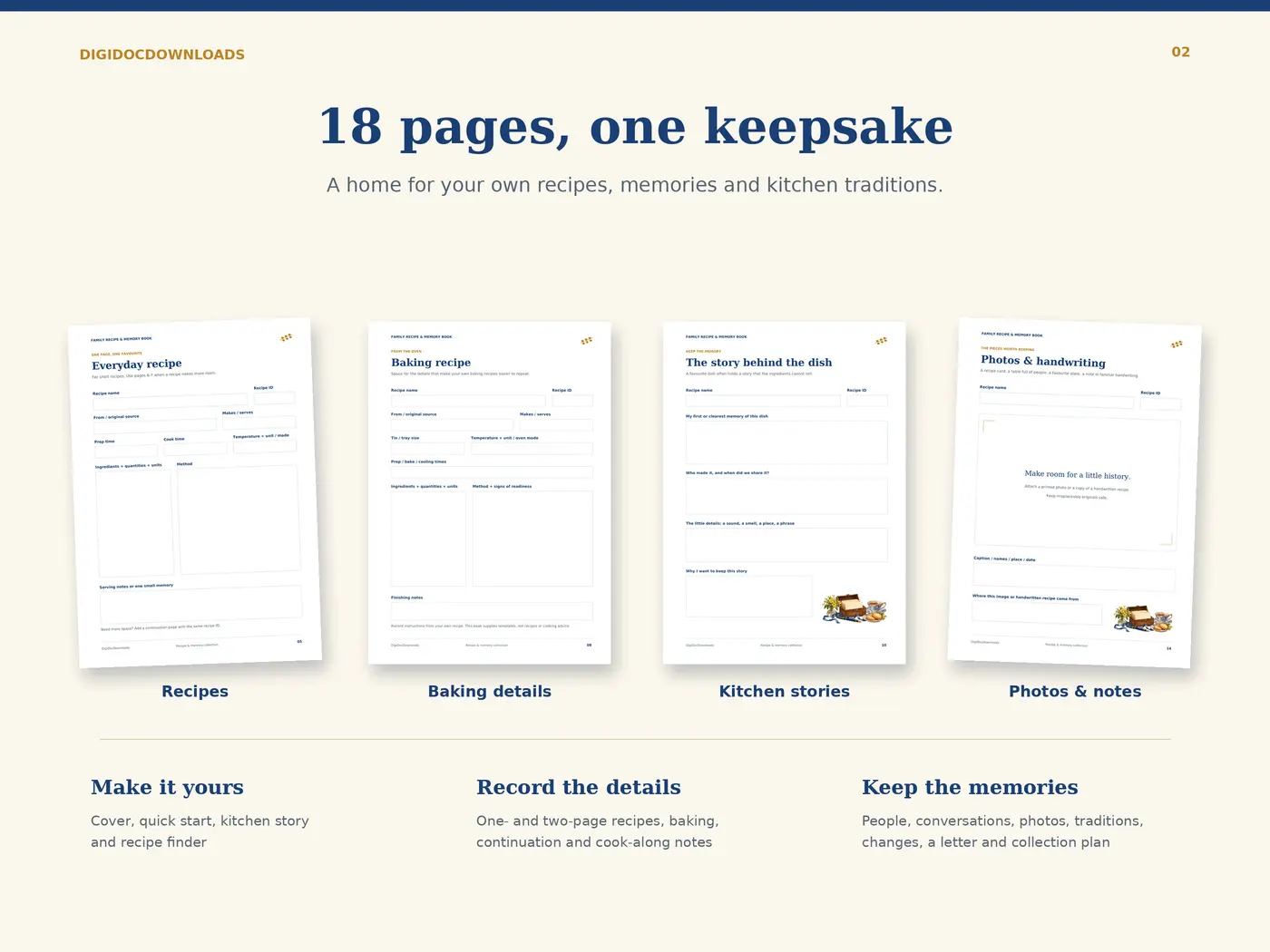
Our Family Recipe & Memory Book provides blank templates for your own recipes and stories. Add the contributor, the occasion and one specific recollection: where the dish was served or what someone always changed. The eighteen-page A4 PDF contains no supplied recipes.
Print the pages or use text fields in a compatible desktop PDF reader, saving a working copy. Photo spaces take attached printed copies. Our family-recipe story explains why the original notes deserve their place beside a clearer version.
6. Version the changes simply
When the working recipe is cooked, record the date, actual adjustments and result. “Reduced sugar on 12 November; texture unchanged in this attempt” is useful; “improved recipe” hides what changed. Keep the original and revised versions distinguishable.
Ask the contributor to review the page where possible. A practical record should preserve their meaning without requiring every instruction to stay vague for sentimental reasons. Clear steps help another person cook the dish; the accompanying story explains why someone wanted to keep it.
Explore Family Recipe & Memory Book
More to read, make and discover
A few useful, interesting and checked routes into the subject.
- Further readingLibrary of Congress: collect family recipes
Examples of recipes preserved with their family stories.
- Further readingLibrary of Congress: preserve family records
Care for original family documents, photographs and objects.
- Further readingWikipedia: recipe
A broad overview of recipe formats and their history.