The recipe is not always the whole record
“A little more milk” can be maddeningly vague when dinner depends on it. On an old recipe card, it may also be the most revealing line. It shows someone adapting the dish, noticing a problem and leaving a useful nudge for next time. The ingredients tell us what went into the bowl; the margin tells us how the cooking actually went.
Saving family recipes works best when those two kinds of information stay together. A clean working version makes the dish easier to repeat, while the original wording keeps something of the person who used it.
Libraries keep ordinary scraps for a reason
The Library of Congress guide to collecting family recipes shows how food records can live on unexpected pieces of paper. Its examples make a helpful point: a document does not need to look like a polished cookbook to carry history. A reused envelope may preserve a recipe, a hand and a moment in everyday life.
Look beyond the ingredient list when sorting a family collection. Who wrote this? Where was it kept? Is there a date, a food stain or a correction in another hand? Record what is known, and leave uncertainty visible rather than filling gaps with an appealing story.
Preserve the original, make a working copy
The Library’s family-record preservation guidance is a useful place to begin with old documents and photographs. Handle an original carefully and make a copy for cooking. The kitchen is excellent at producing steam, spills and fingerprints; it is less accomplished at protecting irreplaceable paper.
Photograph the whole card before cropping a neat version. Its reverse, edges and surrounding notes may contain information worth keeping. Avoid sticking a delicate original into a new scrapbook simply because the page has a conveniently sized space.
Separate memory from method
A memory such as “we had this after Sunday walks” belongs beside the recipe, but it cannot tell another cook the oven temperature. Keep two clear layers: the original record and a tested working version. Mark any changed quantities, ingredients or timings as changes.
Wikipedia’s overview of recipes provides a wider introduction to their written form. For a family project, the useful question is practical: can someone unfamiliar with the dish understand the equipment, sequence and signs of doneness? “Until ready” has an easy confidence that the next generation may not share.
Give the stories somewhere deliberate to go
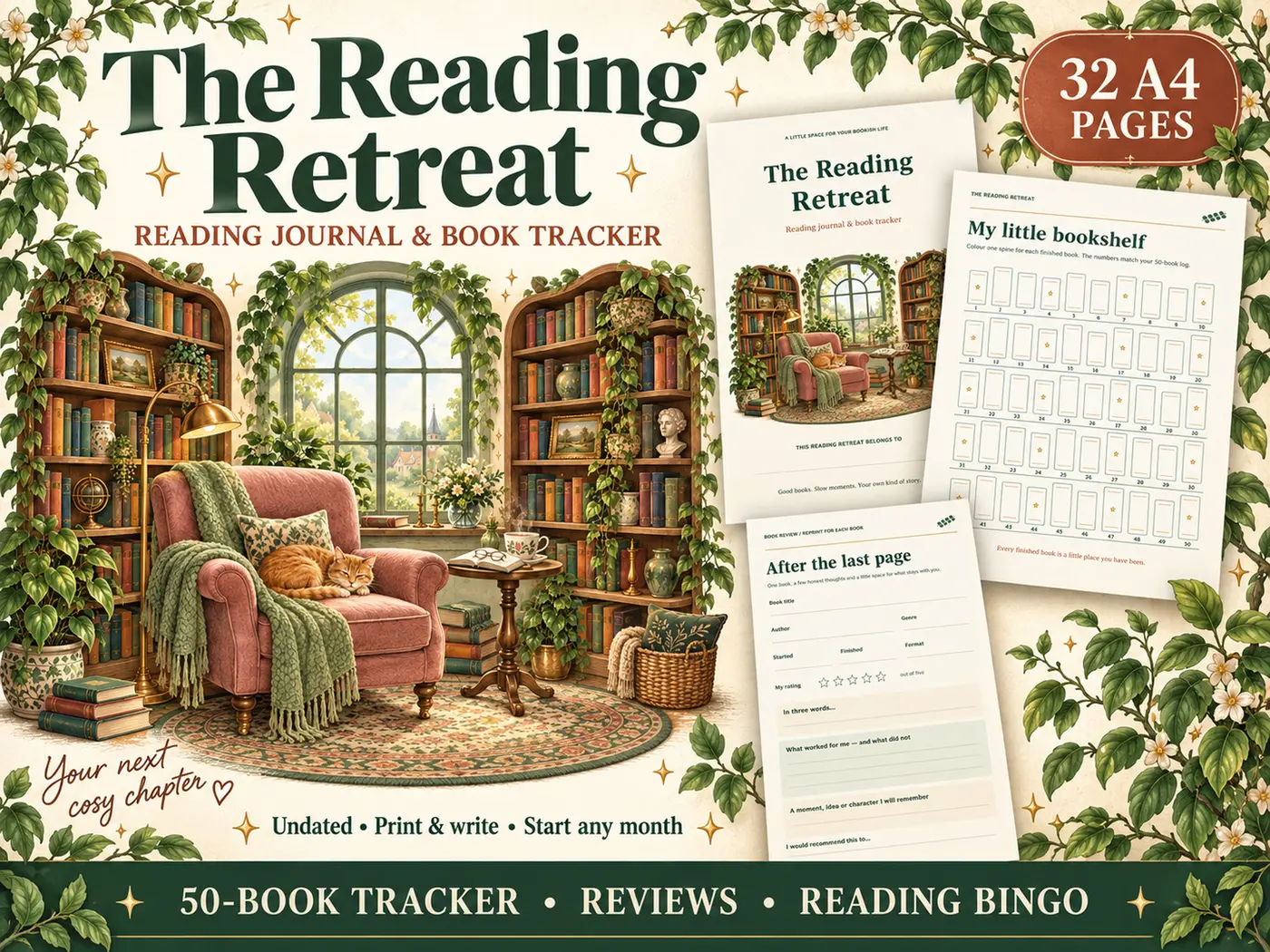
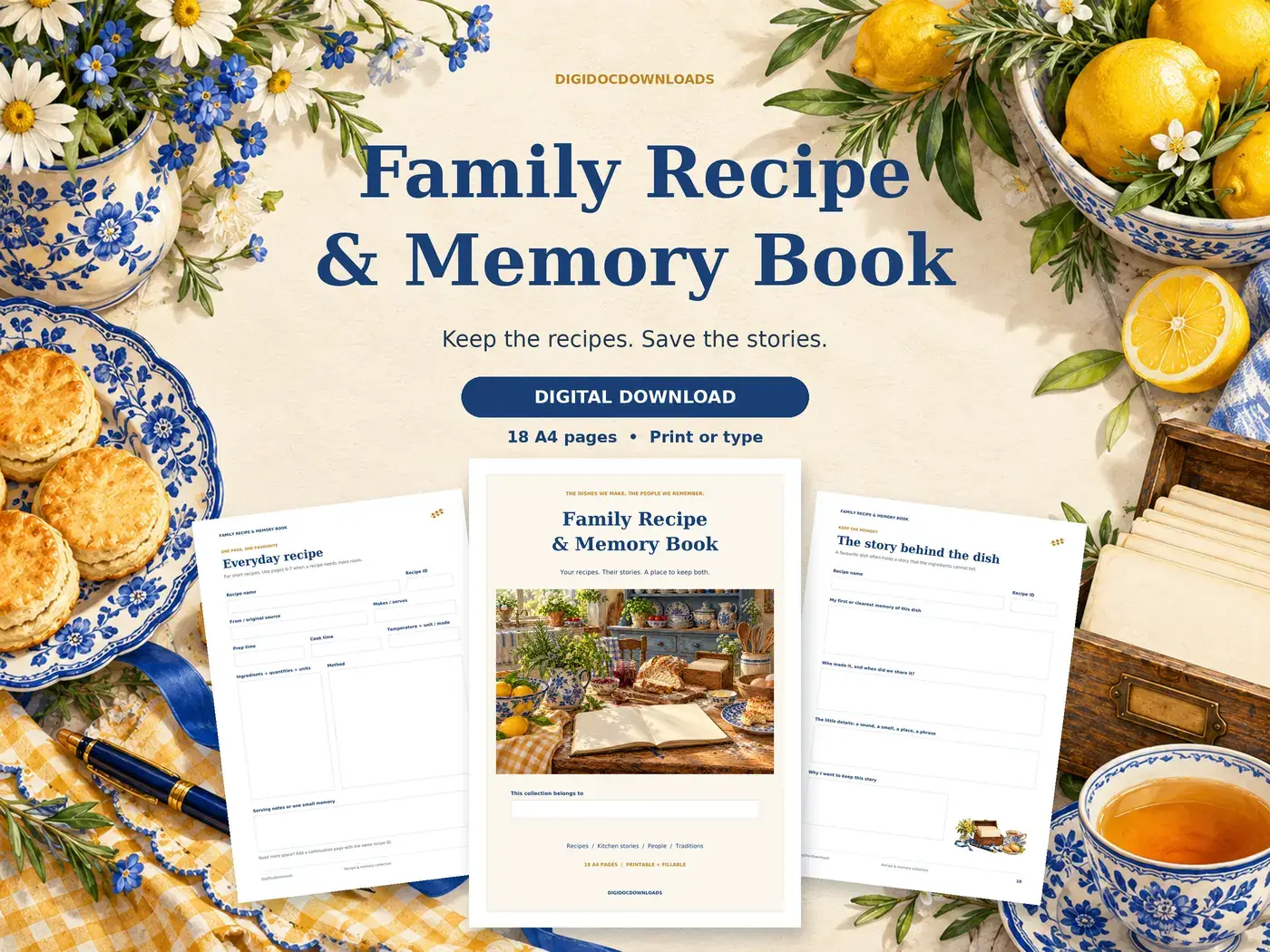
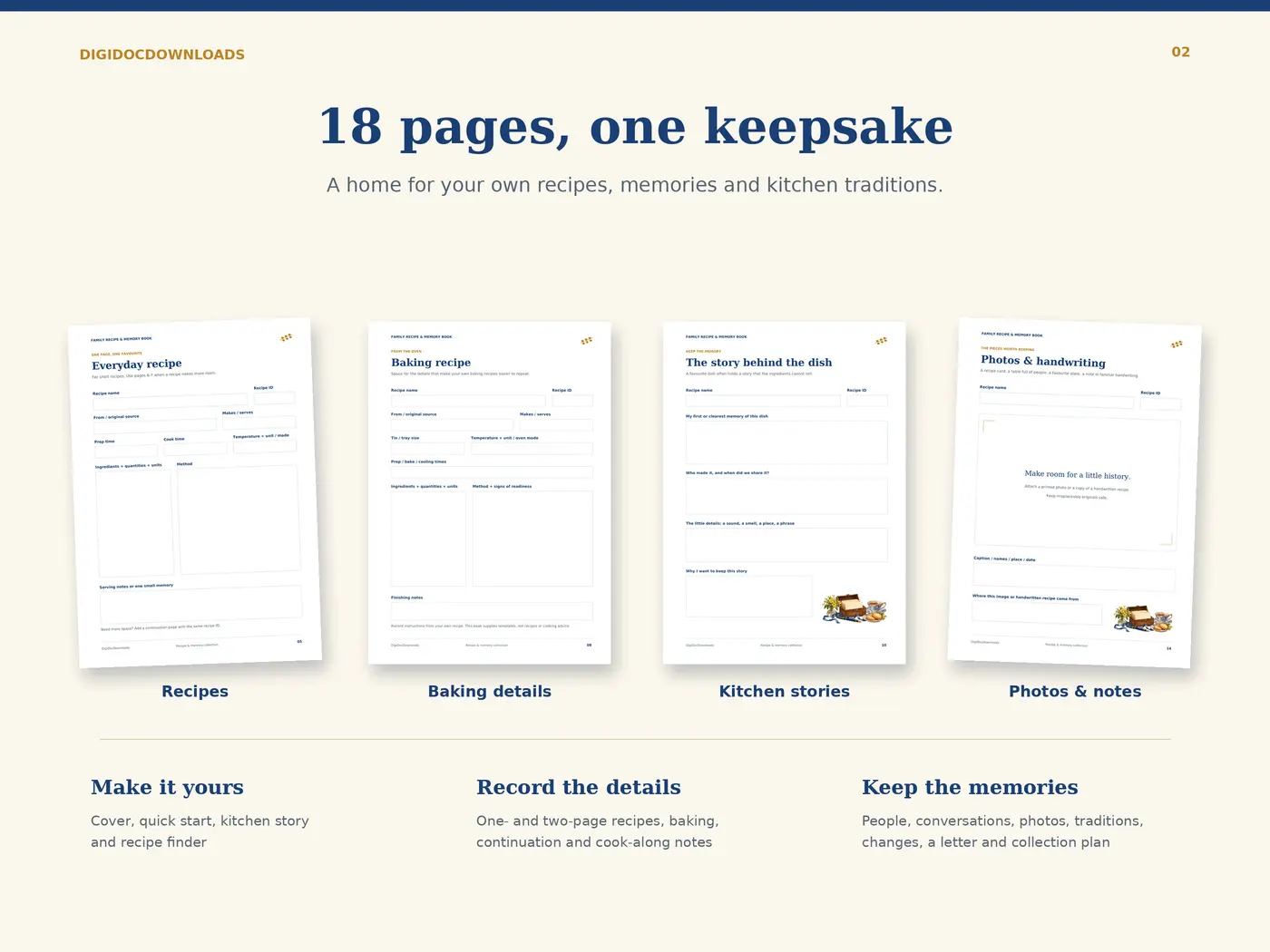
Our Family Recipe & Memory Book contains blank recipe templates and space for accompanying stories. It is an 18-page A4 book for adding your own material, not a collection of supplied recipes. Print selected pages or use the supported desktop PDF text fields; photo spaces are for attached printed copies.
The templates help separate the dish’s usable instructions from the recollection that makes it yours. Our guide to recording a family recipe shows how to turn an informal explanation into a practical page without erasing the original voice.
Save disagreement as information
Two relatives may remember different versions of the same cake. Record both, with names and dates, rather than forcing an agreement for a tidier book. One version may use a different tin or belong to another decade; the difference itself can be interesting.
Begin with one dish and one contributor. A useful record of a familiar meal is a better first result than an ambitious family cookbook nobody finishes. Keep the margin notes, too. They are often where the recipe stops sounding like instructions and starts sounding like someone.
Explore Family Recipe & Memory Book
More to read, make and discover
A few useful, interesting and checked routes into the subject.
- Further readingLibrary of Congress: collect family recipes
Examples of recipes preserved with their family stories.
- Further readingLibrary of Congress: preserve family records
Care for original family documents, photographs and objects.
- Further readingWikipedia: recipe
A broad overview of recipe formats and their history.