Begin with an everyday habit
The best place to look for a small knitted gift is often an ordinary habit. A mug used every morning, a bag carried to the library or a desk drawer full of tangled cables gives you something concrete to work with. The question is less “What can I knit?” and more “What would this person actually reach for?”
Choose a project that suits the recipient’s taste as well as your own. Someone who likes plain colours may appreciate one well-chosen shade more than a virtuoso stripe arrangement. Thoughtfulness can be quiet; it does not have to arrive wearing every colour in the basket.
Small is not a promise about time
A compact project still involves choosing yarn, checking gauge, finishing edges and fitting any fastening. Allow room for those stages rather than assuming a small object will be finished in one evening. A button loop that works comfortably is part of the present, not a minor detail to be negotiated afterwards.
Read the product’s skill guidance and construction notes. The Craft Yarn Council’s yarn-label information explains the distinction between yarn thickness and pattern skill symbols. A familiar yarn category does not, by itself, tell you how demanding the knitting will be.
Match the pattern to the moment
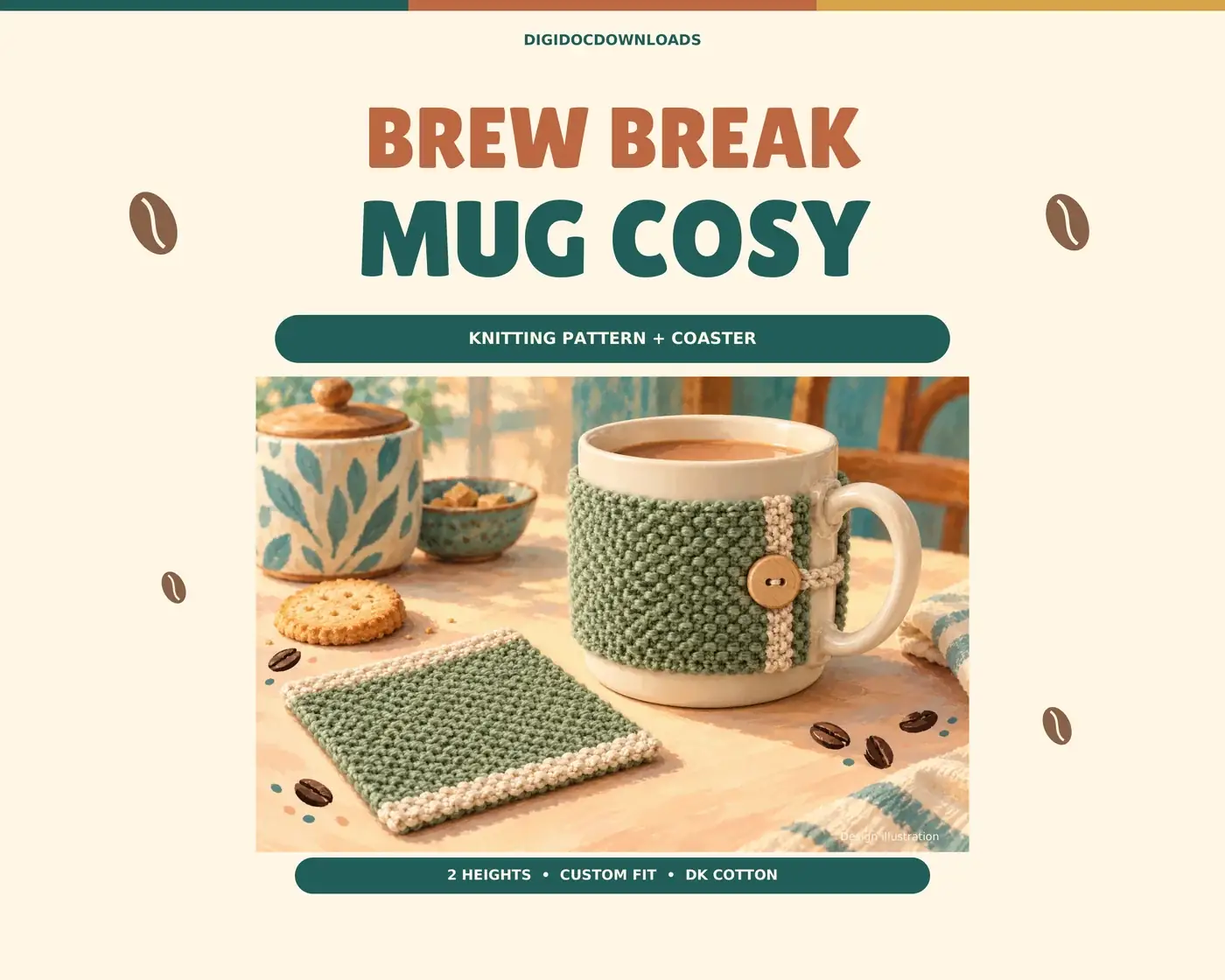
Brew Break includes a mug cosy and matching coaster, with two cosy heights and measuring guidance. It is an appealing starting point for a regular tea or coffee break; check the mug shape and the pattern’s fit instructions before selecting a size.
Carry Kind offers removable bag-strap wraps in three widths and lengths. Cable & Able provides three cable-tidy strap lengths; its use guidance limits fitting to cool, unplugged cables. These are pattern downloads, so the finished gift still depends on your making, fitting and finishing.
Give the yarn a practical job
Colour matters, but so does care. Choose the fibre and yarn specified by the pattern, check the recipient’s preferences and keep the original label. If a gift is likely to need regular cleaning, do not substitute a delicate yarn merely because its shade is irresistible.
The Craft Yarn Council’s care-symbol guide recommends including a label from the yarn used with a handmade gift. Its symbols explain washing, drying and other care instructions. Copy the relevant details accurately; a vague “wash gently” leaves rather a lot of decisions to the person opening the parcel.
Fit first, wrap second
Measure the actual item when the pattern asks for it, and follow its washed-gauge guidance. If the present is a surprise, choose something whose required measurements you can obtain sensibly. A photograph of a mug is a charming reference, but it is not a tape measure.
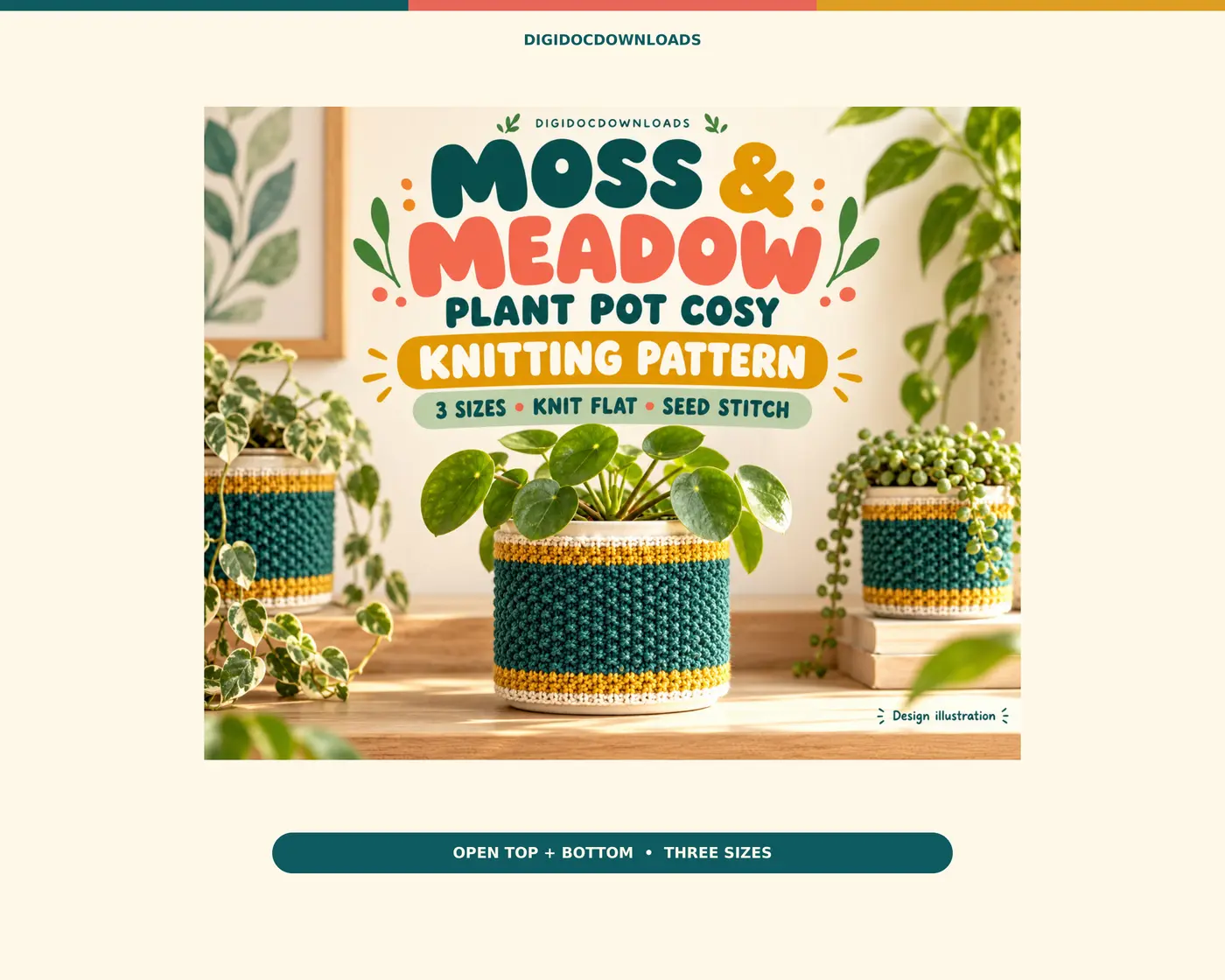
Finish and test fastenings against the intended object before wrapping. The current product notes identify where physical test-knitting remains outstanding, so illustrated examples should not be treated as proof of fit. Read those notes and use the pattern’s checks; there is no need to turn an intended design into a guarantee.
Make the last little bit count
A short gift note can explain the choice: “For the mug that gets you through your morning reading” says more than a generic label. Add yarn care information, and mention any practical usage limit without burying it in the wrapping. The aim is to make the gift easy to enjoy.
Knitted objects have long belonged to useful daily life, as the V&A’s account of British and Irish knitting traditions shows through different garments and regional practices. Your gift need not be grand to belong in that spirit. A little object, thoughtfully chosen and properly finished, can be quite enough.
More to read, make and discover
A few useful, interesting and checked routes into the subject.
- Further readingCraft Yarn Council: care symbols
How yarn labels communicate care and why a label is useful with a handmade gift.
- Further readingCraft Yarn Council: yarn label information
Yarn-weight and pattern skill symbols.
- Further readingV&A: knitting traditions
Regional knitting in practical everyday life.