The view is only half the story
A postcard can show a harbour, a hillside or an exceptionally blue sea. The message becomes more interesting when it adds something the picture cannot: the sound outside the café, a surprisingly good cake or the detail that made you think of the person receiving it. A small space encourages a useful choice.
You do not need to account for every day of a trip. Pick one moment and give it enough shape to be recognisable. “We walked beside the harbour” is an update; “The ropes tapped the masts while we waited for the bakery to open” gives the reader somewhere to stand.
A format that had to find its room
The Smithsonian Institution Archives’ postcard history explains that early US picture postcards did not allow a message on the address side. Messages could end up squeezed into space beside the image. The divided back became available in the United States in 1907; other countries had their own timelines.
The Finnish Postal Museum’s retrospective describes Finland’s first stamped postcard without an envelope in 1871. This is a past exhibition account, not a current event recommendation. Both histories show how a modest piece of paper became useful everyday communication long before our phones took over the short-message business.
Try a detail, a connection and a closing
Begin with something you noticed. Add why it reminded you of the recipient, then finish with a small thought for the next time you meet. “There is a bookshop here with a whole shelf of sea stories. It made me think of your sailing novel. I will tell you about the one with the astonishing cover when I get home.”
The structure is flexible, not a formula to disguise. A note to a close friend may skip the explanation; one to a relative might include a little more context. Let the amount of familiarity decide how much the reader needs to know.
No holiday required
A small message can come from an ordinary week. Describe the first leaves turning outside your window, a new recipe that worked or the local café you finally tried. “The apple crumble survived my improvisation, which I am choosing to regard as progress” gives someone a cheerful piece of news without pretending your Tuesday was an expedition.
A recommendation can work especially well: a book title, a walk or something to cook together. Keep any precise practical information clear enough to use. If you have not checked opening times or prices, leave those out rather than passing along a guess.
When the thought needs more room
A postcard suits a small observation. A longer story, a private message or several questions may belong in a letter instead. Our handwritten-letter guide helps with getting started without making the page feel like an examination.
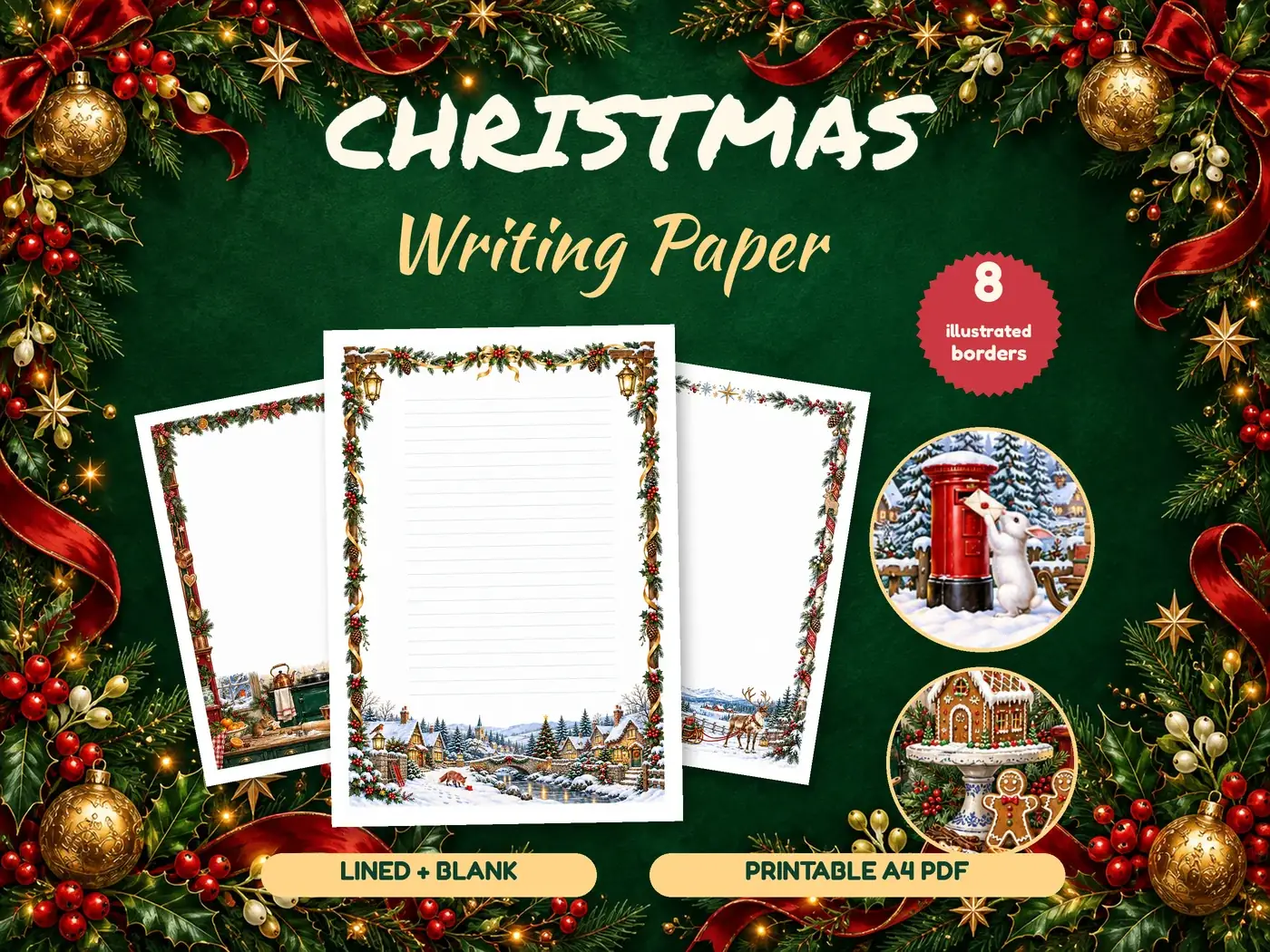
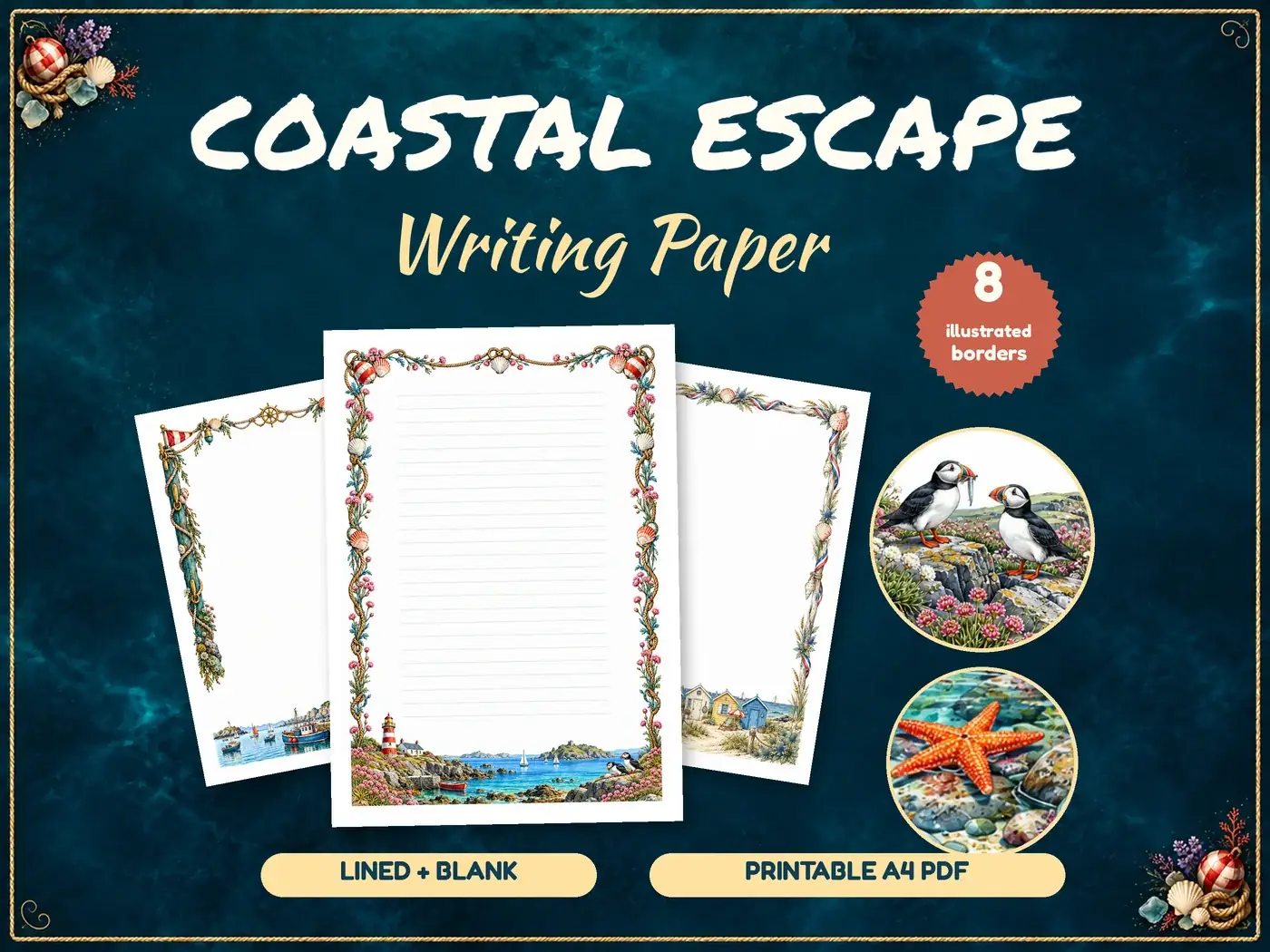
Coastal Escape Writing Paper is full-page A4 stationery, not a postcard template. Its eight illustrated designs come in lined and blank versions within an 18-page PDF. Choose it when a seaside border suits a longer letter; use an actual postcard when that is the format you want to send.
Give the recipient something to keep
Read the message back for the person opening it. Does it contain a detail they can picture or a connection they will understand? If it is mostly a list of places, replace one item with a moment. If it needs several explanations, choose a simpler story rather than shrinking the handwriting until it becomes decorative.
A short note does not have to be profound. It just needs to feel meant for someone. The nicest result may be a small card on a shelf, reminding its owner that a harbour, a bookshop or an otherwise ordinary afternoon brought them to mind.
Explore Coastal Escape Writing Paper
More to read, make and discover
A few useful, interesting and checked routes into the subject.
- Further readingSmithsonian Institution Archives: postcard history
US postcard formats and the introduction of the divided back in 1907.
- Further readingFinnish Postal Museum: 150 years of postcards
Past exhibition account of Finnish postcard use; 1871 introduction context.
- Related GuideMake time for a handwritten letter
A related practical guide for longer correspondence.