Choose the activities before choosing the quantity
Start with the kind of afternoon you want, then select two or three activities that suit it. Tea & Giggles includes conversation, word games, riddles, a logic puzzle, drawing and story activities. A relaxed catch-up may need one conversation page and one creative page; a more game-focused gathering might use a puzzle, a word round and a score sheet. Printing decisions become much simpler once the activity list is fixed.
Sort each selected page by role
- Host only: guidance, answers, timing notes and the score sheet.
- Shared at the table: prompts or a puzzle that everyone can see together.
- One per pair: a page that two guests can complete side by side.
- One per person: a drawing, writing or individual answer sheet.
- Optional stationery: invitations, place cards, menus and thank-you notes only when they help your plan.
Write the role beside each page in your print list. That prevents a host answer from appearing on the table and stops a shared activity being copied once for every guest. Keep the host set clipped together and place guest pages in the order you intend to use them.
Use one simple copy-count rule
For a group of any size, host-only pages usually need one copy; shared table pages need one per table; pair activities need one copy for every two guests, rounded up; and individual activities need one per participating guest. Write those four labels beside the selected pages before opening the print window. The arithmetic is small, but doing it once on paper is much easier than counting guests again for every PDF page.
A four-column note is enough: page or activity, role, number of copies and preparation needed. The last column catches jobs such as cutting cards, placing an answer sheet in the host set or adding pens to the table. It also separates printing from preparation; a page can be printed correctly and still be waiting for scissors five minutes before the doorbell goes.
Use the activity instructions to decide
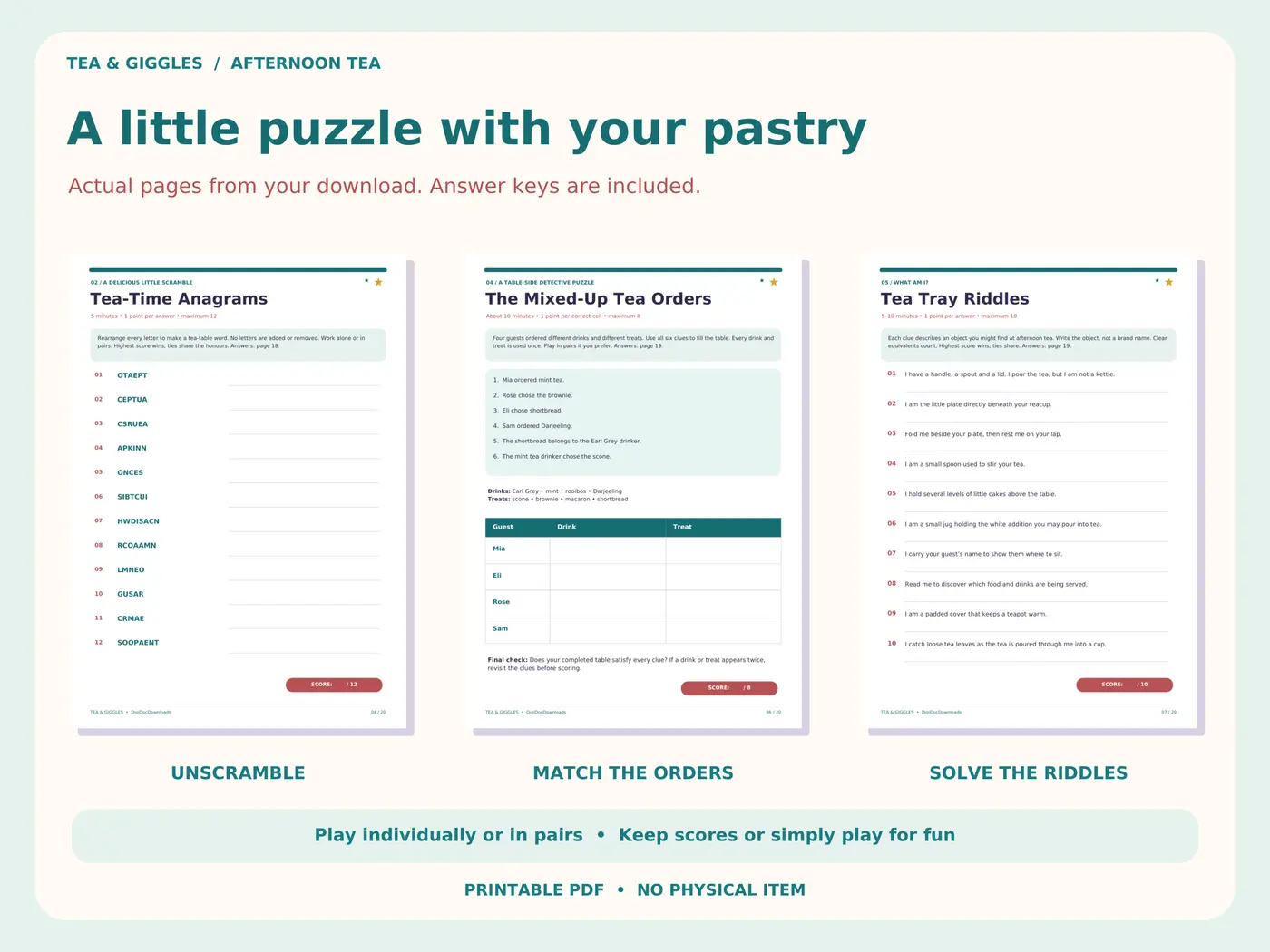
Cup of Conversation is a shared set of twelve cards for three to twelve guests, so one printed page can serve the table after the cards are cut apart. Tea-Time Anagrams can be completed alone or in pairs, so four copies work for eight guests playing in pairs. The Impossible Cake is an individual drawing and pitching page, so eight guests need eight copies if everyone is taking part.
A worked eight-guest print plan
For eight guests, choose Cup of Conversation, Tea-Time Anagrams in pairs and The Impossible Cake individually. Print one conversation-card page, four anagram sheets, eight cake pages and one host answer page for the anagrams. That is fourteen A4 sheets for the activities and answer. Add two spare guest sheets if you want cover for a mark or printing mishap, bringing the working total to sixteen. Invitations or menus are separate because their quantity depends on how you are hosting.
If the guest list changes, adjust only the pair and individual rows. A ninth guest makes the anagram count five when everyone has a partner or small team, while the shared conversation page and host answer remain at one. The print list therefore changes by a few clear numbers instead of becoming a fresh planning exercise. Keep unused clean sheets with the pack for another gathering rather than treating every spare as waste.
Print one test page first
Use the A4 setting shown in the pack and print one selected page before the full batch. Check that the text, score boxes and writing areas are complete and easy to read. Adobe’s current Acrobat Reader guide explains page ranges, print preview and the difference between Actual Size and Fit; the printer driver ultimately controls options such as double-sided printing. Compare the test with the PDF preview before continuing. One sheet is a pleasantly cheap place to discover a cropped edge.
Match the paper to the job
Ordinary printer paper is practical for anagrams, riddles, drawings and score sheets because guests can write on it comfortably. Conversation cards, folding place cards or a menu may feel sturdier on a slightly heavier sheet, provided the printer is designed to take it. Test one page before changing paper weight and check the printer manual rather than persuading a reluctant feed tray by force; machinery rarely improves under cross-examination.
Keep answers out of sight
Tea-Time Anagrams, The Mixed-Up Tea Orders and Tea Tray Riddles have answers in the pack. Print the answer material once for the host and keep it away from the activity sheets. If you are using a score sheet, decide whether you want a single host record or a table copy; there is no need to print both unless they serve different jobs.
Print by role: one for the host, one for the table, one per pair or one per person.
Prepare in the order you will use it
Put the first activity on top and keep later pages underneath. Cut the Cup of Conversation cards before guests arrive and set out enough pens and spare paper. If an activity is not used, keep its unmarked copies for another gathering. When buying paper, FSC UK’s paper and print guide explains how certification identifies material from well-managed forests or verified recycled sources. After the party, check local collection rules before recycling marked or spare sheets; Recycle Now’s paper guide explains how recovered paper is sorted, pulped and made into new products.
Let the pack stay flexible
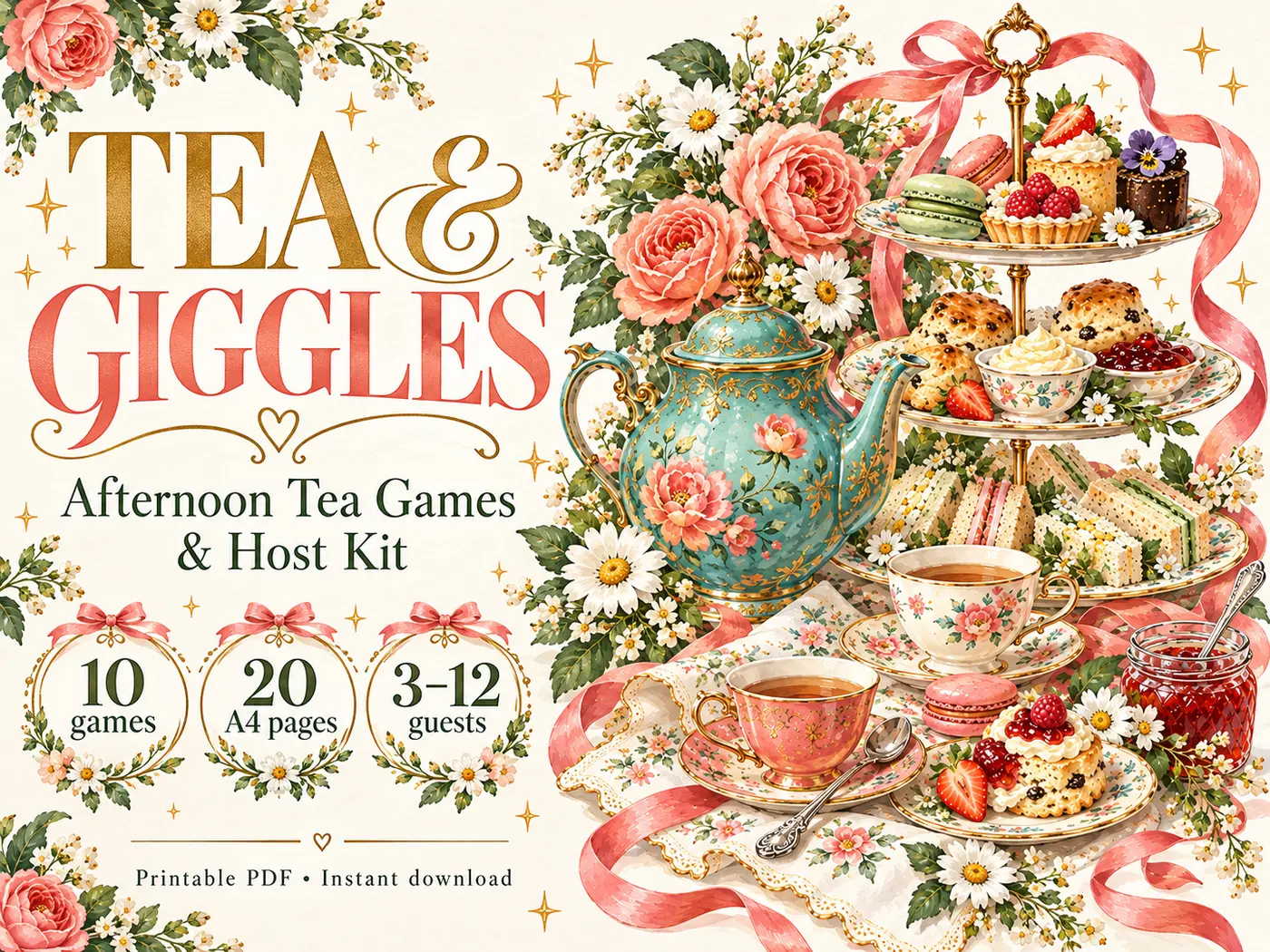
Tea & Giggles contains ten original games plus a host guide, planner, floral stationery, answers and a score sheet in one twenty-page A4 PDF. The games are intended for three to twelve guests, with most taking about five to fifteen minutes. Choose the pages that match the group, print the right number for each role and leave room for the conversation to lead the afternoon. Plain paper and a pencil remain perfectly good equipment; the download is there to organise the choices, not to turn a catch-up into a print-production department.
More to read, make and discover
A few useful, interesting and checked routes into the subject.
- PDF printingAdobe: print selected PDF pages and check sizing
Current Acrobat Reader guidance for page ranges, previews, Actual Size, Fit, greyscale and duplex printing.
- Paper choiceFSC UK: paper and responsible forestry
A clear explanation of how certification helps identify paper from responsibly managed forests or recycled sources.
- After the partyRecycle Now: how paper recycling works
What happens to recovered paper and why local collection rules still matter.