
Five stars cannot hold an entire book
A rating is convenient shorthand, but it leaves a great deal unsaid. Two four-star books may have earned the number for entirely different reasons: one for a character, another for an idea, a third because its ending changed the meaning of the opening. The number remembers the verdict while misplacing the evidence.
A reading journal becomes more useful when it keeps one or two of those details. It need not compete with a published review. Its first reader is usually the person who will open it later and wonder what, exactly, they meant.
Keep one moment and one reason
After finishing, record a scene, image or argument that remained clear in your mind. Add why it mattered: it revealed a character’s priorities, challenged an assumption or made a place feel convincing. That second sentence turns “memorable” into an observation someone can understand.
Keep spoilers separate if the notes will be shared with a book club. A private journal can be candid; a recommendation may need a lighter touch. Our existing book-club disagreement story explores how specific evidence keeps different opinions interesting.
The reading context belongs in the record
A book heard on a commute and the same book read in one quiet weekend are different experiences, even though the text has not changed. Record the format, narrator where relevant and circumstances if they help explain your response. Audiobooks do not need an apologetic separate shelf.
Distinguish the work from the experience. “I lost track while distracted” is not the same claim as “the plot is incoherent”. A candid note can leave both possibilities open until a reread or conversation supplies more evidence.
Use the journal at the size it needs
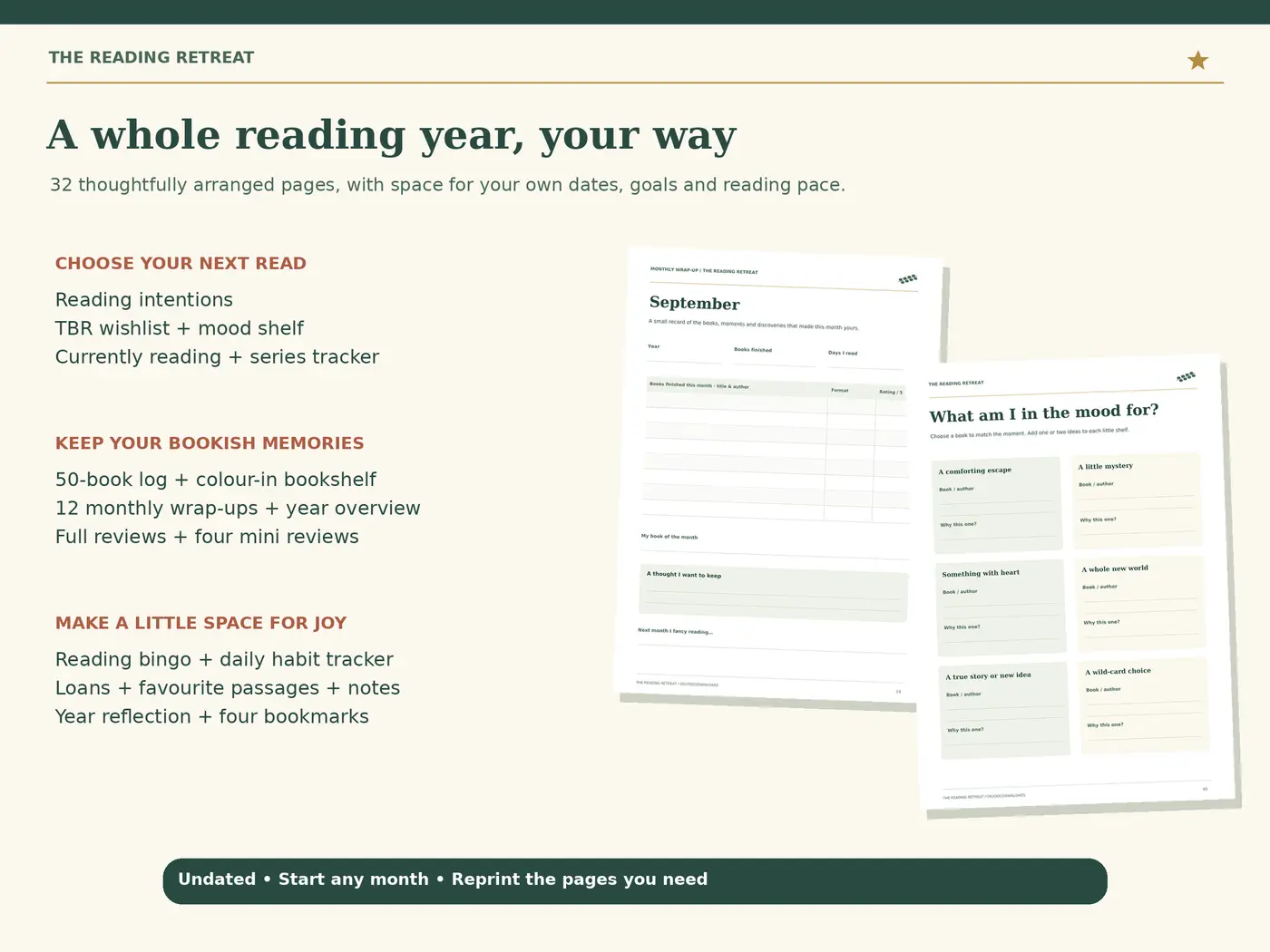
Our Reading Retreat includes a fifty-book log, full-page and quick-review spaces, monthly wrap-ups, a mood shelf, favourite passages and series and loan records. Choose the small review for a book that needs a few sentences; save the larger page for one that gives you more to explore.
The thirty-two-page A4 journal is undated and designed to print and write on by hand. It works for paper books, e-books and audiobooks. The variety of pages offers choices rather than a requirement to fill every section after every finished title.
Look after the book as well as the note
For physical copies, the Library of Congress introduction to preserving books explains the importance of preventive care. Its handling guidance is also worth reading before assuming that gloves or elaborate rituals improve every situation. Clean, dry hands and a clear working area are a sensible beginning.
The Library’s storage guide helps distinguish appropriate care from attractive display. A handmade sleeve may help organise an everyday book in a bag, but it is not an archival enclosure or waterproof protection. Our book-sleeve sizing guide explains fit and those limits.
Let an unfinished thought remain unfinished
A good final entry might be a question: “Did the narrator misunderstand the ending?” or “Would this work differently as a film?” The journal can keep that thought without demanding an immediate answer. A later conversation may add more than a confident paragraph written in haste.
Finish with a brief note about who might find the book interesting and why. The next recommendation then has something useful behind it. Keep the stars if you like them; give them a little supporting evidence.
More to read, make and discover
A few useful, interesting and checked routes into the subject.
- Further readingLibrary of Congress: preserving books
Preventive care for books and the distinction between everyday use and conservation.
- Further readingLibrary of Congress: handling books
Clean, dry hands and careful book handling.
- Further readingLibrary of Congress: storing books
Storage conditions and protective enclosures.