
Let dinner remain dinner
A good table activity does not have to take possession of the evening. It can begin while plates are cleared, spark a story and quietly disappear when the conversation finds its feet. Think of it as a useful ingredient, rather than an extra course everyone must finish.
That matters especially when guests arrive with different levels of enthusiasm. Some enjoy wordplay, some prefer listening and others are already working hard to follow a busy table. Choose something that can be explained simply and joined without an elaborate introduction.
A question with room for a story
Ask for a small, specific memory rather than a complete autobiography. “Which food reminds you of a place?” leaves room for a market stall, a family kitchen or an unexpectedly excellent service-station sandwich. “What would you put on a menu named after your town?” can become an imaginative discussion without requiring personal disclosure.
These are original conversation suggestions, not quoted questions from a purchased pack. Keep the tone curious. Follow up with what somebody enjoyed or noticed; do not demand a dramatic tale, an embarrassing confession or agreement about the best way to make tea.
Make passing an ordinary option
Explain that guests may answer, listen or pass. A pass should not trigger a second, more insistent question. Offer paper for anyone who would rather jot down an idea first, and avoid asking one person to speak over several competing conversations.
Before the event, ask about dietary and access needs in a straightforward way. Scope’s accessible-events guidance emphasises giving people ways to tell a host what they need. The advice concerns events more broadly; at home, the useful principle is still to ask rather than guess.
Choose one activity for the gap
An activity that needs writing is easier after plates have been moved and a clear patch of table has appeared. A conversational prompt suits a shorter pause. Read the instructions before serving so that the host is not discovering an answer sheet at precisely the moment the pudding needs attention.
Pick one starting activity and one optional backup. There is no virtue in completing a whole bundle when everyone is enjoying a lively conversation. The backup earns its place by being available, not by forcing its way into the evening.
Let the kit lend a hand
The Supper Club contains 12 food-themed table activities across 18 A4 pages, with guidance for 3–8 adults. The verified contents include conversation, prediction, wordplay and creative games, plus a logic puzzle, a memory game and a gathering keepsake. Each activity has its own instructions.
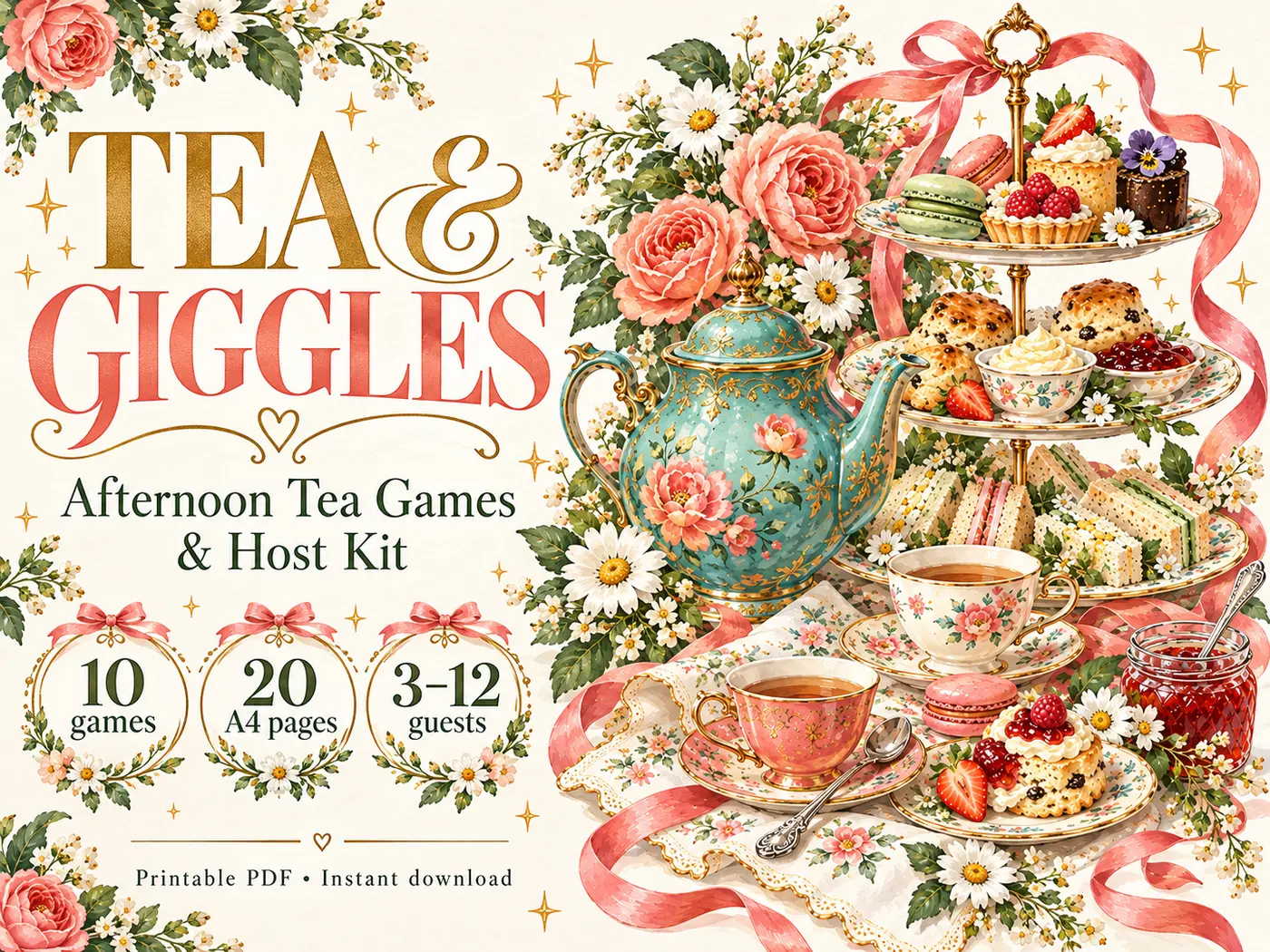
Print selected pages single-sided on A4 at 100%, as the listing advises, and gather pens and blank paper. Choose the kind of activity your table will enjoy rather than expecting every guest to like every format. The afternoon-tea guide offers another example of choosing activities around the gathering.
Keep the evening, not the score
If a shared joke, invented menu or excellent recommendation emerges, note it somewhere guests can see. Ask before recording anything personal. A keepsake can preserve a favourite moment without turning the dinner into a transcript; the detail that makes everyone smile again is usually enough.
Leave the final stretch open. People may want another prompt, a slower conversation or simply a second helping. An evening that ends with guests talking comfortably has already found its result. The score sheet can enjoy a night off.
More to read, make and discover
A few useful, interesting and checked routes into the subject.
- Further readingScope: access needs and RSVPs
Ask guests what makes participating easier.
- Product referenceThe Supper Club: verified product details
The actual 12 activities, 18-page format, group guidance and printing instructions.
- Related GuidePlan an afternoon tea party
Choosing a few activities to suit a gathering.