1. Choose four chocolates with a purpose
Start with four chocolates that offer a useful comparison. They might share one feature, such as being plain bars, while differing in texture, cocoa percentage or stated origin. Avoid changing everything at once if the aim is to notice why preferences differ. A filled truffle and a plain bar can both be enjoyable, but their differences will be harder to untangle.
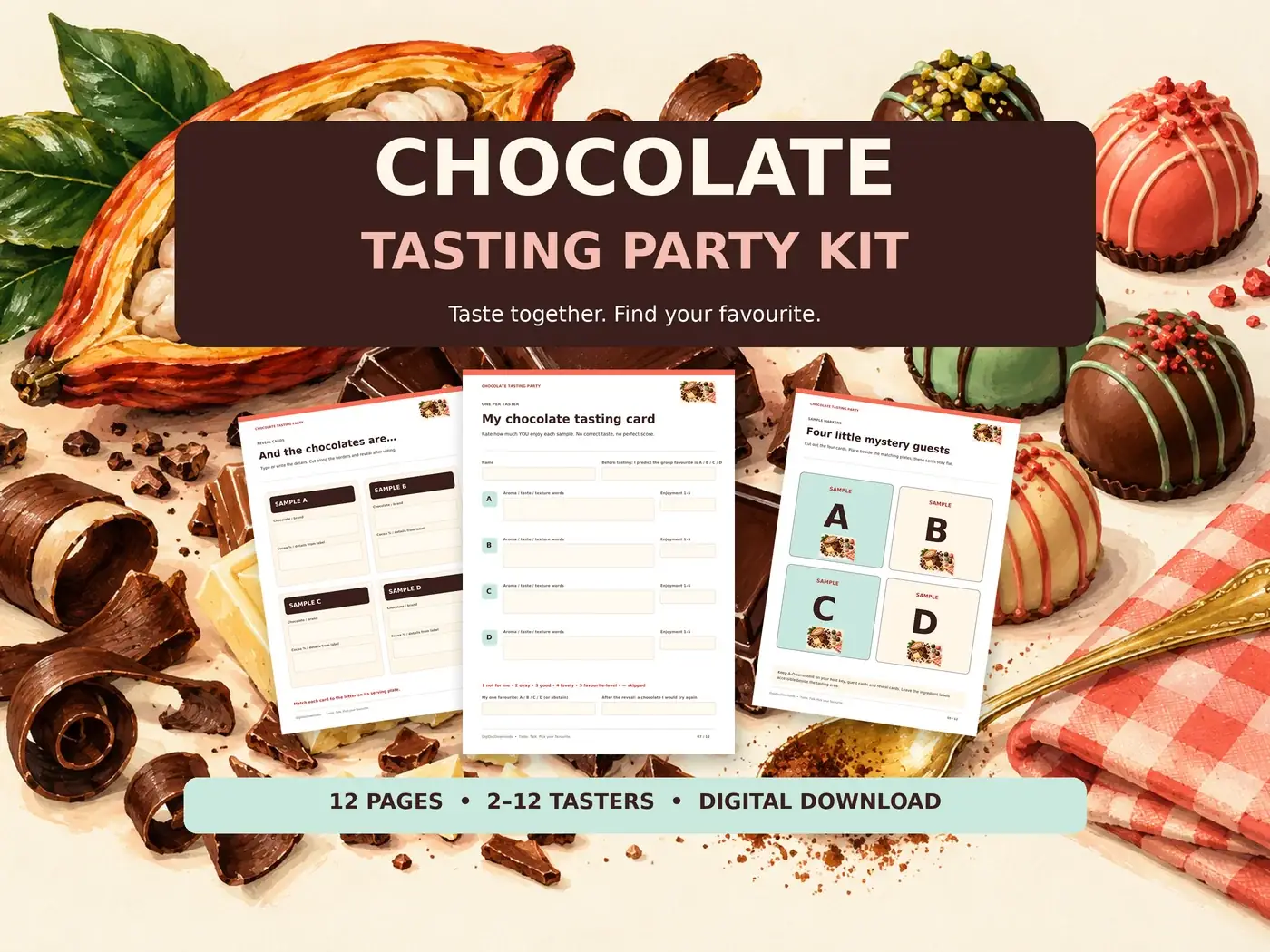
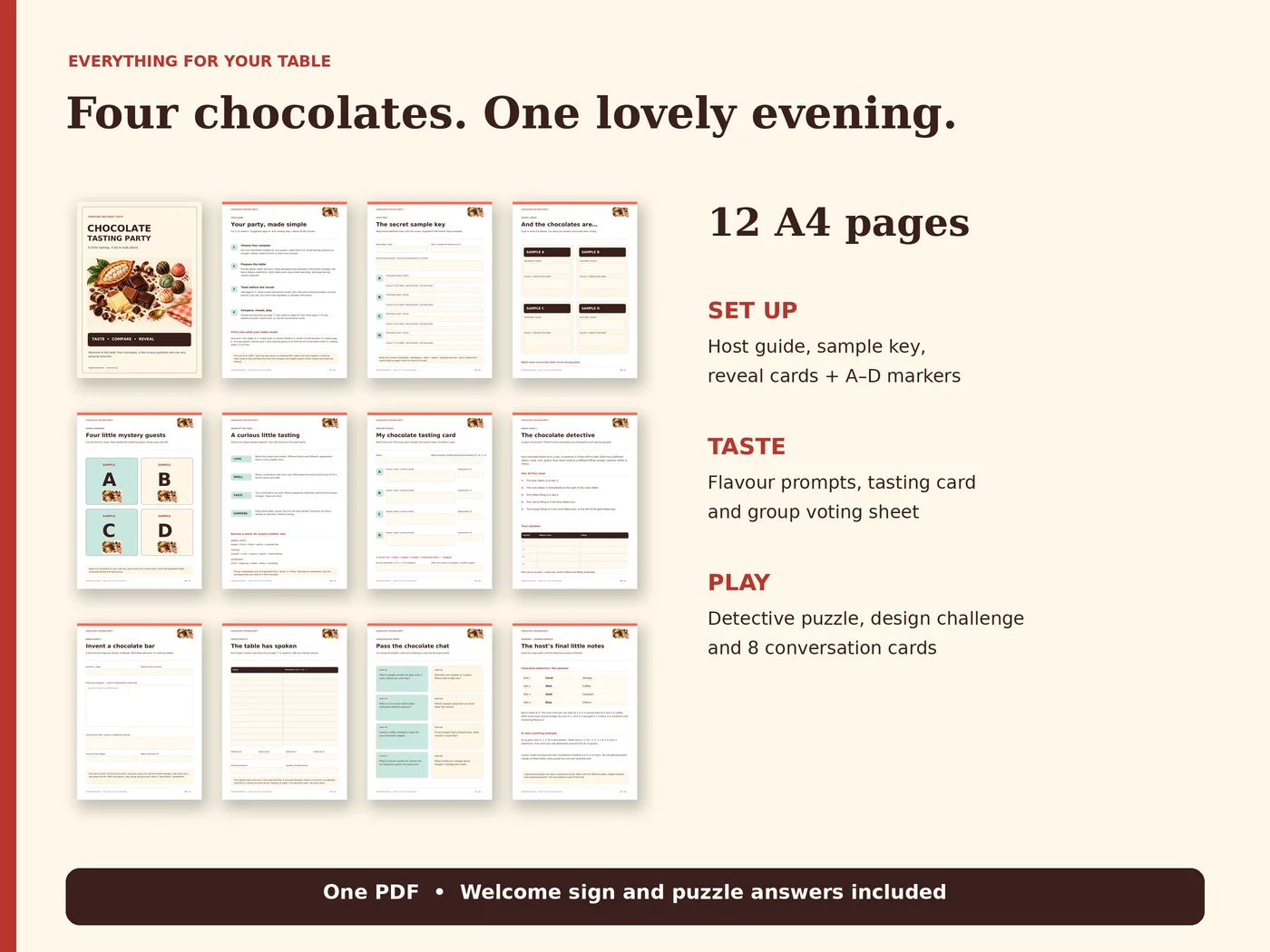
Our Chocolate Tasting Party is designed around four samples, with a sample key, A–D markers and personal tasting cards. It suits two to twelve people and a session of roughly 45–60 minutes; children aged eight and over can join with grown-up help. The chocolate itself is supplied by you.
2. Check ingredients before concealing brands
Ask guests about relevant dietary needs before choosing samples. Keep every wrapper and ingredient list available, and label samples clearly. A guessing game should conceal a brand only from people who have already been given the information they need to decide whether to eat it.
The Food Standards Agency’s food-allergy guidance is a useful starting point for planning. Check each actual product and its handling requirements, including possible cross-contact. If you cannot confidently provide a suitable sample, agree a different way for that guest to participate. Reading clues, recording votes or designing a bar can be part of the evening without eating chocolate.
3. Set out small samples and clear records
Prepare similar-sized pieces, labelled A, B, C and D, with water and a place to write. Leave enough room between samples that people can keep track of which is which. Keep the key with the host and the wrappers nearby rather than relying on memory once the table is busy.
The pack’s text fields can be completed in a compatible desktop PDF reader before printing. Totals are calculated manually, and drawing activities are completed on paper. Test one card first, especially if several guests will share a printer or work from differently sized screens.
4. Compare observations before preferences
Invite a first look, a sniff and a small taste, allowing time to describe each sample. Useful prompts include “smooth or grainy?”, “quick to melt or slower?” and “what remains after the first taste?”. Ordinary words are perfectly adequate. Nobody needs to find an implausibly specific orchard in a square of chocolate.
Our chocolate-tasting feature explains why cocoa percentage alone does not settle the experience. Record descriptions separately from a favourite score: two people may agree that a sample tastes bitter and disagree completely about whether that is appealing.
5. Add one short cultural pause
Chocolate has a history beyond the modern bar. Mexico’s INAH introduction to the ancestral cacao tree offers a useful source from a country closely connected with that history. The National Museum of Anthropology’s jicalpextle feature explores a particular vessel and its place in food, drink and gift-giving traditions.
Share a photograph or a brief observation between rounds, giving the institution and object their names. Avoid presenting one example as an account of every culture that used cacao. A small, accurately described detail can enrich the table without turning the tasting into a lecture with refreshments.
6. Reveal, vote and leave room for disagreement
Use the included reveal cards and group vote sheet once observations are recorded. Explain the voting rule first: one favourite each is easier to compare than a mixture of scores and second choices. The conversation cards, detective puzzle and invent-a-bar page offer optional activities if the group wants to continue.
End with the differences that emerged. A favourite may have changed after the reveal, or a description may have become more precise. There is no need to declare an objectively best chocolate. A well-run tasting makes preferences easier to discuss, which is a more useful result than making everyone choose the same square.
Explore Chocolate Tasting Party
More to read, make and discover
A few useful, interesting and checked routes into the subject.
- Further readingFood Standards Agency: food allergies
Reliable information for checking ingredients and planning food with guests.
- Further readingINAH: the ancestral cacao tree
A Mexican cultural source on cacao and its long history.
- Further readingMexico’s National Museum of Anthropology: jicalpextle
A vessel’s place in food, drink and gift-giving traditions.