In this guide
- The short answer: build an activity ladder
- Start with a game that needs almost no explanation
- Split the middle by reading level, not only age
- Use a simple two-hour running order
- Keep competition gentle and visible
- Halloween games have always changed with their players
- Prepare the boring bits before the interesting guests arrive
The short answer: build an activity ladder
For a mixed-age Halloween party, begin with one visual game everyone can understand, split the middle into age-appropriate choices, then finish with a quick shared round. Plan three or four games for a two-hour gathering and keep one spare. The useful question is not ‘Which game suits every guest?’ but ‘When should different guests play together, and when should they have different jobs?’
Start with a game that needs almost no explanation
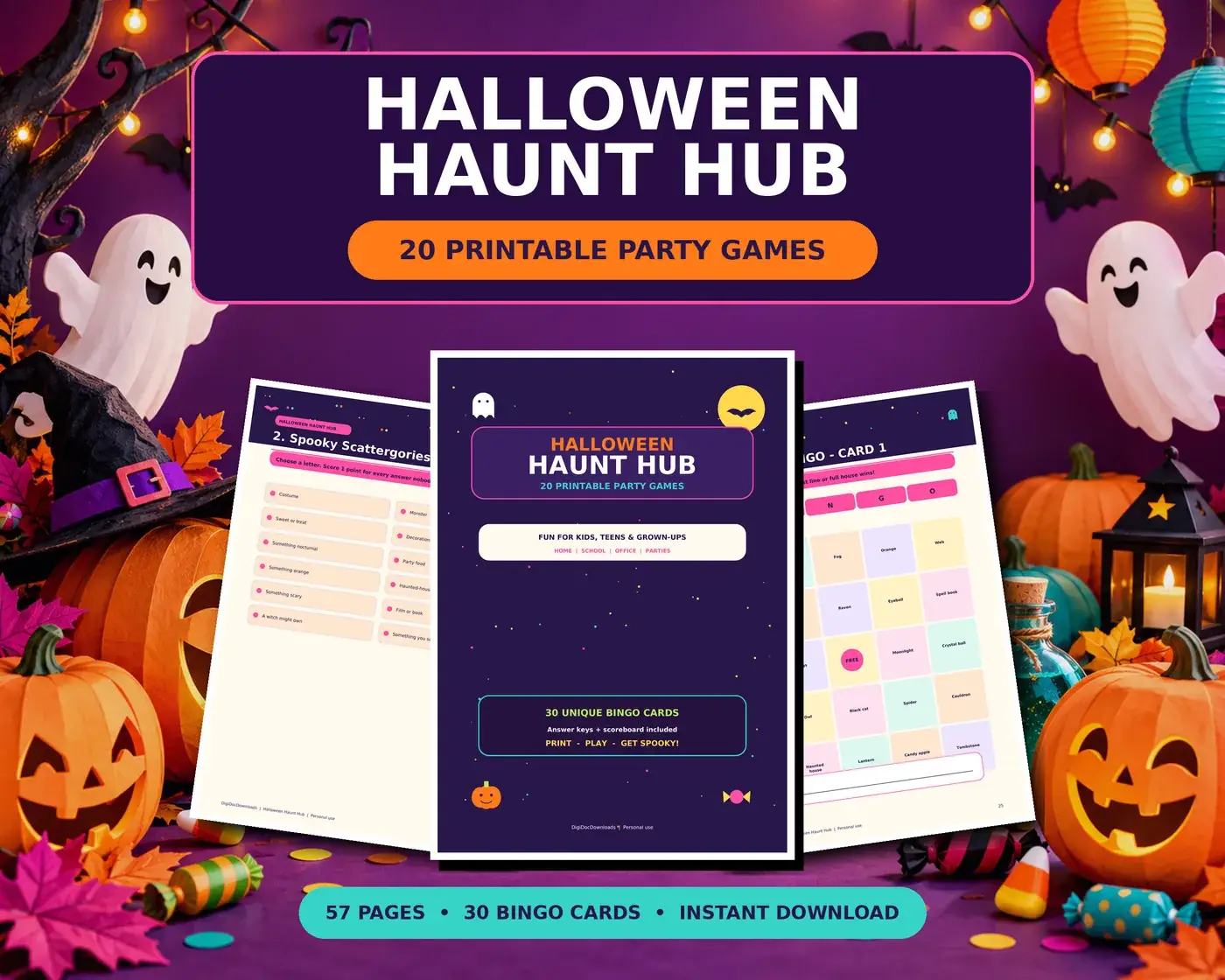
Picture bingo, a room hunt or a simple vote gives arriving guests something to do without pausing the party for a speech. Pair younger children with an older reader and make the task collaborative rather than competitive. The Halloween Party Games Mega Bundle includes 20 games, 30 different bingo cards and both A4 and US Letter files, so the opening round can use a familiar format while later choices become more specific. Print only the pages required for the chosen order; a 57-page bundle is a menu, not a challenge to complete before pudding.
Split the middle by reading level, not only age
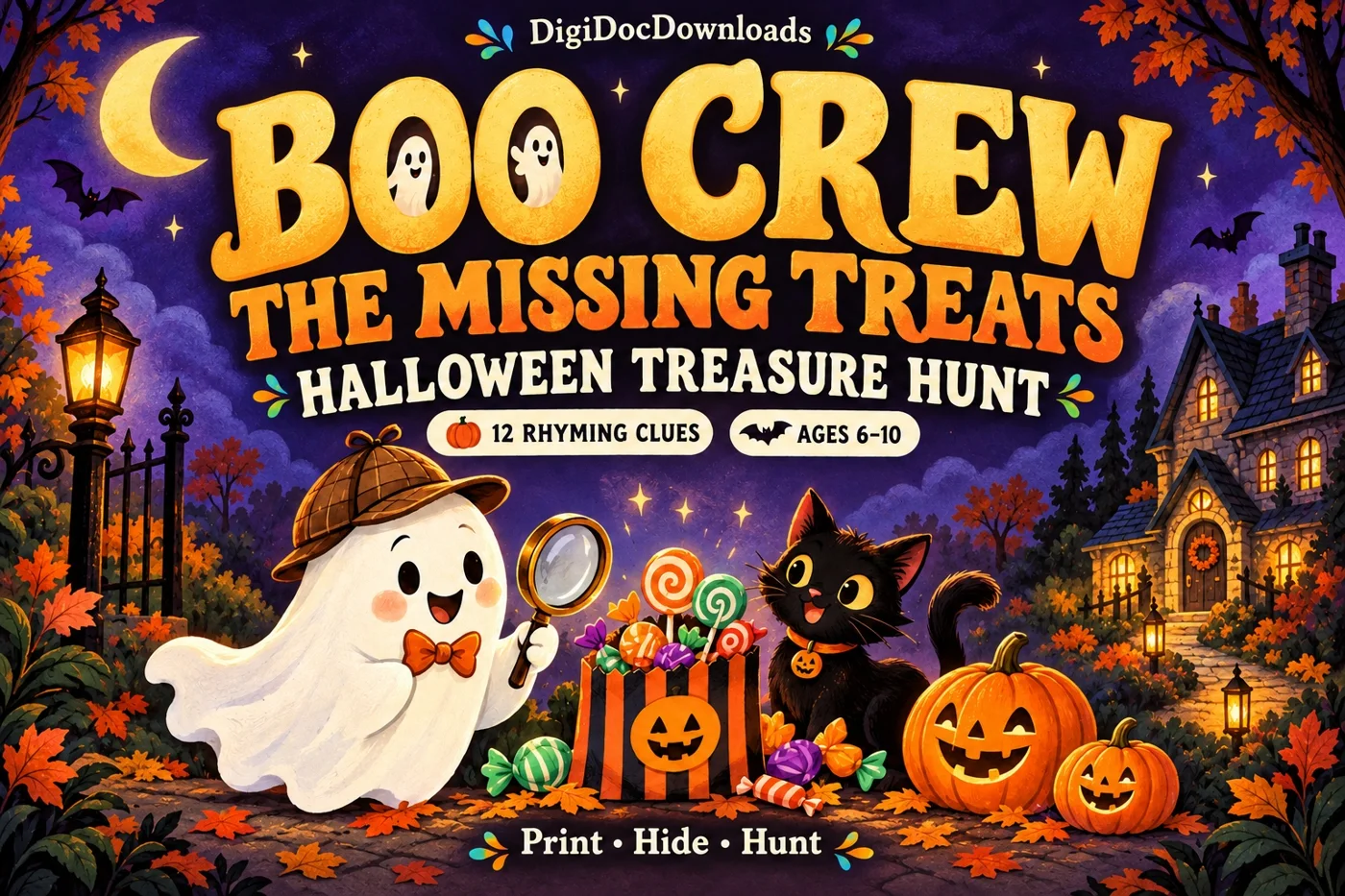
A confident six-year-old may enjoy clues while an older guest with a different reading need may prefer pictures or a team role. Offer two routes: a visual activity at one table and a clue-led activity elsewhere. The Little Boo Halloween Picture Hunt is designed for ages 3–6 without required reading, while The Pumpkin Post escape room is aimed at ages 8–12. Both can run during the same 20-minute block without pretending that one difficulty level fits everybody.
Give adults and teenagers useful roles rather than appointing them permanent referees. One can read a clue, another can keep time and a third can help a younger team record an answer. Anyone who would rather play independently can take the older route. Good mixed-age hosting creates choices without announcing that one table is the ‘easy’ table.
Use a simple two-hour running order
- 0–15 minutes: arrival hunt, picture bingo or costume vote.
- 15–35 minutes: one shared team game with short turns.
- 35–55 minutes: parallel visual and clue-led activities.
- 55–75 minutes: food, free play and a reset for the host.
- 75–100 minutes: the main puzzle, mystery or team challenge.
- 100–115 minutes: quick finale, scores and any certificates.
- Final five minutes: gather pencils, named sheets and abandoned capes.
Treat those times as maximums, not contracts. End a game while people still understand why it is enjoyable. If the first round is lively, let it breathe; if a puzzle stalls, offer the prepared hint rather than allowing one laminated clue to acquire the atmosphere of an examination paper.
Keep competition gentle and visible
Use teams with a mix of ages, award one point per round and include at least one category that is not based on speed. A careful observation point, a funniest-team-name vote or a bonus for tidy handover gives different skills somewhere to matter. Avoid elimination: guests who leave a game early tend to become an unofficial committee beside the snacks.
For older teenagers and adults, a separate later session can carry more reading and deduction. Moonwick Manor’s printable murder mystery is a no-acting detective case for teens and adults; it belongs after younger children have moved to another activity, not squeezed between picture bingo and apple slices.
Halloween games have always changed with their players
The National Museum of Ireland’s account of Halloween traditions records fruit-and-nut games, guising, pranks and carved turnip lanterns in Irish tradition; pumpkins became the familiar American development. English Heritage’s historian-led guide to Halloween, All Saints’ Day and All Souls’ Day also cautions against turning a layered history into one tidy ancient origin. Halloween has accumulated customs across places and centuries, which makes adapting the games to the people in the room entirely in character.
Puzzles are hardly a recent addition either. The Library of Congress shares Halloween puzzles from digitised historic newspapers, a useful reminder that wordplay and seasonal silliness have long shared a table. The graphics have changed; the pleasure of comparing answers has not.
Prepare the boring bits before the interesting guests arrive
- Print one complete host copy and separate player sheets.
- Put each game, answer key and required pencil in its own labelled envelope.
- Write the running order on one page and mark the optional spare.
- Test clue visibility in the room’s evening lighting.
- Choose teams before the first scored game, but allow easy swaps.
- Keep food and drinks away from the only copy of an answer key.
A mixed-age party works when togetherness is used deliberately rather than continuously. Share the easy opening, offer sensible choices in the middle and reunite everyone for a short finish. That gives younger guests room to succeed, older guests something worth solving and the host a running order that can survive an unexpected extra cousin.
Explore Halloween Party Games Mega Bundle
More to read, make and discover
A few useful, interesting and checked routes into the subject.
- Irish folkloreNational Museum of Ireland: Irish Halloween traditions
Museum account of traditional Irish Halloween food, games, guising and carved turnip lanterns.
- Historical contextEnglish Heritage: Halloween, All Saints’ Day and All Souls’ Day
Historian-led explanation of the layered history of Halloween and the need to avoid overly neat origin stories.
- Historic puzzlesLibrary of Congress: Halloween puzzles from historic newspapers
Examples of Halloween-themed puzzles preserved in digitised American newspapers.