Decide what kind of afternoon tea you want
Start with the atmosphere rather than a long shopping list. This might be a birthday, a bridal shower or simply a reason to bring friends together. Afternoon tea became a recognisable British social ritual in the nineteenth century—the British Museum’s illustrated history follows the tableware as well as the tea—but a modern gathering need not recreate a Victorian drawing room. The cups, plates and table already at home are perfectly capable of the job.
Prepare fewer games than the pack contains
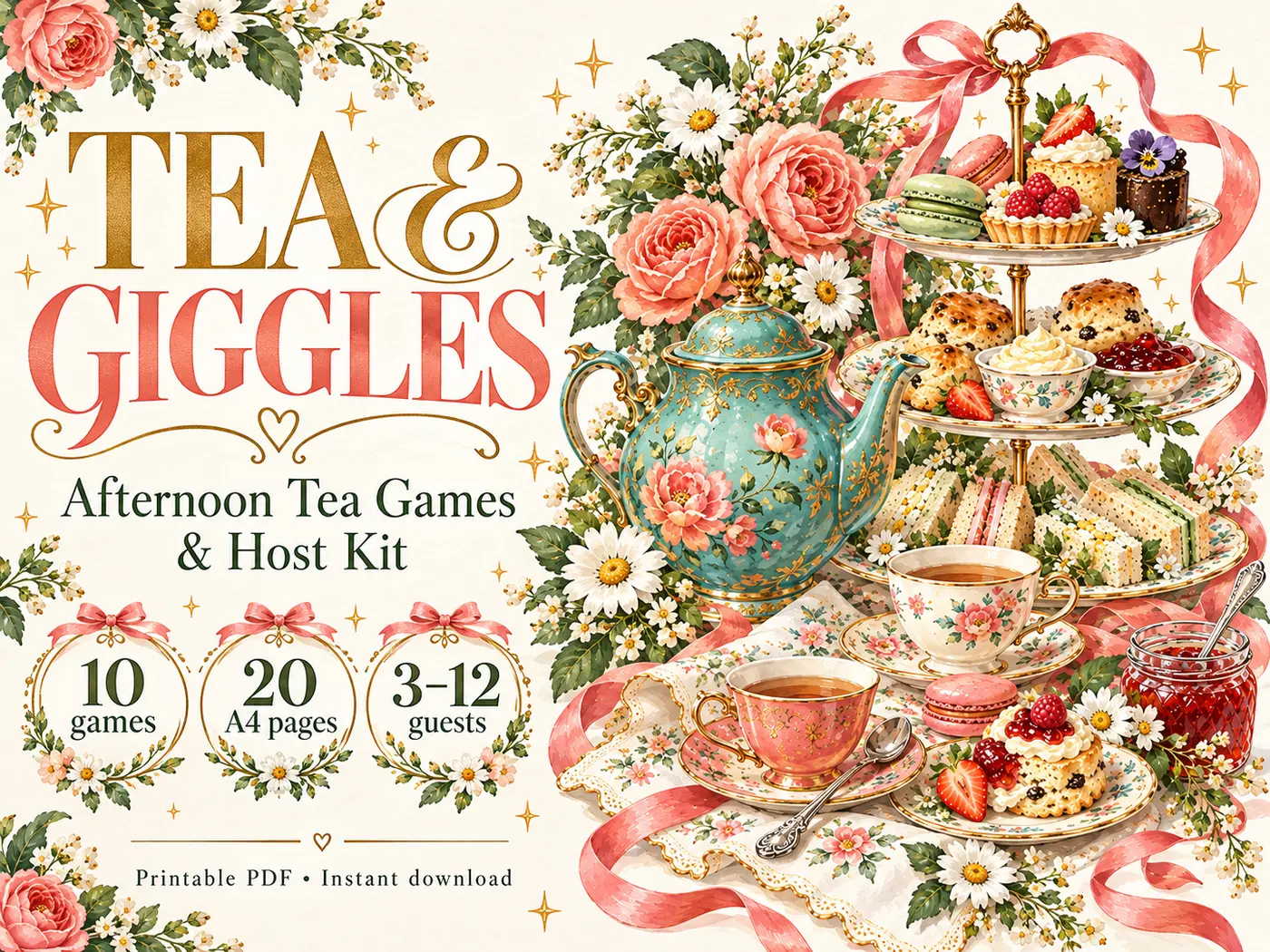
Tea & Giggles contains ten games, which creates choice rather than a ten-event tea-table decathlon. Pick two or three that suit the guests: a conversation activity to help everyone settle in, a word puzzle for a little challenge, then perhaps a drawing or story game to change the pace. Leave room for people simply to talk.
Keep the afternoon tea menu manageable
Choose a few things that can be prepared calmly, including at least one savoury option. The Good Food afternoon-tea collection is useful for selecting a small menu rather than accidentally opening a hotel. Ask about allergies and dietary needs in advance, label unfamiliar fillings, and use the Food Standards Agency’s party guidance for storage, chilling and serving. Cake is charming; food safety is what lets everyone enjoy it.
Set the table for easy participation
Put a pen within reach of each guest and keep extra paper nearby. Print only the game pages chosen for the day and read the included host guide first. Set answer keys aside where they will not give the game away, and prepare any pieces that need cutting before the doorbell starts its work.
Give everyone a gentle opening
Open with a question that does not demand a clever answer. A favourite treat, a memorable afternoon or a small thing someone is looking forward to can be enough. Explain that anyone can pass. Familiar friends and guests who have just met may need different prompts, so choose for the group in front of you.
Mix the pace
- Start with a short conversation round while people settle in.
- Offer a tea-table word game or riddle between refreshments.
- Save an imaginative drawing or story activity for a change of mood.
- Finish whenever the group feels ready; the kit is a menu, not a timetable.
Most Tea & Giggles games take around five to fifteen minutes. That makes it easy to use one as a small part of the gathering. If a conversation is going well, let it continue. Nobody needs to complete a score sheet for an afternoon to be a success.
Use the stationery that helps
Matching invitations, place cards and a handwritten menu can bring the table together, but each is optional. A menu is useful if guests would like to see what is on offer; a place card can help when the group is meeting for the first time. Print extra copies only for the pieces you need.
Tea & Giggles combines ten original games with a host guide, planner, floral stationery, answers and a score sheet in one 20-page A4 PDF. It is designed for three to twelve guests, with adult gatherings in mind and a suggested age of twelve and above. For the story behind everyday tea things, the Museum of English Rural Life’s collection follows changing habits through cups, pots and meal times—the ordinary objects that quietly turn refreshment into ritual.
More to read, make and discover
A few useful, interesting and checked routes into the subject.
- Menu ideasGood Food: afternoon tea recipes
Browse savoury and sweet ideas, then choose a manageable handful rather than opening a small hotel in your kitchen.
- Tea historyBritish Museum: the Victorian story of afternoon tea
A friendly history of the ritual, its tableware and the social world around the teacup.
- Object storiesMuseum of English Rural Life: tea culture in the collection
Follow teapots, meal times and changing habits through objects from everyday life.
- Food safetyFood Standards Agency: safely hosting a party
Straightforward food hygiene and allergy guidance for hosts. Less glamorous than cake, rather more important.