Start with the roofline
Borgund is a building that rewards a second look. The first takes in the whole silhouette: dark timber, roofs rising above roofs, small creatures perched at the edges. The next follows a single line. Where does one roof finish? Which part shelters the entrance? What seems broad and low, and what draws the eye upwards? Looking this way turns an impressive outline into a collection of decisions made by craftspeople.
The Norwegian heritage organisation that cares for Borgund dates the church to around 1180 and highlights its carved portals, roof crosses and dragon heads. These are details of a particular church, not a checklist that every Norwegian timber building follows. Begin with Borgund’s own photographs rather than a blended picture of several sites; distinct buildings deserve distinct stories.
Let wood be part of the story
A photograph can make timber look like little more than a dark colour. Instead, look for the direction of boards, the repeated marks of shingles and the places where one surface meets another. Imagine tracing those lines with a finger, without touching the historic building itself. Repetition makes a large surface readable; a doorway interrupts it and tells the eye where to go.
For a useful comparison, UNESCO’s account of Urnes describes a wooden building with cylindrical columns and semicircular arches, expressing forms associated with Romanesque stone architecture in timber. It also explains how older carved elements were reused. Urnes is not Borgund, but the comparison adds a worthwhile question: how can two buildings share a material and still have such different visual personalities?
Give the dragons more than one explanation
A dragon on a roof is an excellent invitation to curiosity, but not permission to invent a legend. It is tempting to turn every unusual carving into proof of a single belief. Medieval decoration is more complicated than that. Notice the creature first: its outline, its position and its relationship to the rest of the building. Then ask what the evidence actually supports.
Research presented by NTNU on the animals at Urnes challenges an exclusively pagan reading of its ornamentation and considers it within European medieval church art. That is a useful caution, rather than a licence to give Borgund’s roof dragons the same meaning. A good caption can say what is known, what is proposed and what remains uncertain; it need not solve the entire Middle Ages.
Try a three-detail looking game
- Choose one structural detail: a roof edge, porch or supporting element. Describe where it sits before naming it.
- Choose one repeated pattern: boards, shingles or carved curves. Follow how it changes around a corner.
- Choose one surprising detail. Write a question about it, then look for an answer in a named heritage or museum source.
This works on screen with a museum photograph or beside a paper model. There is no need to identify everything correctly on the first attempt. A sketch and a question are often more useful than a page of copied facts. With a family group, let each person choose a different detail; the resulting conversation has somewhere concrete to begin.
A model is an interpretation, not a miniature witness
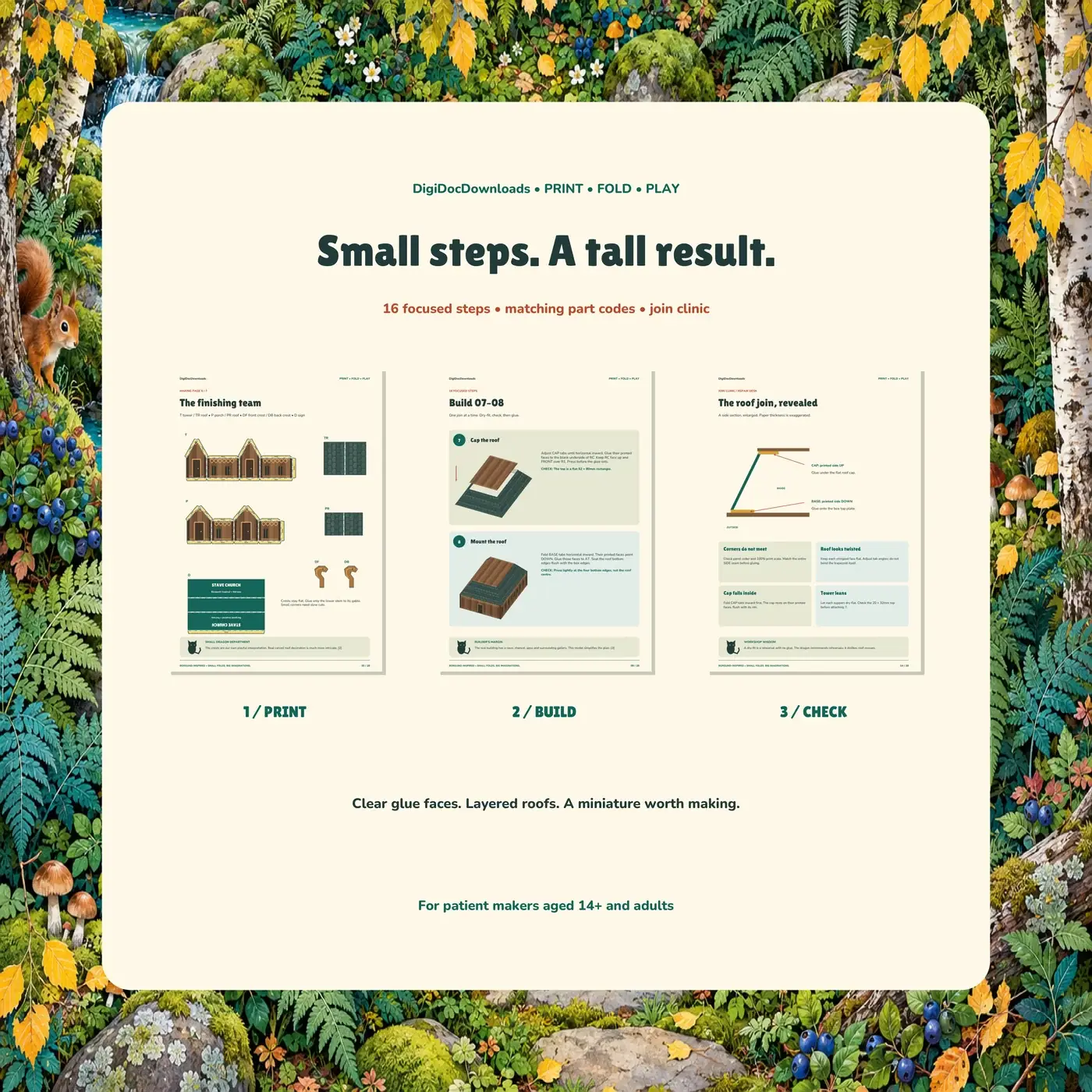
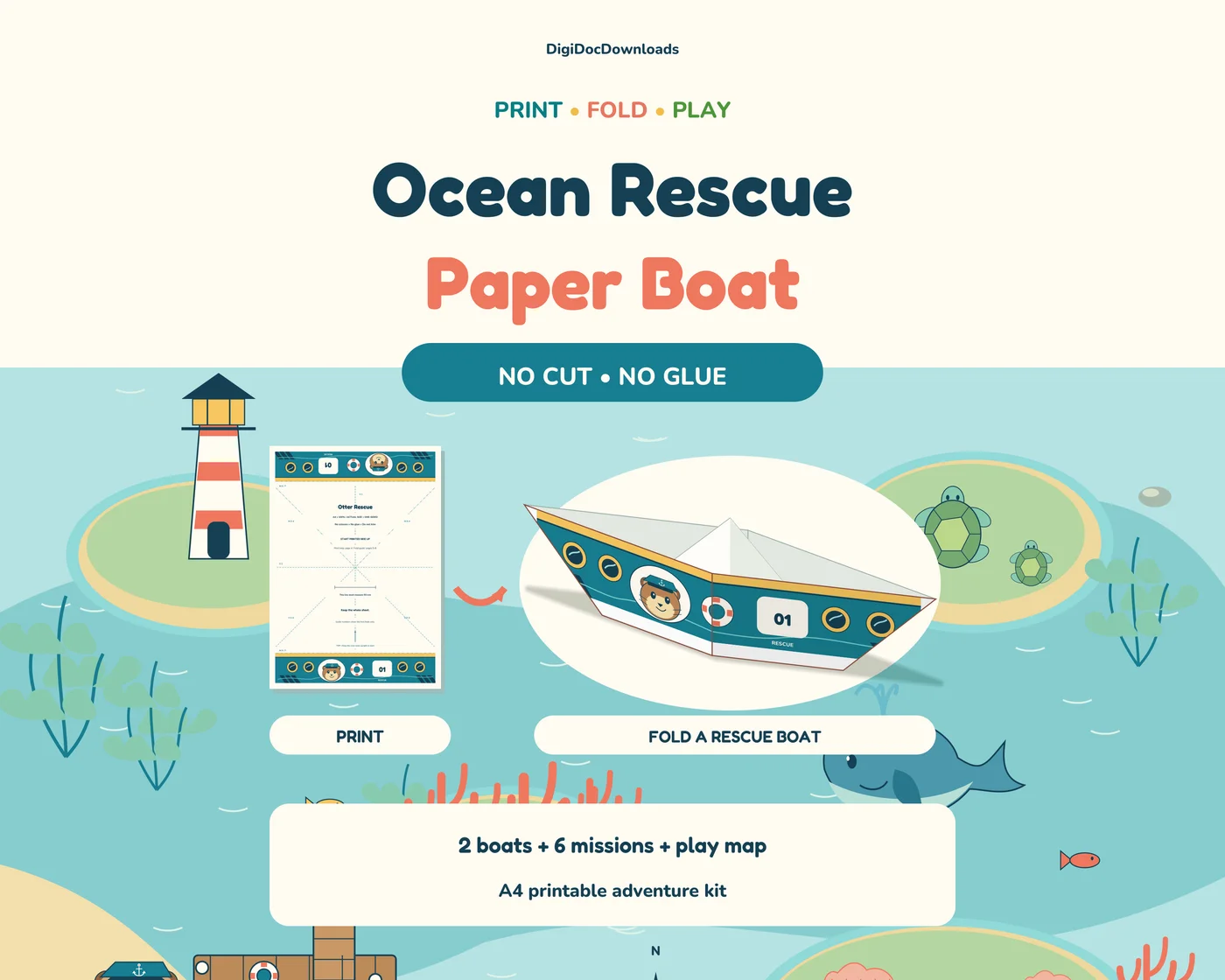
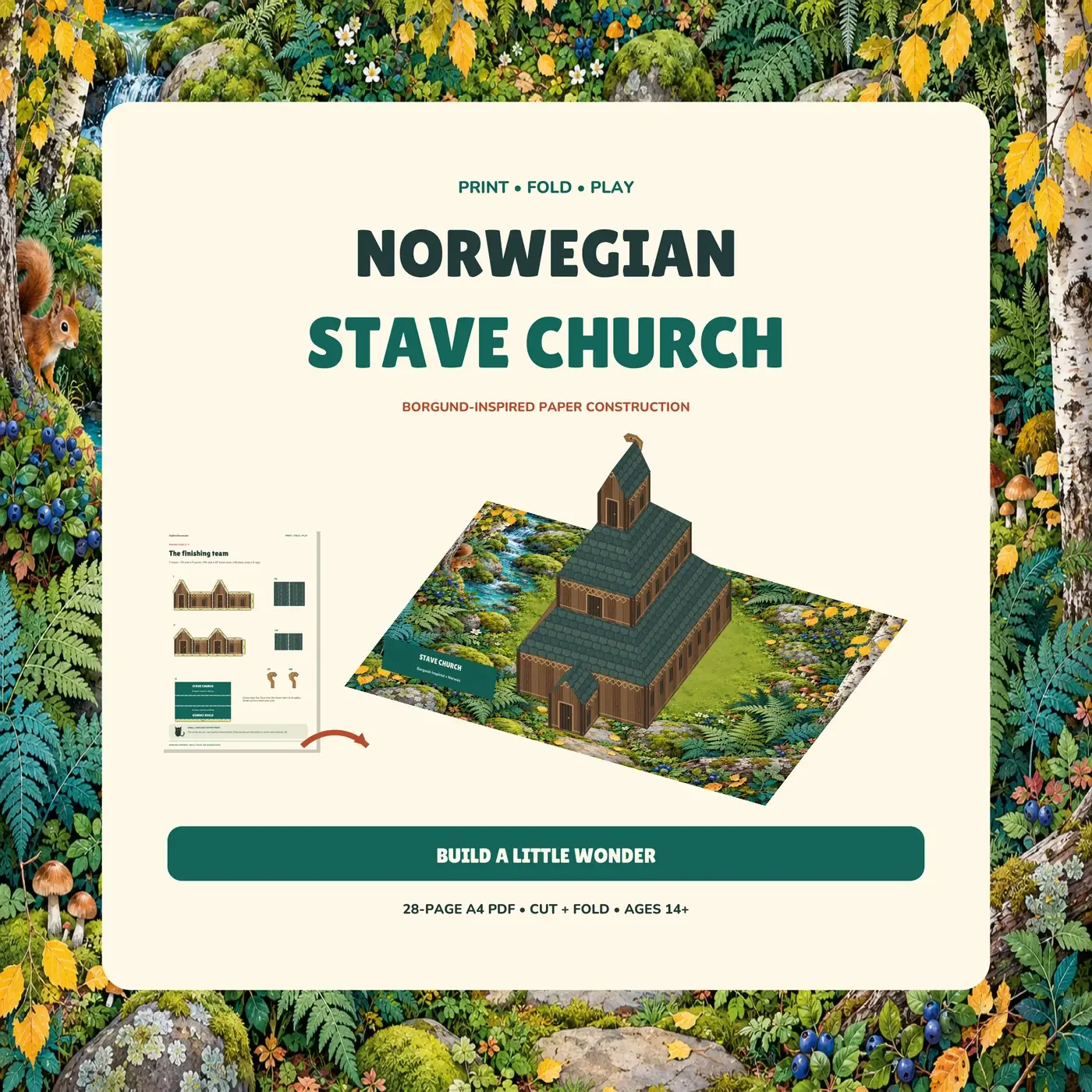
The Norwegian Stave Church paper craft is inspired by Borgund, with stepped shingle roofs, timber-patterned walls, a projecting porch and two small dragon crests. It is explicitly a decorative interpretation, not a scale replica. Its simplified parts make a paper construction possible; they should not be used to establish the dimensions or exact engineering of the real church.
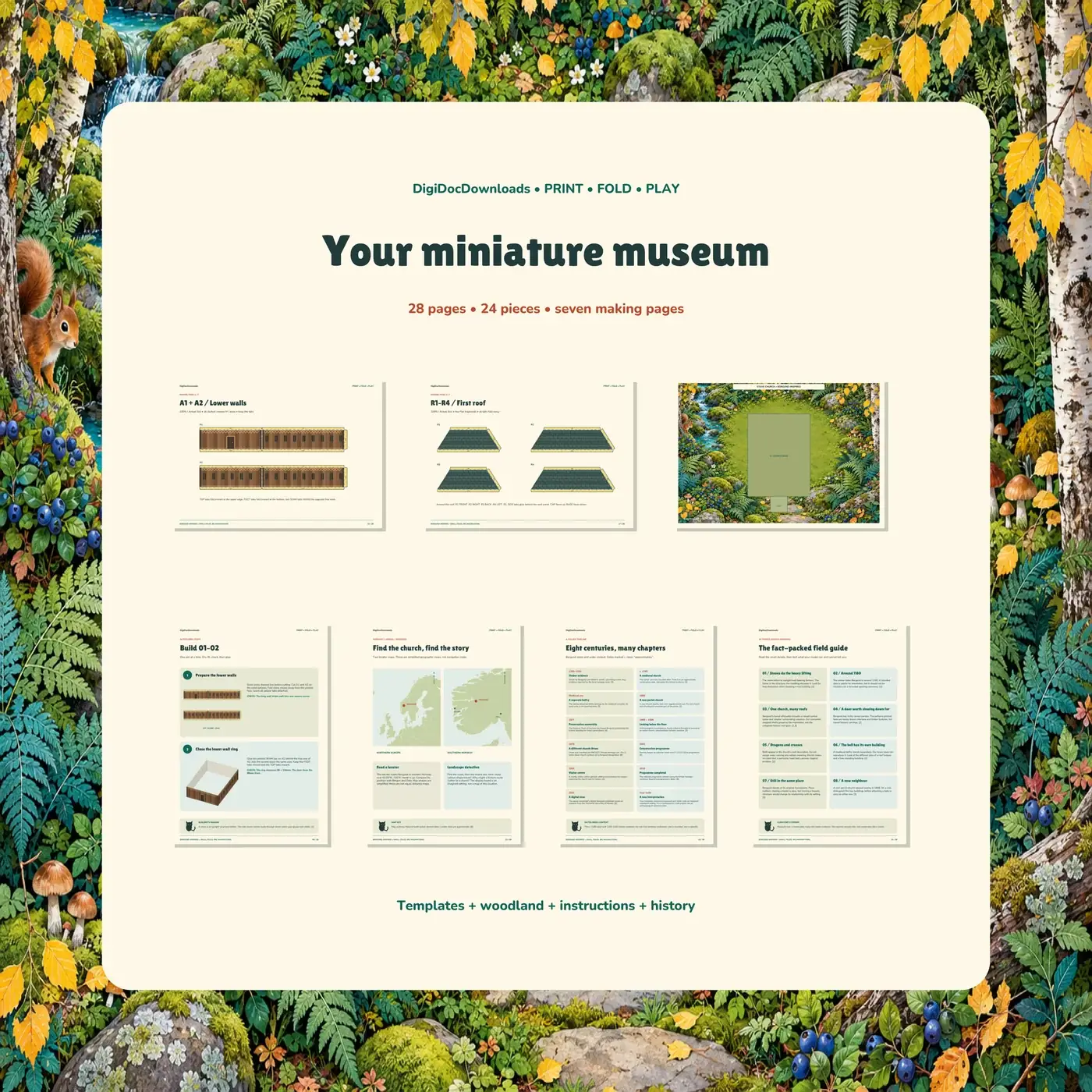
The pack already includes maps, a timeline, sixteen facts, museum challenges and nine linked references, so the historical learning is not an extra research chore. Read those pages alongside the model and use the sources for questions that catch your attention. Our paper-model making guide explains the practical preparation, including why this particular 4/5-difficulty build is better treated as a patient project than a quick first fold.
Keep one question after the last fold
A finished model need not be the end of the activity. Set it beside a photograph and compare a roof, a doorway and a crest. Which features carry the character of the original? Which have been simplified? That small act of comparison is the richer souvenir: not merely a building on a shelf, but a habit of looking closely at the next one.
Explore Norwegian Stave Church
More to read, make and discover
A few useful, interesting and checked routes into the subject.
- Norwegian heritageFortidsminneforeningen: Borgund Stave Church
The church’s custodians introduce its medieval construction, carved portals and distinctive roofline.
- ArchitectureUNESCO: Urnes Stave Church
A detailed account of timber construction and reused carved elements at a different Norwegian church.
- Research perspectiveNTNU: animals in stave church ornamentation
Norwegian university research explains why animal carvings deserve more than a simple pagan-versus-Christian label.