An October event with a longer view
World Migratory Bird Day's second 2026 date fell on 10 October, following the May event. The official campaign chose the theme “Every Bird Counts – Your Observations Matter!” Its emphasis is on noticing birds and contributing observations, rather than requiring an impressive species list.
The U.S. Fish & Wildlife Service's announcement explains how community observations can help understanding of migration, populations and habitats, and encourages continued involvement in monitoring programmes. On 12 October, the event is behind us; the opportunity to pay attention remains. A familiar patch of sky is still worth looking at twice.
A return visit changes the question
On a first walk, the question may be what is here. On a second, it becomes what is different. Choose one ordinary place that is easy to revisit: the same park entrance, garden view or stretch of a familiar path. Keeping the place consistent makes the comparison more meaningful than collecting unrelated sightings from everywhere.
Note the date, approximate time, weather and how long you watched. If one visit lasted five minutes in rain and another half an hour in sunshine, record that beside the observations. The difference may help explain what was noticed; it should not be concealed by a neat list of bird names.
Let uncertainty stay on the page
Not every bird needs an immediate name. A useful note might describe size, movement, colour and location: a small brown bird moving along the hedge, rather than a confident identification made from a distant glimpse. A quick sketch can preserve the shape that memory loses on the walk home.
For children, ask what they actually saw or heard before suggesting an answer. “What happened when it landed?” invites another look. “Was that a robin?” has already done much of the deciding. Keep a space for unknown birds and unanswered questions; these are observations waiting for more evidence.
Use the walk's quieter details
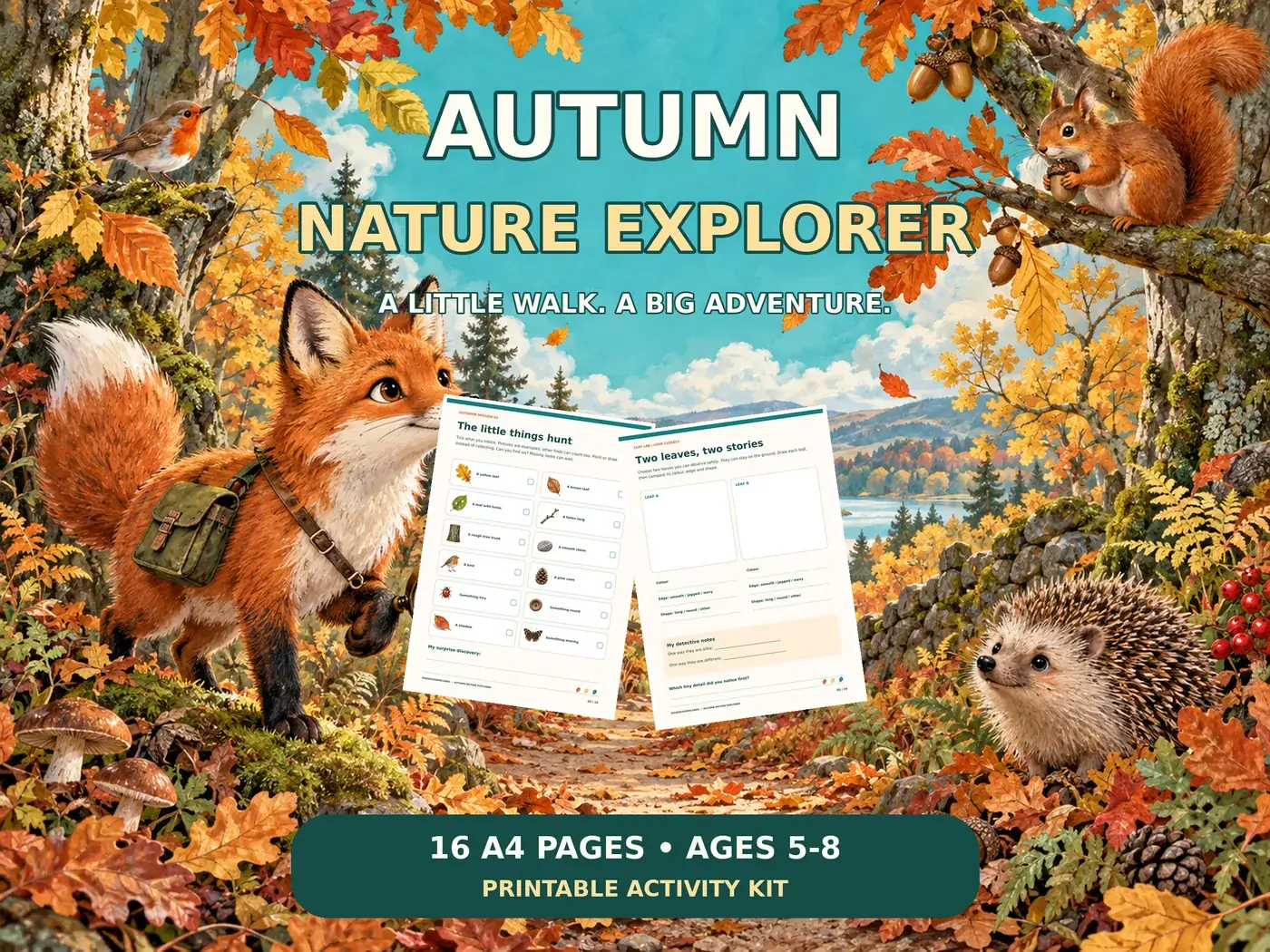
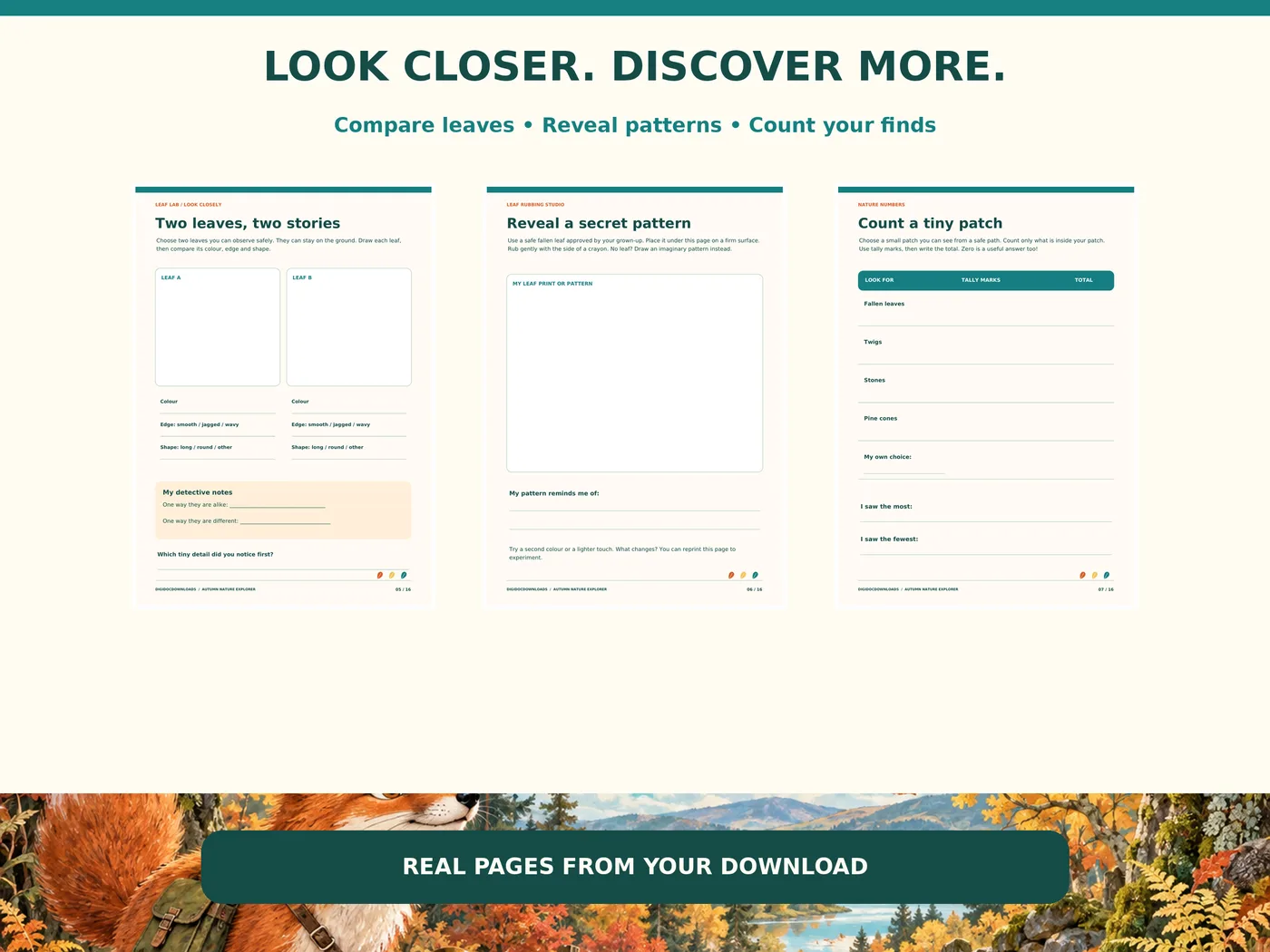
The Autumn Nature Explorer includes sound-map, drawing-map, journal and return-visit activities for children aged 5–8 with grown-up support. These pages offer different ways to take part when birds are distant or hidden. A sound map records where a call seemed to come from without pretending to identify its maker.
Choose a few pages rather than carrying all 16. A pencil, a firm surface and a short route are enough for a modest session. Our autumn nature-walk guide helps with planning the outing. The printable is a personal activity kit, not an official bird-survey form.
Keep personal notes and survey records distinct
A family notebook is free to include sketches, questions and a particularly interesting leaf. A monitoring programme needs observations collected and submitted according to its own rules. If the family wants to contribute data, choose a recognised programme and read its current instructions together before counting.
The RSPB's Big Garden Birdwatch is one route to explore separately. Check its current dates and method; an autumn walk does not become a Birdwatch submission simply because birds were counted. The World Migratory Bird Day theme is a useful invitation to contribute, but accuracy includes knowing which record belongs where.
Finish with the next visit, not a score
Leave birds space, stay on suitable routes and avoid trying to bring wildlife closer for a better photograph. A window observation can be a perfectly good alternative when a walk is impractical. The aim is a record of what was encountered under ordinary conditions.
Before putting the pages away, choose one thing to revisit: the same hedge, a repeated call or the timing of birds arriving at a tree. Add a date for another short look. The next page may contain fewer sightings, more questions or a different sound map. Each is worth keeping honestly.
Explore Autumn Nature Explorer
More to read, make and discover
A few useful, interesting and checked routes into the subject.
- Further readingWorld Migratory Bird Day: official campaign
The international campaign lists the 2026 dates and observation theme.
- Further readingU.S. Fish & Wildlife Service: 2026 campaign announcement
Explains the role of observation and continued participation in bird monitoring.
- Further readingRSPB: Big Garden Birdwatch
A separate recognised monitoring event; follow its current dates and counting instructions.