1. Choose a route for the group
Pick a familiar route with a clear turnaround point and places to pause safely. Think about surfaces, toilets, weather and the people taking part before choosing a woodland simply because it looks attractive. A garden, park or short pavement route with trees can supply plenty to observe.
Allow a flexible twenty-to-thirty-minute outing rather than a fixed distance. That is a planning suggestion, not a target children must meet. An adult stays responsible for supervision, route decisions and materials. Leave unfamiliar plants, fungi, berries and animal remains alone; observation does not require handling or tasting them.
2. Take three activities, not the entire pack
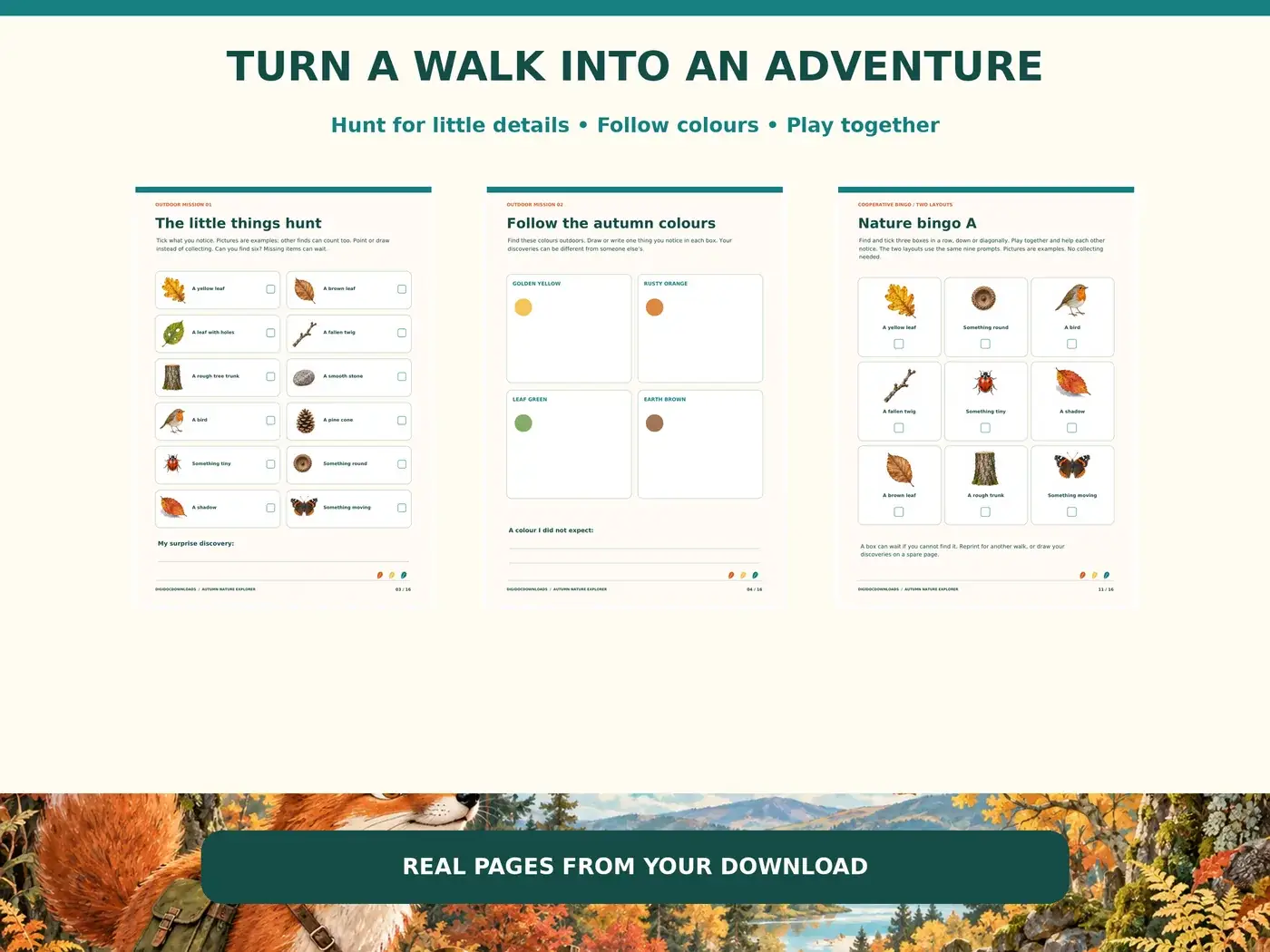
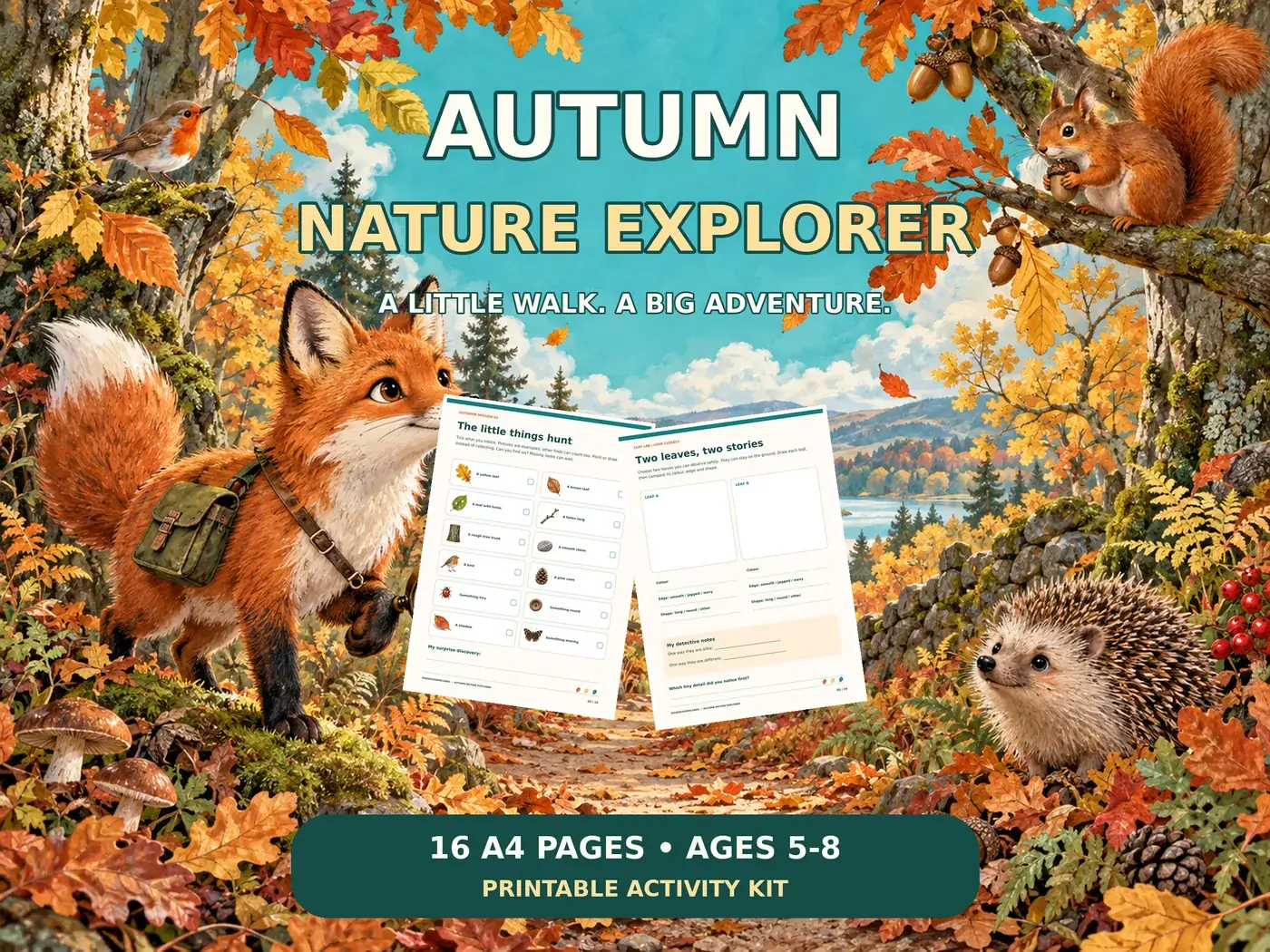
Our Autumn Nature Explorer includes a scavenger hunt, colour trail, leaf comparison, counting, rubbing, sound map and more. For a first walk, choose the colour trail, one comparison page and a journal sheet. The sixteen-page kit is designed for ages 5–8 with grown-up support.
Bring pencils or crayons and a firm surface to write on. A spare plain sheet can help if someone prefers drawing. The pack’s two bingo layouts share nine prompts; they are different layouts rather than eighteen distinct discoveries, so choose one if repetition would add little.
3. Make the first stop about colour
Look at one tree or a small patch of ground. Find a main colour, a second shade and something unexpected. Match them roughly with crayons or describe them aloud. There is no requirement to find a red leaf if the route has not supplied one.
The Woodland Trust’s 2026 autumn-signs guide supports noticing real seasonal changes rather than expecting every place to look the same. Record the date and general location, so the observation can be compared on a later visit without needing to collect the leaf.
4. Compare two visible features
At the second stop, compare two leaves where they can be seen safely. Ask about their edges, shape and vein pattern. Use a photograph or a fallen leaf where appropriate, with local rules and wildlife in mind. A helper can write dictated observations for someone who prefers looking to handwriting.
The Woodland Trust’s tree-identification guide provides a useful reference. Colour alone is not a reliable identification method. If the tree is uncertain, record the visible features and leave the name blank. “Unknown tree with rounded leaves” is more accurate than a confident wrong answer.
5. Pause for a sound map
At a safe stopping point, listen quietly for a short interval. Mark approximate directions of sounds on the page: a bird, passing traffic, footsteps or wind. Do not require closed eyes, silence or a particular response from everyone. Another person can choose to draw something visible instead.
Back indoors, use the Woodland Trust’s explanation of leaf colour to answer one question that arose. Keep the explanation short enough to connect to what was actually seen. Our autumn palette story gives a practical route from outdoor observation to an optional colouring activity.
6. Keep one record for a return visit
Ask each participant to choose one thing worth noticing again: the same tree, the colour beside a bench or a familiar bird call. Place the date on the journal page and choose a possible later visit without promising a particular change.
The walk has done useful work if it leaves a few specific observations and a question. Completing every square is optional. The route is there to be experienced; the pages help keep a little of that experience afterwards.
Explore Autumn Nature Explorer
More to read, make and discover
A few useful, interesting and checked routes into the subject.
- Further readingWoodland Trust: first signs of autumn
A September 2026 guide to noticing seasonal changes.
- Further readingWoodland Trust: identifying trees
Look at leaf shape, edges and other features rather than colour alone.
- Further readingWoodland Trust: why leaves change colour
Pigments and weather behind autumn colour.