A Christmas lights scavenger hunt turns an ordinary evening walk into a small shared expedition. Children have something specific to notice, grown-ups have a reason to choose a manageable route, and the brightest inflatable reindeer in the neighbourhood finally receives the careful study it clearly expected. The useful bit is not collecting every item. It is giving the walk a light structure while keeping attention on the surroundings.
Choose the purpose before the route
Decide whether the evening is a ten-minute look around nearby streets, a longer family walk or a small-group activity. For younger children or a first attempt, twelve broad objects are plenty: a star, a tree, a snowman, red lights or a decorated doorway. Older children may enjoy a longer list, a colour challenge or bingo. A clear purpose prevents the game from quietly expanding into a tour of three postcodes.
Plan the walk in daylight
Walk or inspect the route before the event. Look for continuous pavements, familiar crossings, steep or uneven sections, roadworks, busy junctions and places where the group can pause without blocking other people. Choose a turning point and one or two easy ways to shorten the walk. The route should still work if a display is switched off, the weather changes or somebody has had quite enough sparkle for one evening.
Set a sensible time and distance
For children aged roughly five to ten, a flexible 20–60 minute window is easier to manage than a fixed mileage target. The right length depends on age, weather, mobility, traffic and how often the group stops. Begin with the shortest useful loop and treat extra streets as optional. Tell everyone where the walk ends before setting out, particularly if the finish involves hot chocolate and expectations are therefore serious.
Choose one main way to play
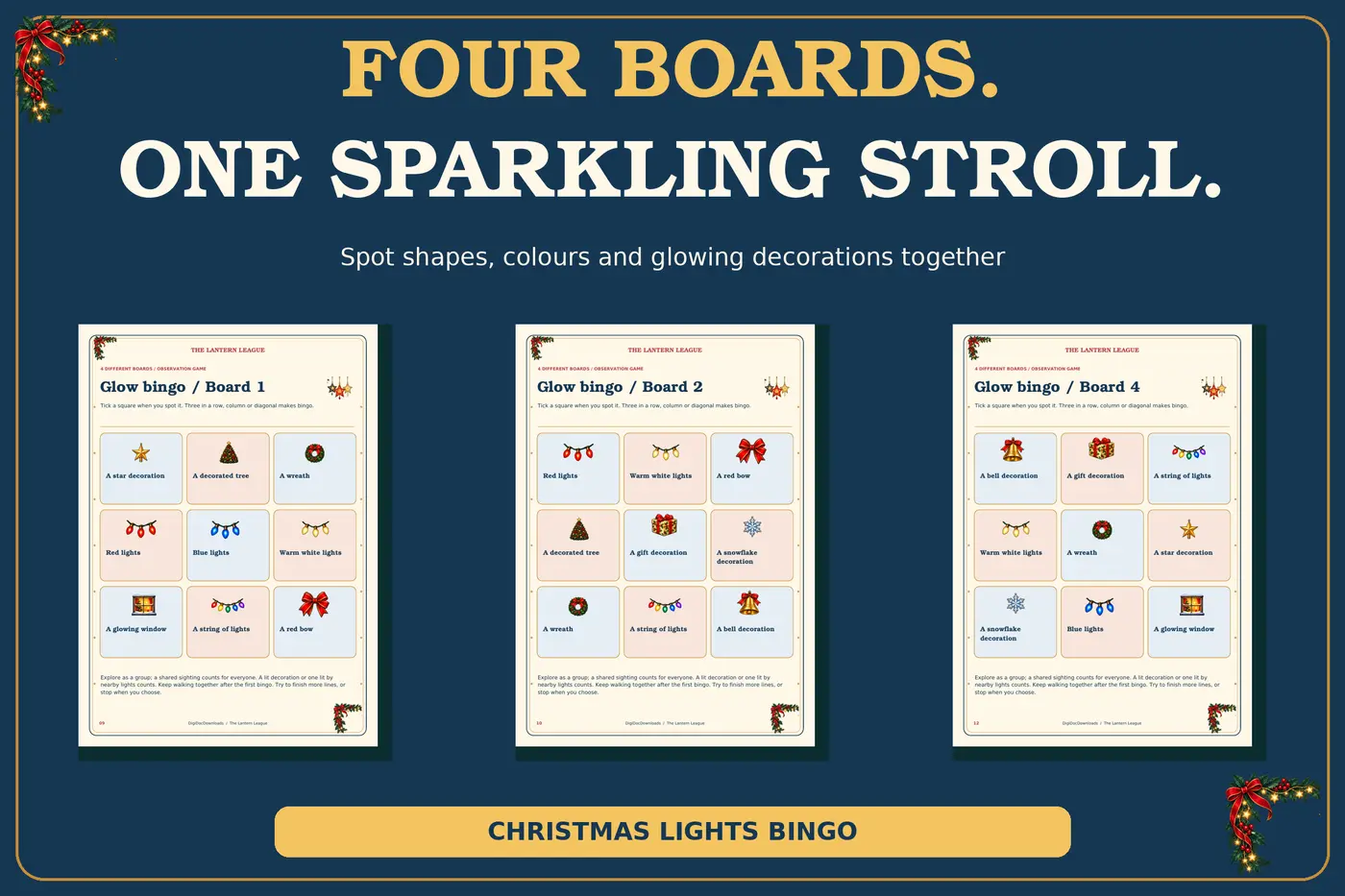
A checklist is easiest for one family: tick an object when somebody spots it. Bingo suits several children or repeat walks because different boards can produce different routes to a line. A colour hunt works well for younger players, while older children may compare patterns, symmetry or repeated motifs. Avoid running several scoring systems at once. One clear game leaves more attention for walking and looking.
Write clues that can survive a dark street
Use short words, large print and familiar pictures. Keep objects broad enough to appear on more than one display, and allow sensible equivalents: a lit star can count whether it is in a window, on a tree or above a doorway. If reading is still developing, let an adult or older child act as clue keeper. Nobody needs to step onto private property, touch a decoration or photograph a home for an item to count.
Make visibility part of the plan
The Highway Code's pedestrian rules advise light-coloured, bright or fluorescent items in poor daylight and reflective materials after dark. A torch can help with the sheet and uneven ground, but point it down and avoid shining it at drivers, windows or other walkers. RoSPA's low-light walking guidance also recommends reflective clothing and a torch or headlamp. Check that coats, shoes and weather layers suit the actual evening rather than the one the forecast promised at breakfast.
Keep the grown-up in charge near roads
The game pauses at every crossing. Put the sheet down, gather the group and cross using the safest available place; never let a sighting on the opposite side pull a child ahead. The Highway Code says young children should not be out alone on the pavement or road, and RoSPA's child pedestrian guidance makes hand-holding a central rule for younger children near traffic. Set that expectation before the first clue appears.
Give every child a useful role
One child can hold the pencil, another can read or describe the next item, and another can watch for a chosen colour. Swap jobs at a planned point so the quickest spotter does not accidentally become chief executive of Christmas. For siblings of different ages, pair a picture-based role with a harder observation question. The activity should make room for looking, talking and passing a turn.
Agree what counts before leaving
Decide whether indoor window displays count, whether one arrangement can supply several objects and whether a partially hidden item is enough. A relaxed rule is usually best: if the group can identify it from a public path, it counts. For bingo, choose a line, four corners or the whole board before starting. Simple rules reduce debate without turning a family walk into a tribunal for illuminated penguins.
Build in a weather and energy plan
Check the conditions shortly before leaving and cancel or shorten the route when surfaces, wind, visibility or temperature make the walk unsuitable. Bring only what helps: a charged phone for the adult, water if needed, a pencil that writes in the cold and a small folder or clipboard for paper. A tired, cold or worried child is a reason to take the direct route home, not a failed mission.
Use photographs thoughtfully
The hunt does not require photographs. If the family chooses to take them, frame children against public festive spaces or your own decorations rather than recording house numbers, car registrations or people in their homes. Ask before sharing an image that includes another family. A tick on a sheet is perfectly adequate evidence; the snowman will not request an audit.
The best festive hunt is short enough to enjoy, clear enough to follow and flexible enough to end early.
Finish with a tiny review
At the end, ask which display was easiest to spot, which colour appeared most often and what the group would change next time. Children can draw a favourite arrangement or invent one new hunt item for a future walk. The review gives the activity a satisfying finish and helps the next route fit the group better.
Use a printable kit as a menu, not a timetable
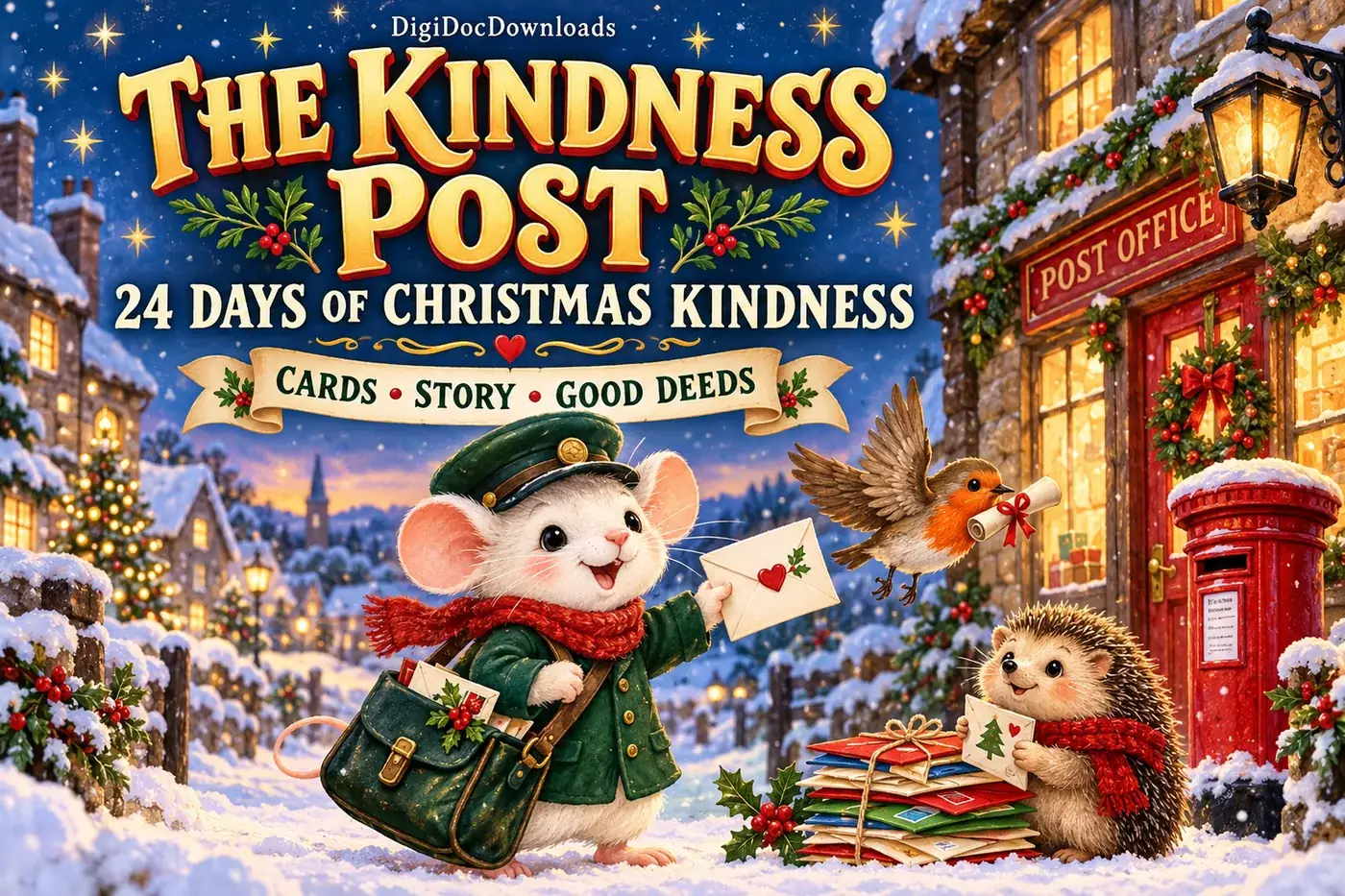
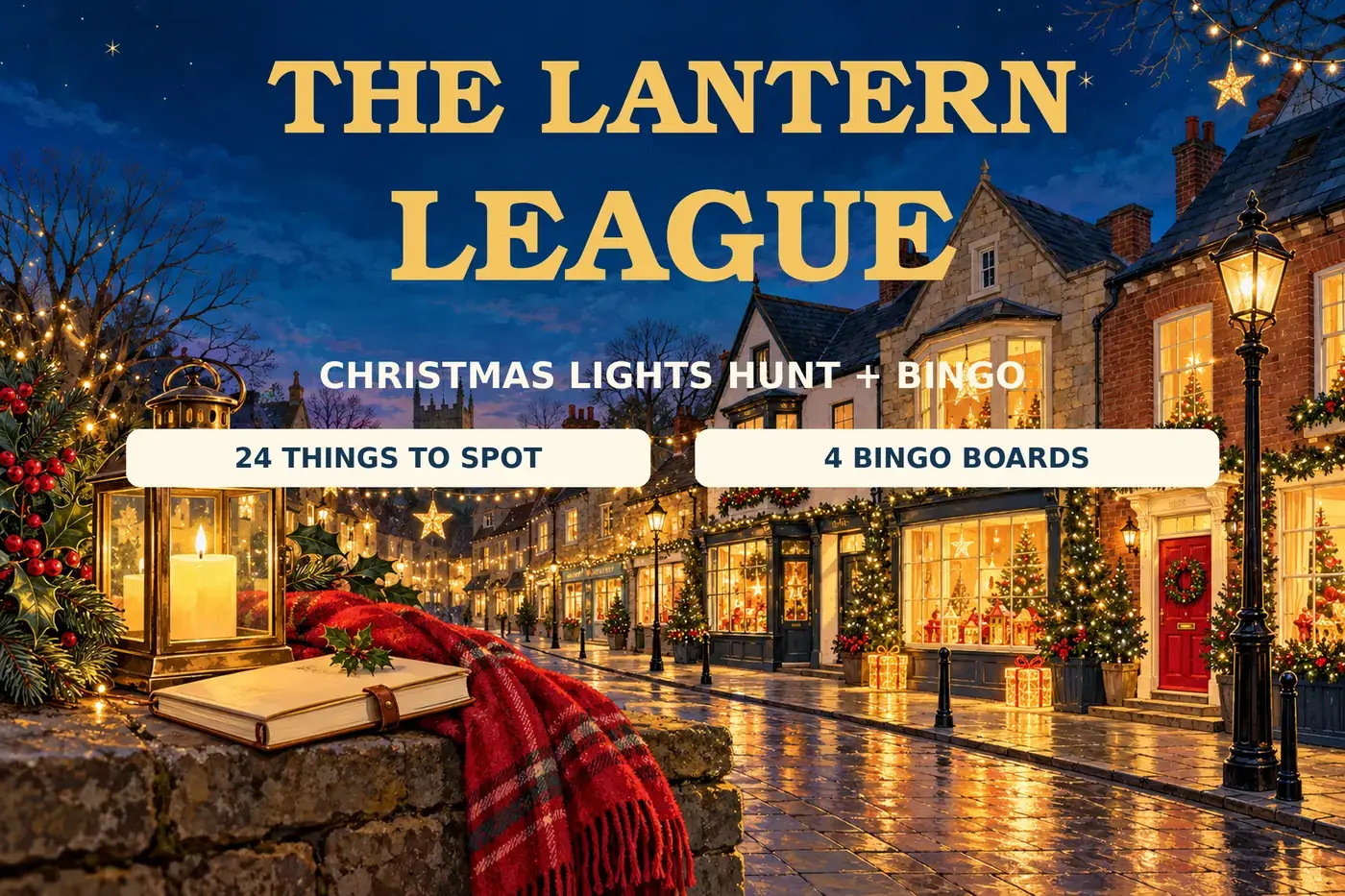
The Lantern League Christmas lights hunt includes a quick 12-item hunt, a larger 24-item adventure, four bingo boards, a route planner, trail map, colour and pattern challenges, science facts, a quiz, postcards and explorer awards. It is designed for ages 5–10 with an adult and a flexible 20–60 minute route; the hunt and bingo pages can also work with indoor displays. Print only the pages that fit the evening. The Christmas collection has other quiet, indoor and table-based activities for days when the weather makes a walk less appealing.
Christmas lights scavenger-hunt checklist
- Inspect a short, pavement-based route in daylight.
- Choose one checklist, bingo board or colour challenge.
- Set the crossing, hand-holding and private-property rules before starting.
- Wear suitable layers and add bright or reflective items for low light.
- Bring a torch for the ground and sheet, not for shining at people or traffic.
- Give children simple roles and agree what counts as a sighting.
- Keep a shortcut home and stop when weather, energy or visibility changes.
- Finish with one favourite display and one idea for next time.
A little planning makes the evening feel freer, not more formal. Once the route, safety rules and game are settled, the grown-up can concentrate on the group and the children can concentrate on looking. That is quite enough organisation for a walk whose main attraction may be a hedgehog made entirely from blue lights.
More to read, make and discover
A few useful, interesting and checked routes into the subject.
- Official pedestrian guidanceThe Highway Code: rules for pedestrians
Current UK pedestrian guidance on pavements, crossings, supervising young children and being visible in poor daylight and after dark.
- Child road-safety guidanceRoSPA: child pedestrian safety and road awareness
Practical advice for adults teaching and supervising children near roads, including hand-holding and reflective clothing.
- Low-light walking guidanceRoSPA: staying safe while walking, wheeling or cycling
Current guidance on reflective clothing, torches and planning for low-light travel.