A number cannot describe the whole mouthful
A cocoa percentage is useful information, but it is not a complete tasting note. Two bars displaying a similar number can offer different sweetness, texture and aromas. Treating the percentage as a league table misses the interesting work of noticing what is actually in front of you.
A small comparison changes the question from “Which is best?” to “What differs, and which differences do I prefer?” That leaves room for a favourite without requiring everyone at the table to agree. The chocolate can survive a difference of opinion; the evening should, too.
Give cacao its wider context
Begin with Mexico’s National Institute of Anthropology and History account of cacao, which discusses its long history and cultural significance. Chocolate’s story does not begin with a wrapped bar on a British or American shelf. Cacao has belonged to food, drink and social practices with their own histories.
The National Museum of Anthropology’s discussion of the jicalpextle describes a vessel associated with foods, drinks and gift-giving, including cacao-based preparations. It provides a specific cultural example rather than asking one generalised “ancient chocolate” story to represent many different communities.
Taste with ordinary words
Start by looking, then smelling, then taking a small piece. Describe what is noticeable without reaching for impressive vocabulary. Smooth, grainy, sweet, bitter, milky or a little fruity are useful observations when they match the experience. Not detecting a particular aroma is also a valid answer.
There is no need to imitate a professional tasting sheet. Write “reminds me of toasted cereal” if that is the closest comparison. Keep the note personal: a recollection or preference is not a claim that the chocolate contains the thing it resembles.
Make the comparison manageable
Choose four chocolates with a reason for being together: different styles, different percentages or four plain bars with clear labels. Change several factors and the tasting becomes exploratory rather than a test of one cause. That is fine, provided the conclusion remains modest.
Keep packaging available. The Food Standards Agency’s allergy guidance is useful when checking ingredients with guests; “plain” chocolate does not automatically mean suitable for everyone. Use the guest’s requirements to decide whether food tasting is appropriate, rather than presenting mystery samples without ingredient information.
A prepared kit can keep the conversation moving
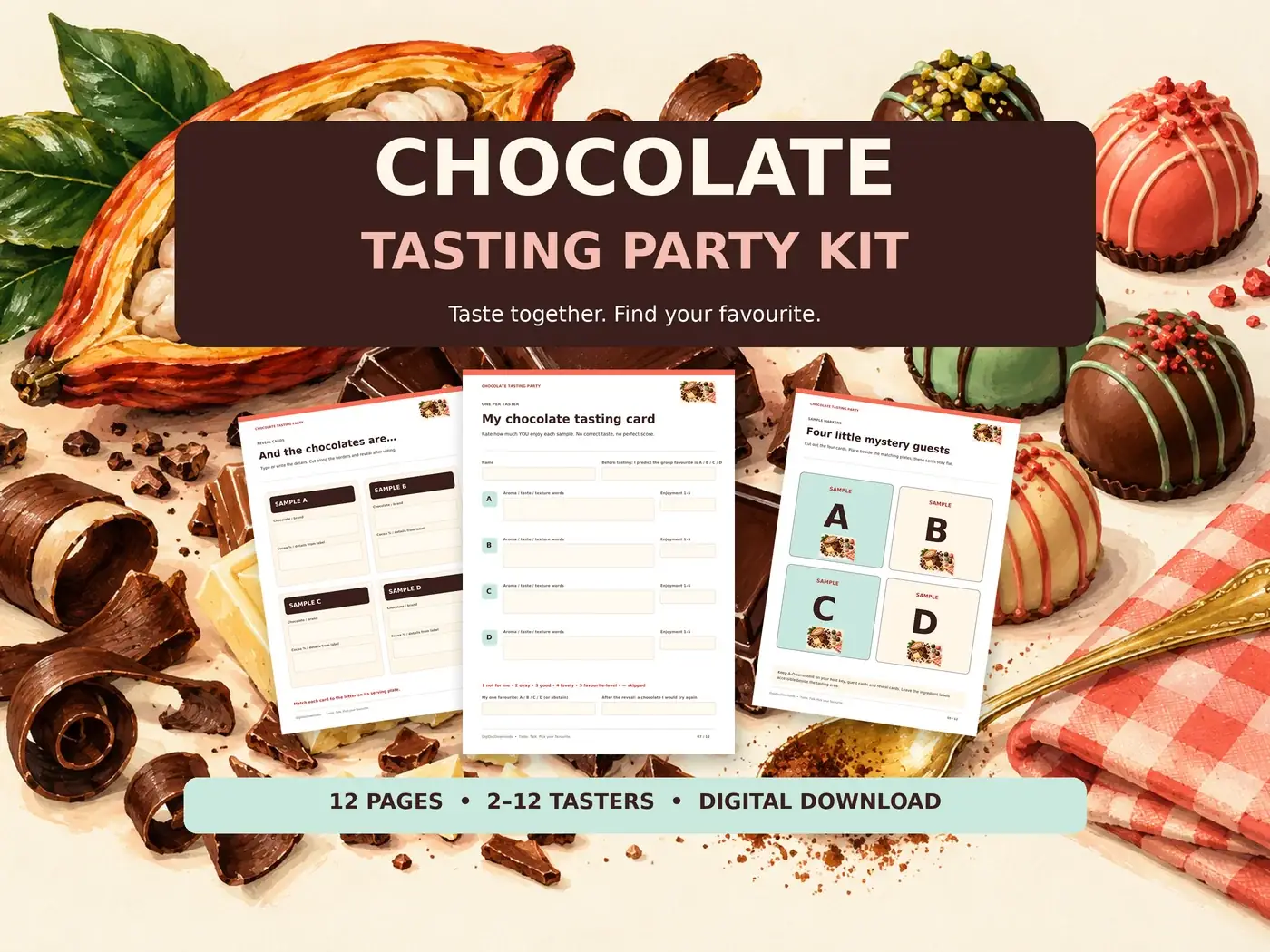
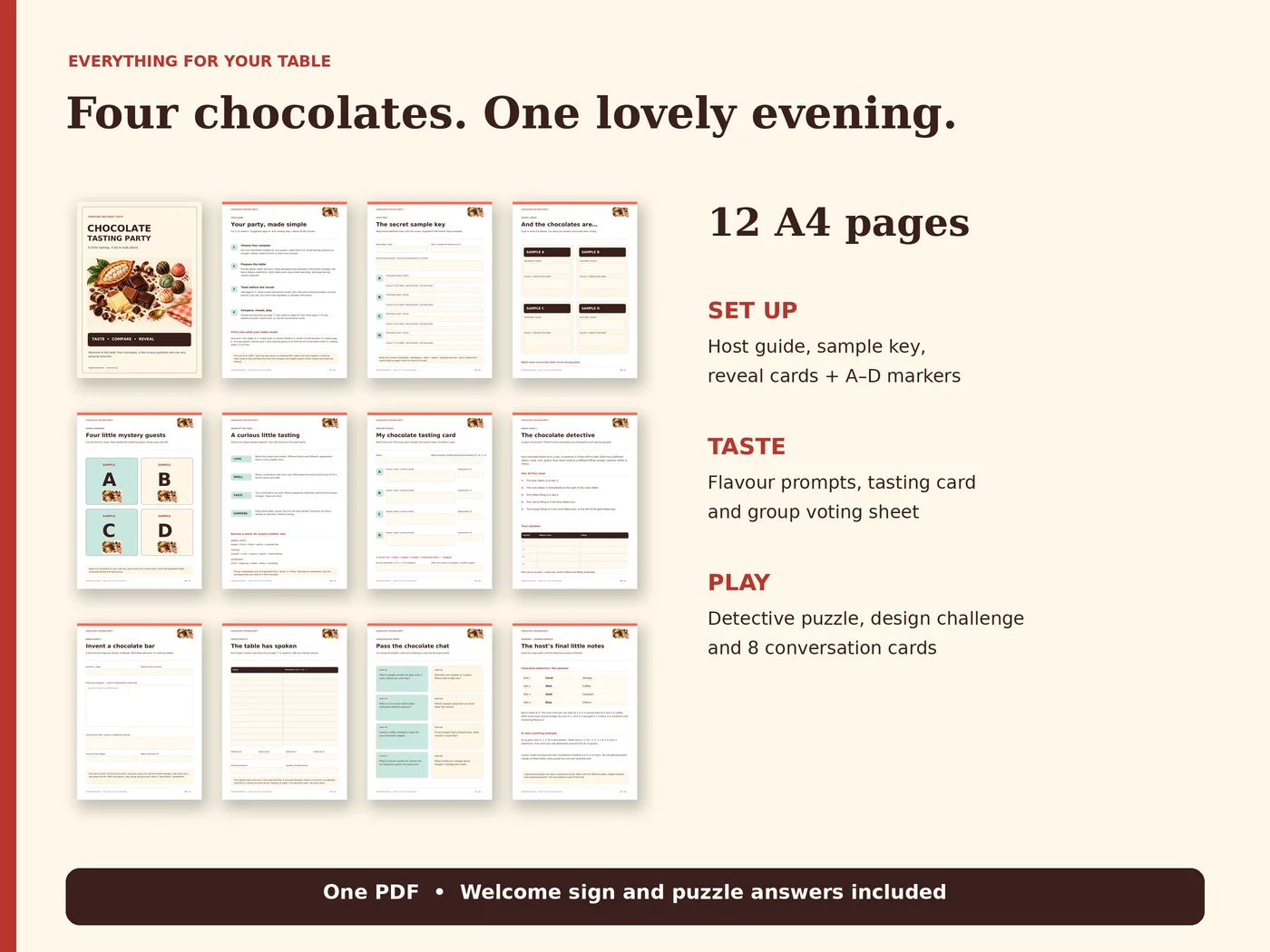
Our Chocolate Tasting Party is designed for four supplied chocolates and 2–12 people, with a host guide, personal scorecard, group vote, sample markers and reveal cards. It also includes a detective puzzle, an invent-a-bar challenge and conversation cards. The chocolates themselves come from your own selection.
The fillable text fields work in a compatible desktop PDF reader, or the pages can be completed by hand. Totals are manual. Our home chocolate-tasting guide gives a practical sequence, including keeping the ingredient information accessible before any optional reveal.
Keep the result specific
At the end, compare notes before comparing votes. A bar might be someone’s favourite because of its texture while another person prefers a sweeter finish. That difference is useful; it explains why the result cannot be reduced to the largest percentage or most elaborate label.
Record a favourite and one thing newly noticed. Next time, choose a narrower comparison if curiosity remains. Four small samples can offer plenty to discuss without appointing anyone the final authority on chocolate.
Explore Chocolate Tasting Party
More to read, make and discover
A few useful, interesting and checked routes into the subject.
- Further readingINAH: the ancestral cacao tree
A Mexican cultural source on cacao and its long history.
- Further readingMexico’s National Museum of Anthropology: jicalpextle
A vessel’s place in food, drink and gift-giving traditions.
- Further readingFood Standards Agency: food allergies
Reliable information for checking ingredients and planning food with guests.