1. Choose a calendar that fits real life
A kindness calendar works best when the actions fit the household, rather than requiring the household to perform an elaborate December timetable. Decide which days are realistic before choosing activities. School events, work and ordinary tiredness still exist when the decorations go up.
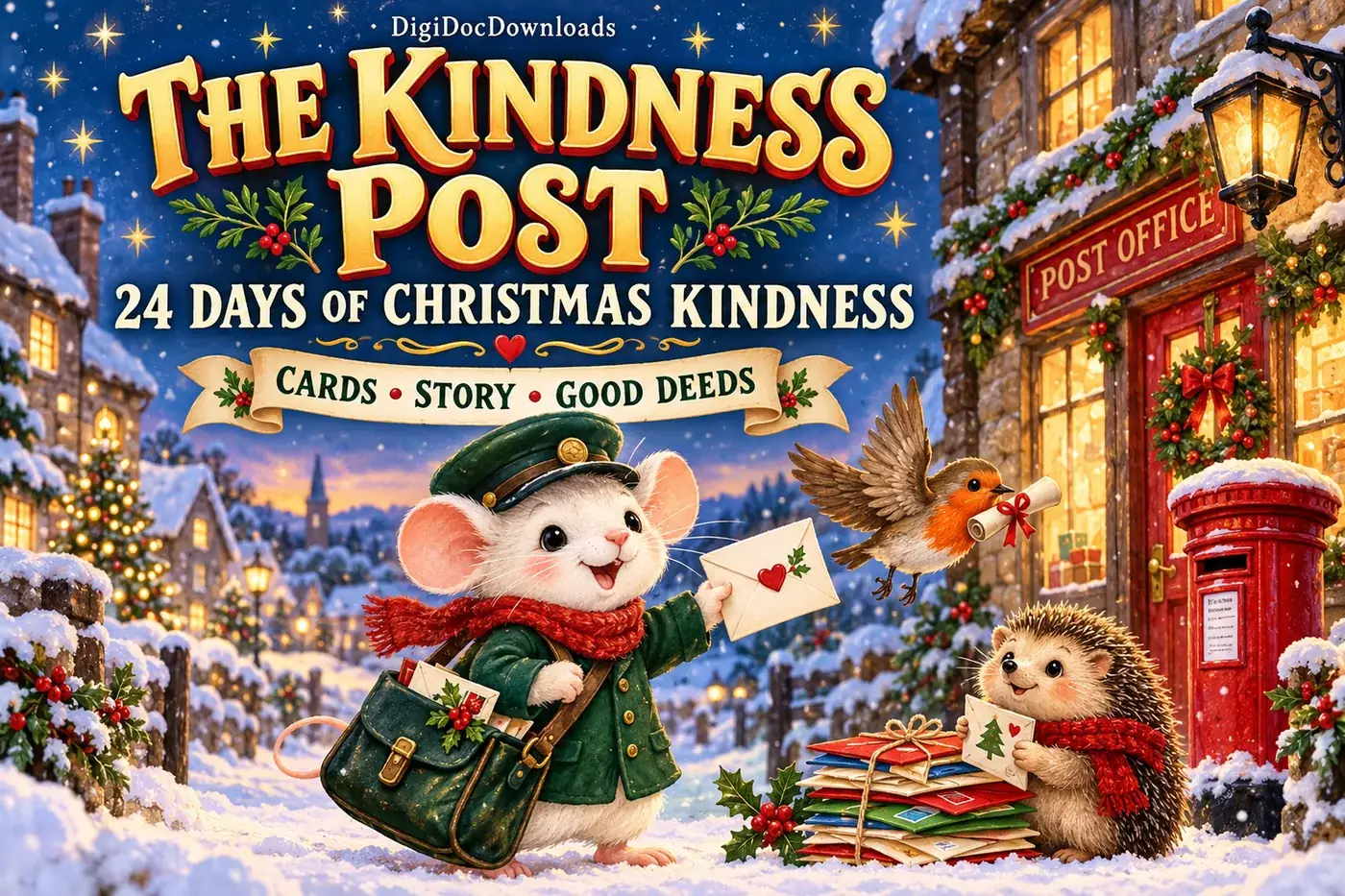
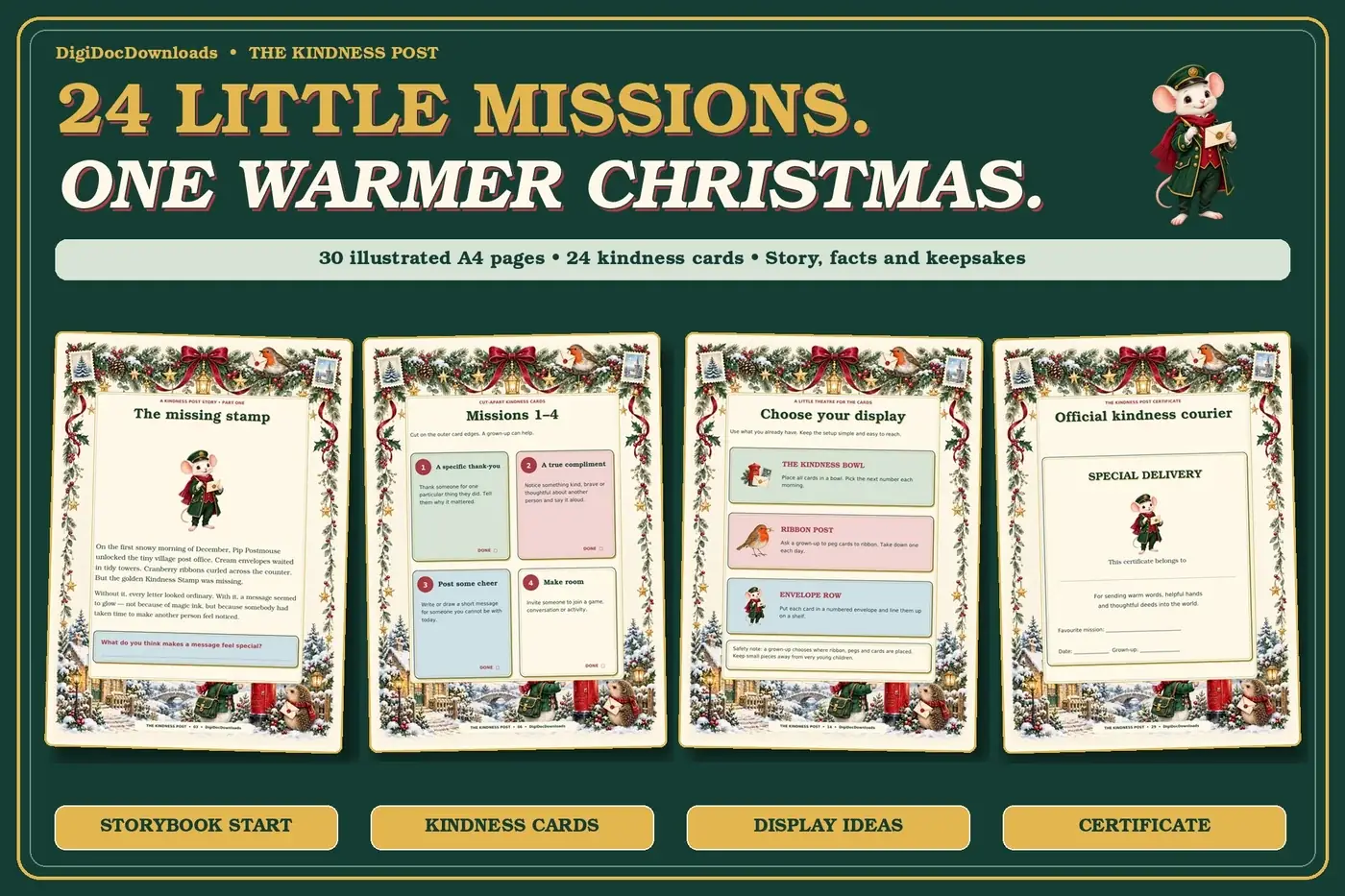
Our Kindness Post contains 24 numbered mission cards and eight blank cards, supported by a story featuring Pip Postmouse, Rory Robin and Hettie Hedgehog. It is designed for children aged five to ten with grown-up help. Follow 1–24 December, choose twelve days or use selected missions. The calendar is a framework, not an attendance register.
2. Make the actions small and specific
Choose actions a child can understand and complete: write a thank-you note, offer help with a familiar task or make a kind message for someone they know. Keep the recipient’s wishes in mind. Helping means checking what is useful, especially when the proposed assistance involves another person’s belongings.
Use the blank cards to adapt missions for your family. Avoid making spending money the default expression of care. The pack includes gifts-of-time coupons and mini thank-you notes, which can support something modest and concrete. “Help put the books away after reading” is easier to fulfil than a sweeping promise to be helpful forever.
3. Let children choose how to take part
Read the story together, then offer a choice between two suitable missions. A child who finds writing difficult may dictate a sentence or draw a message. Someone who prefers a quieter activity can prepare a card rather than perform a surprise in front of a group.
Scope’s accessible event-planning guidance provides useful questions about different ways to participate. Bring that principle into the calendar: the worthwhile part is the thoughtful action, not matching everyone else’s method. Avoid turning a missed day into a public comparison or expecting children to share private feelings to earn a mark on the route.
4. Prepare only the pages you need
The 30-page A4 pack includes the story, mission cards, a progress route, a planner and supporting stationery. Select the pages that serve your chosen version and print a test before producing the set. Keep spare cards where a grown-up can find them when an activity needs changing.
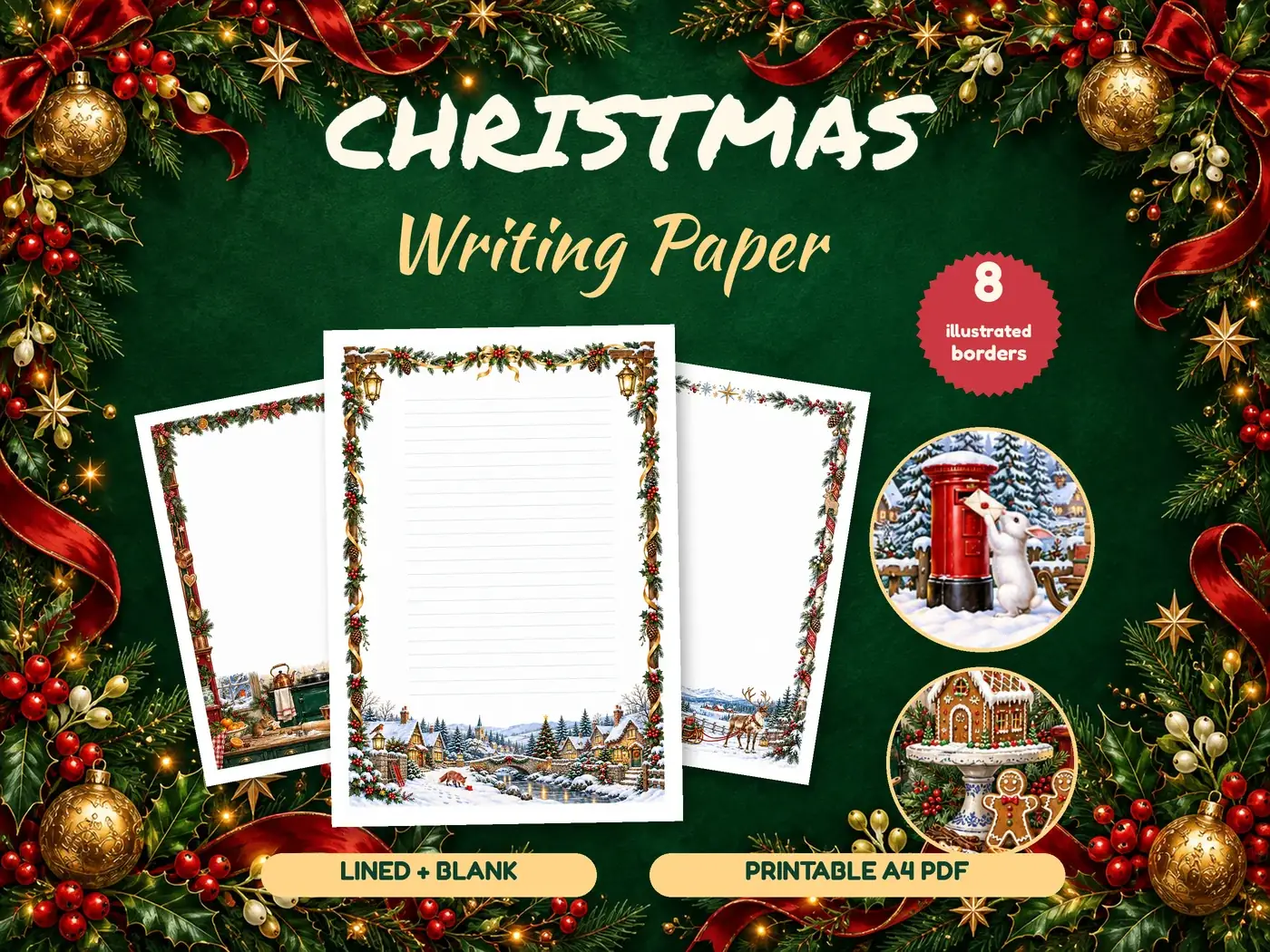
Read the chosen mission in advance and gather any ordinary materials it needs. The foldable postcard, letter page, mini notes and gift tags offer different message formats; they are options rather than a requirement to produce a complete postal department on the kitchen table.
5. Give a message a little context
A short look at the V&A’s first Christmas-card story introduces the 1843 card associated with Henry Cole and John Callcott Horsley. The Postal Museum’s Christmas-card history offers more designs to compare. Notice how a picture and a few words work together, then let the child choose their own approach.
Our Christmas-card feature explores what makes a message feel particular to its recipient. One remembered detail is enough: a shared book, a helpful moment or thanks for something specific. Plain paper works too; the thought does not depend on a decorated border.
6. Review the action, then carry on
After a mission, ask what happened and whether anything needs following up. A promised task may still need doing; a note may need delivering. Keep the conversation brief and allow a child to keep some details private. Kindness is not improved by requiring a full press release.
Use the included reflection page or certificate if it helps mark the experience, without treating it as a ranking of children. At the end, keep one practice that proved useful and leave the rest in December. A small habit that fits ordinary days can outlast the numbered cards.
More to read, make and discover
A few useful, interesting and checked routes into the subject.
- Further readingScope: planning an accessible agenda
Useful questions about different ways to take part in an activity.
- Further readingV&A: the first Christmas card
Henry Cole, John Callcott Horsley and the 1843 commercial card.
- Further readingThe Postal Museum: Christmas-card history
Changing card designs, postal imagery and seasonal greetings.