Secret Santa works because it reduces a long gift list to one thoughtful exchange. It can also go wrong with impressive efficiency: a budget appears after somebody has already shopped, the only clue is “I like things”, or one parcel vanishes into the office kitchen. The cure is not more mystery. It is a short, visible plan agreed before the names are drawn.
Make the invitation genuinely optional
Invite people before creating the participant list, especially at work or in a mixed social group. A person may not celebrate Christmas, may be watching their spending or may simply prefer not to exchange gifts. No explanation should be required. The CIPD’s guidance on Christmas at work recommends optional attendance and recognises that not every faith celebrates Christmas; Acas guidance on inclusive workplaces supports activities that include rather than pressure people. A quiet opt-in message is warmer than a public roll call.
Agree the budget before drawing names
Choose one maximum amount and say whether postage, handmade items or second-hand gifts count within it. Keep the figure modest enough for the whole group, not merely comfortable for the person organising it. MoneyHelper’s Christmas budgeting advice notes that expensive presents can create pressure for the recipient to spend a similar amount. Secret Santa is unusually well placed to avoid that little financial arms race: one name, one agreed limit and no competitive upgrades.
Set four rules in one message
- Opt-in deadline and who is eligible to join.
- Maximum gift budget, including any postage rule.
- Date and place for gift collection or exchange.
- Whether the giver will be revealed or stay secret.
Add any group-specific limits at the same time: homemade gifts welcome, food only when preferences are known, joke gifts by agreement rather than ambush. Keep the rules brief enough to reread. A page of festive terms and conditions is technically organised, but it has rather missed the mood.
Choose a matching method that fits the group
For three or more people, a shuffled giving circle is simple: place the participant names in a random order, then assign each person to the next name, with the final person giving to the first. Everyone has one recipient and nobody draws themselves. The organiser sees the full circle, so this is not suitable where even the organiser must remain unaware. For couples or family members who should not be paired, check the circle before sending assignments and reshuffle if necessary. Never “repair” one awkward pairing by quietly giving somebody two recipients.
Ask for clues that lead to an actual gift
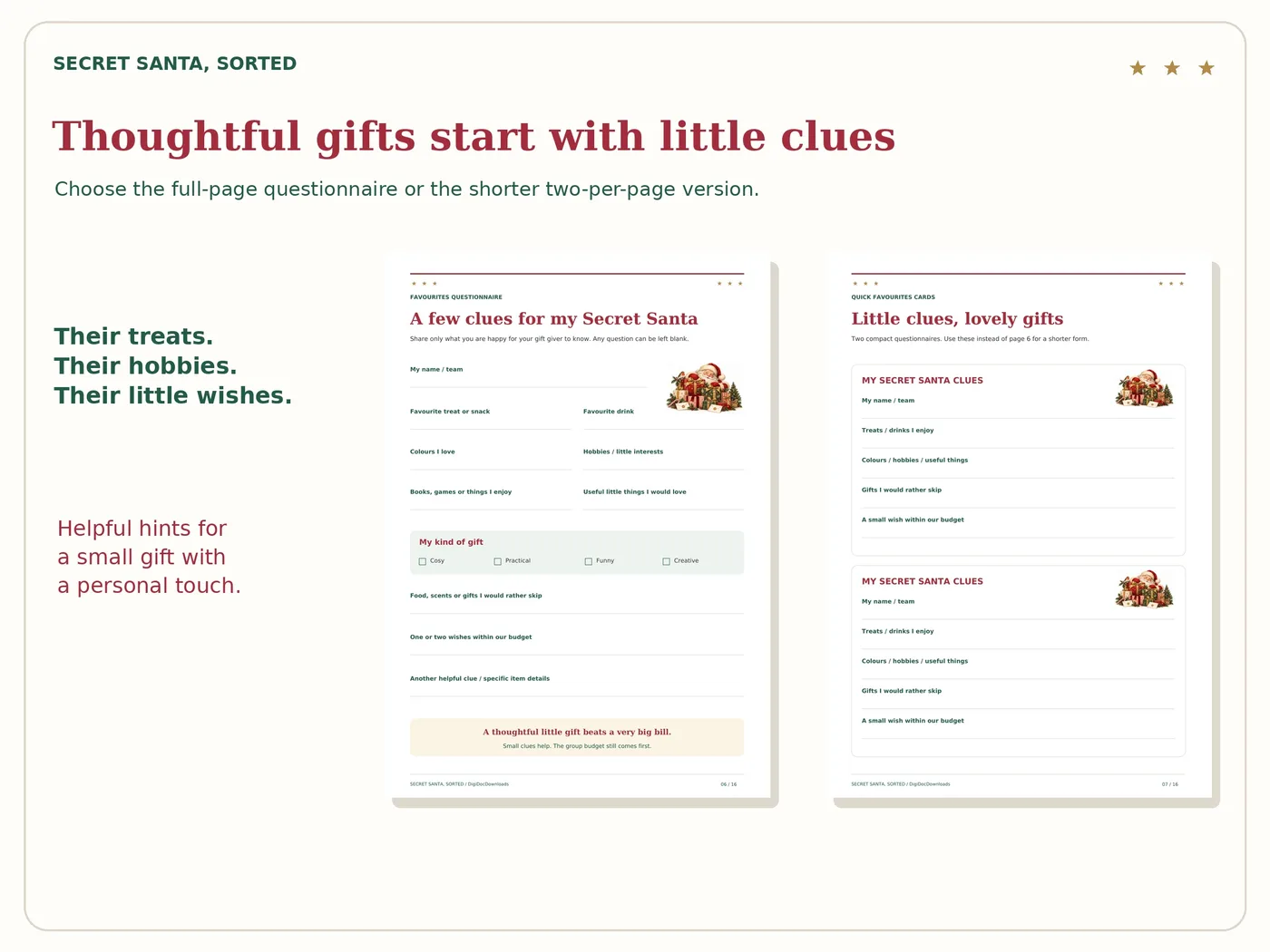
A useful favourites form covers a few concrete choices: preferred snacks or drinks, colours, hobbies, practical treats and small wishes. Include a line for things the recipient would rather avoid. Do not ask people to explain a dietary, religious, sensory or personal reason; the practical answer is enough. Three specific clues beat a miniature autobiography, and they make the spending limit easier to respect.
Keep personal answers private and temporary
Send each Santa only the information needed for their recipient. Do not display everybody’s questionnaires on a noticeboard or leave the assignment sheet beside the printer. The ICO’s data-minimisation principle is written for organisations, but its practical idea travels well: collect what is necessary, use it for the stated purpose and do not keep it for longer than needed. Delete digital copies or recycle paper records securely after the exchange.
Give shopping and handover separate deadlines
Set a joining deadline first, then send assignments promptly. Put the gift-arrival date a few days before the reveal or handover so the organiser can see what is missing while there is still time to act. For an office exchange, nominate one discreet collection point and label every parcel with the recipient’s name; the giver’s name can stay off. For families or remote groups, confirm whether gifts are posted directly and whether the recipient should wait before opening.
Plan for absences without turning them into a mystery
Before matching, decide what happens if somebody withdraws. If assignments have not been sent, remove the name and draw again. If shopping has started, the organiser should speak privately to the affected giver and recipient rather than rearranging the entire circle without warning. A small neutral backup gift can cover a delayed parcel if the group has willingly agreed to fund one, but it should not become an extra cost quietly carried by the organiser.
Make the reveal optional too
Some groups enjoy guessing the giver; others prefer to hand over gifts and move on to tea. State the plan in advance. A reveal card can turn the answer into a small moment, while an anonymous thank-you note lets the exchange remain secret. Avoid public demands for a performance, a speech or an instant verdict on the gift. Gratitude is easier when nobody is being observed like a contestant in a particularly polite game show.
Use one organiser record, not several competing lists
Keep the participant register, private assignments and gift-arrival status together. The organiser needs to know who joined, who gives to whom and whether each parcel has arrived; participants need only their own assignment and the shared rules. That split protects the surprise and reduces crossed messages. If a change is made, update the central record first, then tell only the people affected.
A practical Secret Santa checklist
- Invite people privately and make participation optional.
- Agree one affordable maximum budget before matching.
- Record names exactly and check any pairing restrictions.
- Use a giving circle or another method that prevents self-assignment.
- Send each person only their recipient’s useful preferences.
- Set a gift-arrival date before the reveal date.
- Keep assignments and questionnaires private.
- Prepare a simple plan for withdrawals, delays and absences.
- Decide whether the giver is revealed.
- Clear the organiser records after the exchange.
Let the printable kit do the quiet organising
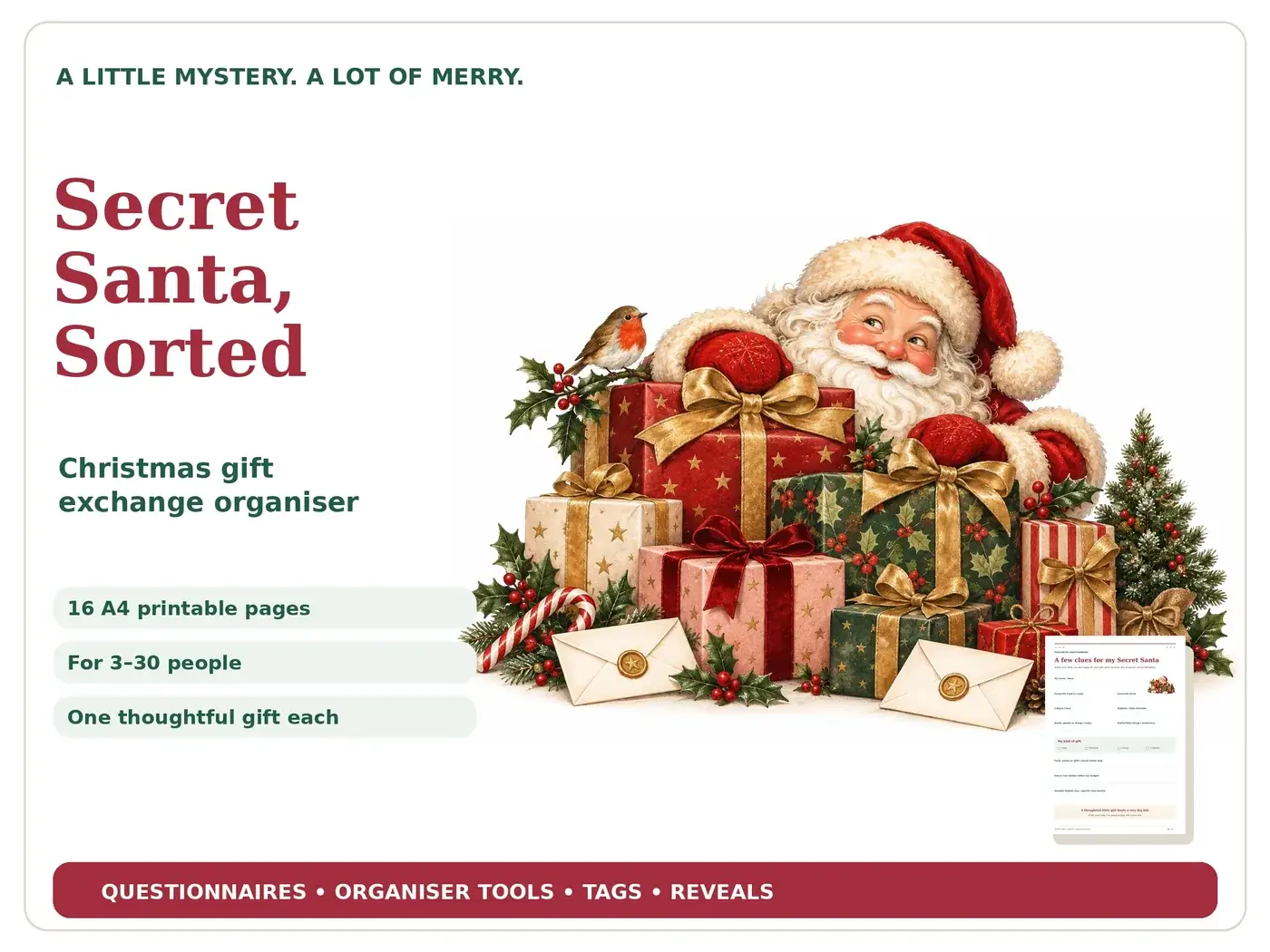
Secret Santa, Sorted is a 16-page A4 organiser kit for groups of 3–30. It includes an illustrated giving-circle guide, exchange plan, invitation poster, participant register, full and compact favourites questionnaires, name slips, a private assignment record, individual assignment cards, gift planner, collection and handover tracker, gift tags, reveal cards, thank-you notes and a collection sign. Print the pages that fit the group; the organiser keeps the matching record private. The wider Christmas collection also includes table games, family activities and quieter projects when a gift exchange is not the right fit.
Once the budget, names and dates are settled, Secret Santa becomes what it was meant to be: one manageable gift and a little curiosity. The organiser’s finest achievement is not a dramatic reveal. It is reaching the handover with every participant accounted for, every gift in the right place and no spreadsheet titled “final-final-Christmas-names-USE-THIS-ONE”.
The useful rules are settled before the names are drawn; the surprise belongs inside the gift, not inside the organisation.
More to read, make and discover
A few useful, interesting and checked routes into the subject.
- Independent money guidanceMoneyHelper: saving money for Christmas
Practical guidance on agreeing present budgets and avoiding pressure to match unaffordable spending.
- Workplace inclusion guidanceCIPD: Christmas workplace tips
Advises optional participation and consideration for people who do not celebrate Christmas.
- Official workplace guidanceAcas: making your workplace inclusive
Current guidance on inclusive workplace activities and culture.
- Official privacy guidanceICO: data minimisation
Collect and retain only personal information necessary for the purpose.