Choose the Halloween book-club read first
Begin with the book the group genuinely wants to discuss. A ghost story, mystery or Gothic novel can suit the season, but Halloween atmosphere does not require everyone to enjoy horror. The British Library’s tour of spine-tingling stories ranges from early Gothic fiction to gloriously lurid chapbooks, which makes it a useful place to browse possible moods rather than a compulsory reading list. Share the chosen title early and say whether the meeting will cover the whole book.
Agree the spoiler boundary at the start
Ask who has finished and decide together how far the conversation can go. You might discuss the complete book, stop at a named chapter or save the ending for a final section that unfinished readers can sit out. Give everyone permission to pass on a question. Stating the boundary aloud takes less than a minute and lets the rest of the conversation feel relaxed rather than cautious.
Treat Halloween as a mood, not a reading test
Gothic classics, ghost stories, cosy mysteries, folklore, magical realism and autumn-set novels can all suit an October meeting. Share content notes where they matter and let members suggest a lighter alternative. A seasonal frame should widen the conversation, not quietly turn attendance into a test of who enjoys being frightened.
Create atmosphere with what you already have
Lower the main light and add a shaded lamp or battery light where people can still read comfortably. Stack a few books beside the welcome sign, use the kit’s coral, teal and cream colours as a simple table palette, and let an autumn branch or dark cloth provide one seasonal note. Keep paths, seats and printed prompts well lit. The room only needs to feel a little different; it does not need to become a film set.
Take one cue from the book — a colour, setting or repeated object — and use it once. A mystery set in a hotel needs a key tag more than a table full of plastic spiders. Specific atmosphere feels intentional, costs little and leaves the printed pages easy to use.
Prepare a small set of conversation cards
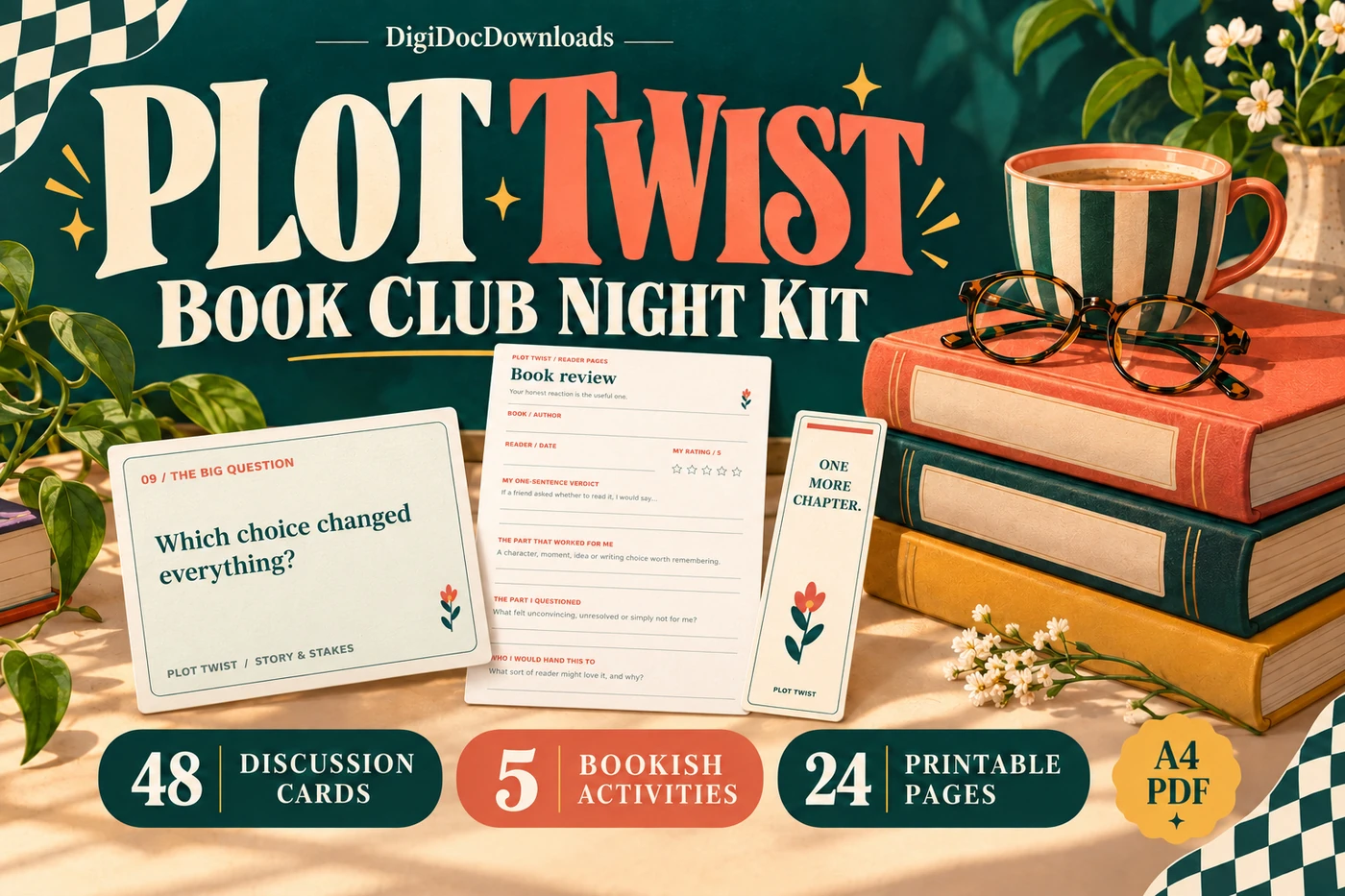
Plot Twist Book Club includes 48 cards across six themes. Choose a handful that fits the book rather than putting every prompt on the table. A question about a decisive choice can open the plot, one about viewpoint can explore the writing, and one about what happens after the final page can finish on imagination. The National Literacy Trust’s book-group guide is a sensible reminder that the group, the book and the discussion need to work together. Keep one or two spare prompts nearby; forty-eight on the table would look less like hospitality and more like an inquiry.
Use a simple 75-minute shape
- Allow ten minutes to settle in, confirm the spoiler boundary and share first impressions.
- Give the main discussion about thirty minutes, following the answers that interest the group.
- Use fifteen minutes for one optional bookish activity.
- Keep the final twenty minutes for reflections, the next-book choice and an unhurried close.
These timings come from the flexible host plan, not a rule that has to be enforced. If a discussion is lively, let it continue and leave the activity for another meeting. A clear shape is useful because it removes the need to keep inventing the evening while you are hosting it.
Choose one playful change of pace
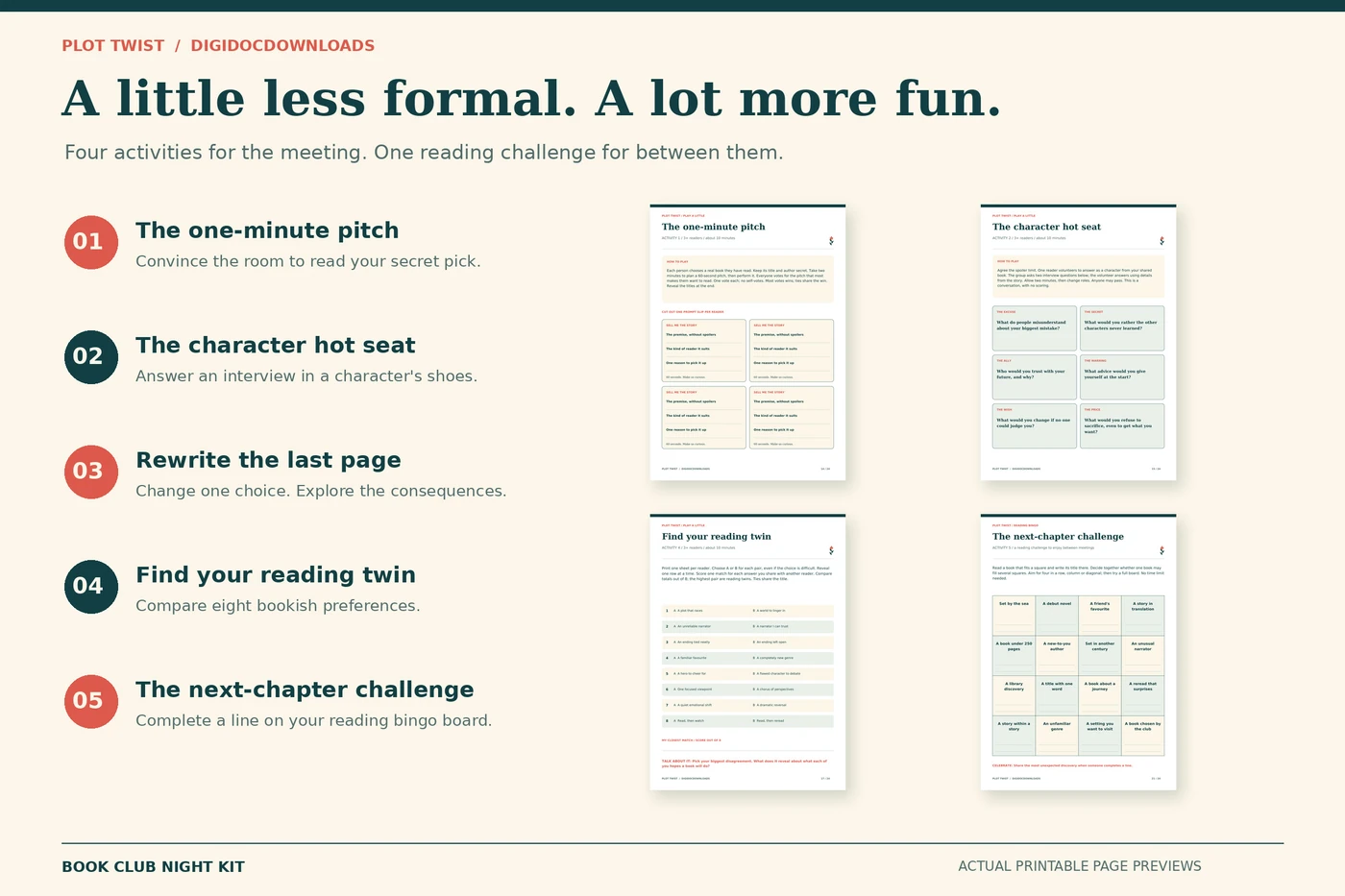
After the main discussion, invite the group to rewrite the last page, answer a few questions in a character’s shoes or give a one-minute pitch for a suitably atmospheric next read. Pick only one activity and explain that joining in is optional. The change of rhythm can lift the room without turning the meeting into a competition or asking anyone to perform alone.
Let the season set the mood, then let the book lead the night.
Make space for different tastes and access needs
Not every reader wants to be frightened, dress up or talk about the darkest scene. Frame the theme as an invitation rather than a requirement. Guests can bring an autumnal recommendation instead of a horror title, choose a gentler prompt or simply listen for a round. Ask about food and access needs before the evening; Scope’s event-access checklist offers useful questions about travel, venue access and quiet space. Keep table styling clear of pages, drinks, sight lines and comfortable conversation.
Close with the next reading step
End by choosing the next book or agreeing how the group will vote. Note the title, date and one thing that worked well while the meeting is still fresh. If people enjoyed the seasonal touch, record the easy details worth repeating; if the discussion needed more time, plan fewer extras next time. Small notes make the next gathering easier to host.
Keep the practical pieces together
Plot Twist is a 24-page A4 kit for fiction-focused groups of around three to ten readers. It combines the 48 discussion cards with five bookish activities, a flexible host plan, invitations, a welcome sign, review pages, awards, next-book slips, a reading log, a meeting record and four bookmarks. Some pieces need cutting, so print at Actual Size and prepare the pages you want before guests arrive.
More to read, make and discover
A few useful, interesting and checked routes into the subject.
- Gothic readingBritish Library: spine-tingling stories in the collections
A lively introduction to Gothic chapbooks, ghost stories and wonderfully lurid historical titles for an October reading list.
- Group planningNational Literacy Trust: how to set up a book group
Practical guidance on choosing books, structuring discussion and making space for different readers.
- Access planningScope: checking event and venue accessibility
Useful questions about access, travel, quiet space and the information guests may need before a gathering.