
Decide what the choice needs to achieve
Before collecting titles, agree the few conditions that genuinely matter to this group. How long is the reading window? Do members usually borrow, buy, listen or use e-books? Is the club open to fiction and non-fiction, or does it have a clear theme? A useful rule might be: the book must be obtainable in at least two common formats, realistically readable before the next meeting and new to most of the group. Keep the list short. A selection process should remove confusion, not arrive wearing the expression of a committee meeting.
Give every member one nomination
Ask each person for one title, the author's name and a sentence explaining why it might create a good discussion. One nomination per member keeps preparation light and prevents the keenest reader from supplying an entire season before anyone else has found a pen. Accept suggestions in the form that is easiest for the member: on a slip, in a message or spoken to the host. The host can put every suggestion into the same format before sharing the list.
Check availability before enthusiasm becomes a promise
A wonderful choice is less wonderful when only one copy exists and it is already on loan until spring. Check the local library catalogue, major formats and a typical new or second-hand price before a title reaches the final ballot. Laois County Council's public-library guide notes that very new or extremely popular books can have waiting lists and recommends asking the library about titles that are easier to source. Do not require every member to buy a new hardback unless that is an expectation the group has knowingly chosen.
Build a shortlist people can actually compare
For a small club, three to five eligible titles are usually enough for a meaningful choice without turning the vote into catalogue work. If there are more nominations, carry the extras into a future list, ask each member to withdraw one of their own, or use a quick first round in which everyone marks the titles they would genuinely read. Preserve the nominator's one-sentence reason. It gives the book more substance than a cover image and stops the loudest improvised pitch from becoming the unofficial deciding rule.
Choose one method and use it consistently
- Simple ballot: each member chooses one title; the most votes wins.
- Approval ballot: each member marks every title they would be happy to read; the broadest support wins.
- Rotating choice: one member chooses each meeting, with the order recorded in advance.
- Lucky dip: every eligible nomination has an equal chance, useful when the group actively enjoys surprise.
The Reading Agency's Book Club Hub guide recognises taking turns, voting and lucky dips as workable approaches. None is universally fairest. A ballot shares the decision each time; rotation guarantees that quieter or minority tastes eventually get a full choice; a lucky dip values variety over consensus. Pick the method that matches the group's purpose and say which one is being used before nominations begin.
Keep the vote independent
Collect votes before announcing a running total. Visible early choices can turn a personal preference into a small parade, with later voters deciding whether to join it or resist it. A BookTrust classroom case study describes replacing visible voting pebbles with opaque boxes so children chose without being guided by the current count. An adult book club needs no ballot box: folded slips, a short private form or messages to one neutral counter are enough.
Set the tie-break rule before a tie
Choose a simple rule while nobody knows which books it will affect. You might run a second vote between the tied titles, give the deciding vote to the member whose turn to host is next, or select the book that is easiest for everyone to obtain. If the same title loses narrowly more than once, keep it on a future shortlist rather than treating the result as permanent exile. Writing down the rule first makes the final decision feel predictable rather than personal.
Fairness is not everybody getting their first choice; it is everybody having a clear route into the choice.
Include members who cannot attend the decision
Share the shortlist and deadline in advance, with the title, author, brief reason and practical format information. Let absent members vote if that is normal for the club, and make clear whether a non-response counts as an abstention. If someone finds a paper slip, group chat or online form difficult, accept their choice another way and record it once. Consistency matters more than the tool. The book club is choosing a book, not testing everybody's willingness to operate the same piece of software.
Protect variety without using a rigid quota
Keep a simple reading log that records author, genre or form, approximate length and who nominated the title. Review it every few meetings. If the list has become very similar, invite the next shortlist to widen one dimension: a translation, essays, a short-story collection, a different period or a form the club has not tried. Laois Libraries recommends varying genre and writing style to keep a group fresh. Treat that as an invitation to notice patterns, not a demand to make every choice carry the entire history of literature.
Record the result and the next step
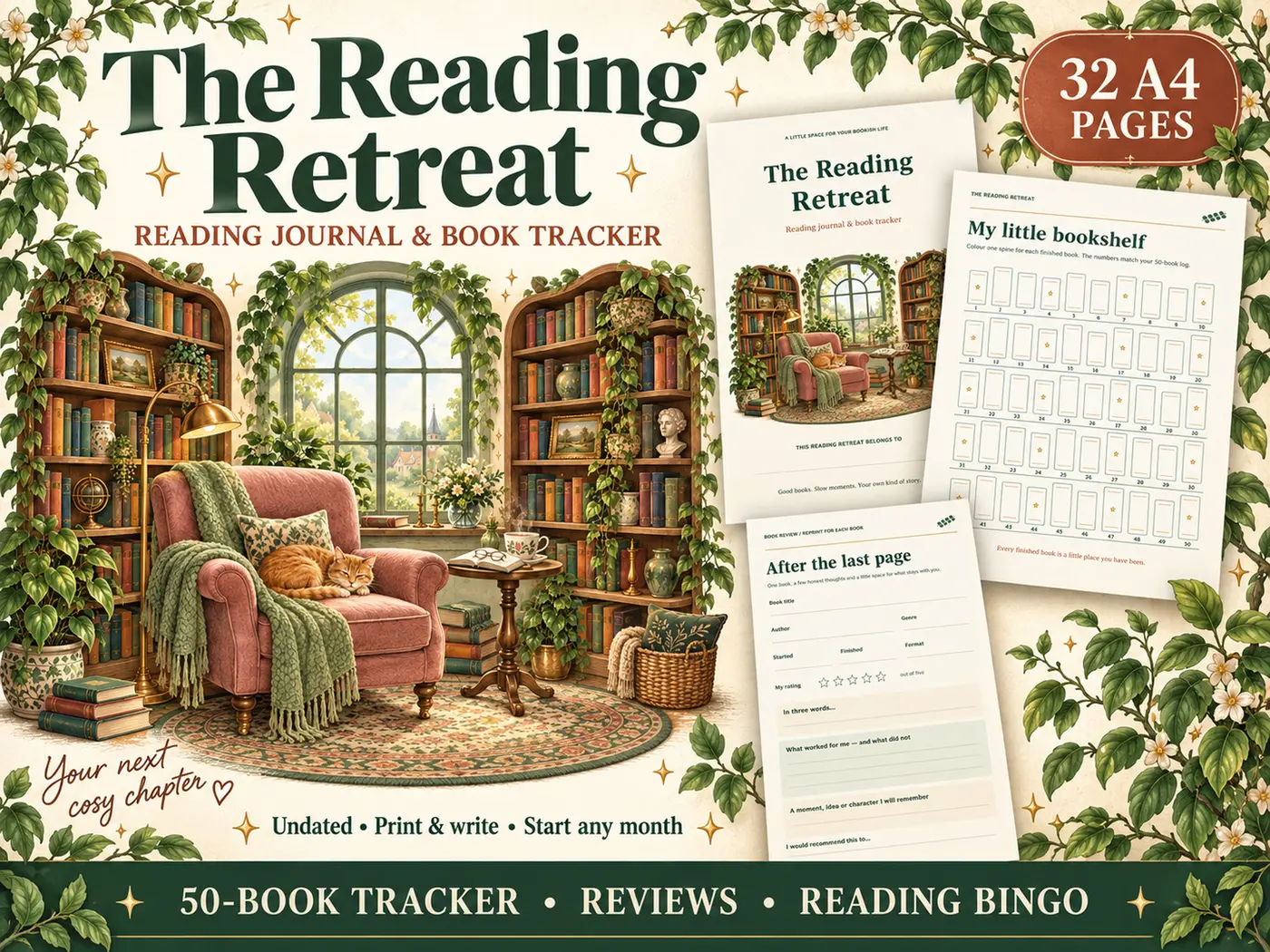
Write down the winning title, the meeting date, who will obtain or reserve copies and when the spoiler boundary will be agreed. Save the runners-up for later. Plot Twist Book Club includes next-book nomination slips, a meeting record, next-time reflections and a twelve-book reading log alongside its 48 discussion cards and five activities. Use only the pages that support the group's decision. Plain paper works perfectly well too; the important part is that the choice survives the journey from one meeting to the next.
More to read, make and discover
A few useful, interesting and checked routes into the subject.
- Reading-group guidanceThe Reading Agency: how to start a book club
The Book Club Hub guide suggests taking turns, voting on a selection or using a lucky dip, and recommends checking library book-club collections.
- Public-library guidanceLaois County Council: book-club guidelines
The public-library guide recommends inviting nominations, varying genre and writing style, voting or rotating the choice, and checking whether enough copies can be obtained.
- Independent voting exampleBookTrust: voting for a shared reading choice
A classroom case study describes moving visible voting pebbles into opaque boxes so readers chose without being guided by the current total; the article also stresses widening the range of books available.